
Recipe Snapshot
Recipe at a Glance
Key timing, yield and style details before you start cooking.
Ingredient Interaction and Salinity Control
Clams release natural brine during cooking, which integrates into the sauce and defines its saline depth. Managing this liquid is critical: excessive reduction intensifies saltiness, while under-reduction leaves the sauce thin and metallic. The base relies on olive oil for fat dispersion and mouthfeel, while tomato purée provides acidity to balance the marine salinity. Garlic and onion form the aromatic foundation, their sulphur compounds mellowing through gentle sautéing. White wine introduces volatile acidity that lifts the sauce, but it must be reduced sufficiently to avoid raw alcohol notes. Paprika adds controlled bitterness and colour, stabilising the sauce’s emulsified texture when combined with oil and clam liquor.
Heat Management and Moisture Regulation
Temperature staging determines both sauce concentration and clam tenderness. The initial sauté must occur over medium heat to sweat aromatics without browning, preventing bitterness. Once wine and tomato are added, simmering should remain gentle to allow reduction without scorching. Clams require high, brief heat exposure to open rapidly while retaining moisture. Overcooking leads to rubbery texture and loss of sweetness. The lid-on steaming phase traps vapour, ensuring even opening and preserving volatile marine aromas. Once opened, immediate removal from heat halts carryover cooking and prevents protein tightening. Controlled evaporation during reduction maintains sauce body without overshooting viscosity.
Transformation Through Reduction and Emulsification
As the sauce reduces, natural pectins from tomato and gelatinous proteins from clam liquor create a light emulsification that binds oil and liquid. This transformation yields a cohesive texture that coats each clam evenly. The reduction phase concentrates umami compounds, while the paprika’s carotenoids deepen colour and flavour. The final sauce should cling lightly to the shell and pool with moderate viscosity. Over-reduction risks separation and excessive salt concentration, while under-reduction produces a watery finish. Proper timing ensures the sauce reaches nappe consistency just as the clams finish opening, achieving structural harmony between protein and sauce.
Workflow Efficiency and Sequencing Logic
Mise en place is essential: clams must be purged of sand before cooking, and all aromatics prepped to avoid delay once heat begins. The sauce base can be started while clams drain, optimising workflow. Deglazing with wine immediately after sautéing prevents residue scorching and builds depth. Once the sauce reaches partial reduction, clams are added in a single layer to ensure uniform steaming. Parallel preparation of garnishes such as chopped parsley allows immediate finishing upon removal from heat. This sequencing minimises idle time and maintains temperature integrity through service.
Regional Technique and Culinary Lineage
Almejas a la Marinera originates from the coastal regions of Galicia and Asturias in northern Spain, where shellfish abundance shaped maritime cooking traditions. The technique reflects Iberian sauce-building logic—using sofrito foundations, paprika, and wine reduction to create depth without heavy fats. The dish evolved as a practical adaptation for fishermen, utilising clam liquor as a natural seasoning medium. Modern versions maintain the same reduction-emulsification principle but employ refined control over acidity and texture. The method exemplifies Spanish coastal cuisine’s balance between minimal ingredient manipulation and precise heat management.
Recipe Education
Learn the Skills Behind This Recipe
Build confidence with cooking skills, techniques, and tools used in this recipe.
How to Sauté Properly
Master fast cooking, pan heat, and ingredient timing for better texture.
Recommended for the saute method used in this recipe.
Simmer vs Boil
Learn when to simmer, when to boil, and how each affects recipe results.
Recommended for the simmer method used in this recipe.
Cookware Guide
Learn which pots and pans work best for frying, sautéing, simmering, and roasting.
Helpful when using frying pan during preparation.
Teaspoons to Grams
Use small-measure conversions more accurately in cooking and baking.
Helpful when using measuring spoons during preparation.
Cooking Basics
Build safer knife preparation, heat control, timing, and everyday kitchen confidence.
Helpful when using chef knife during preparation.


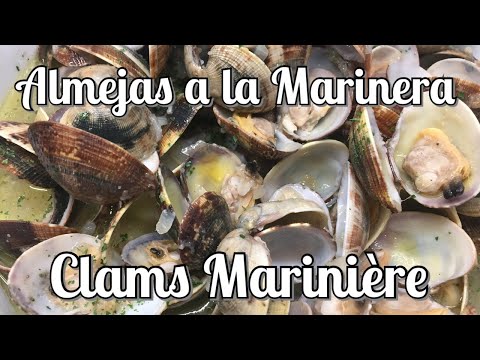
Almejas a la Marinera (Clams in Tomato Sauce)
Description
Clams release natural brine during cooking, which integrates into the sauce and defines its saline depth. Managing this liquid is critical: excessive reduction intensifies saltiness, while under-reduction leaves the sauce thin and metallic. The base relies on olive oil for fat dispersion and mouthfeel, while tomato purée provides acidity to balance the marine salinity. Garlic and onion form the aromatic foundation, their sulphur compounds mellowing through gentle sautéing. White wine introduces volatile acidity that lifts the sauce, but it must be reduced sufficiently to avoid raw alcohol notes. Paprika adds controlled bitterness and colour, stabilising the sauce’s emulsified texture when combined with oil and clam liquor.
Ingredients
Ingredients
Instructions
Instructions
Step 1
Rinse the clams under cold water and discard any that remain open when tapped. Soak them in lightly salted water for 1 hour to purge sand, then drain and rinse again.Use a Colander / Strainer to lift clams from soaking water rather than pouring to prevent reintroducing sediment.Step 2
Heat olive oil in a Saute Pan over medium heat. Add chopped onion and cook for 5–6 minutes until translucent without browning. Add minced garlic and cook for 30 seconds until aromatic.Maintain medium heat to avoid caramelising the onion; the goal is moisture release, not colour development.Step 3
Stir in sweet paprika and cook for 10 seconds to bloom its aroma. Immediately deglaze with white wine, scraping the base with a Wooden Spoon to release any fond. Reduce by half over medium heat.Do not overheat paprika; brief blooming prevents bitterness and preserves colour stability.Step 4
Add tomato purée, salt, and black pepper. Simmer gently for 10 minutes until slightly thickened, stirring occasionally to prevent sticking.Use a Silicone Spatula to monitor sauce viscosity; it should coat the back of the utensil without separating.Step 5
Increase heat to high, add drained clams, and cover with a lid. Cook for 3–4 minutes, shaking the pan occasionally until all clams open. Discard any that remain closed.Stop cooking as soon as the majority open; residual heat will finish the rest without toughening the flesh.Step 6
Remove from heat, sprinkle with chopped parsley, and toss gently to coat clams evenly in the sauce. Serve immediately.Rest the pan off heat for 1 minute before serving to allow sauce emulsification to stabilise and cling to shells.
Recommended Equipment

Nutrition Facts
Servings 4
Serving Size 1 portion
- Amount Per Serving
- Calories 179.91kcal
- % Daily Value *
- Total Fat 9.72g15%
- Saturated Fat 1.37g7%
- Cholesterol 11.25mg4%
- Sodium 621.37mg26%
- Potassium 336.73mg10%
- Total Carbohydrate 10.6g4%
- Dietary Fiber 1.73g7%
- Sugars 4.04g
- Protein 6.95g14%
- Vitamin A 775.26 IU
- Vitamin C 10.57 mg
- Calcium 42.22 mg
- Iron 1.99 mg
- Vitamin E 2.72 mg
- Vitamin K 39.34 mcg
- Thiamin 0.04 mg
- Riboflavin 0.08 mg
- Niacin 1.03 mg
- Vitamin B6 0.16 mg
- Folate 16.2 mcg
- Vitamin B12 4.24 mcg
- Pantothenic Acid 0.36 mg
- Phosphorus 115.38 mg
- Magnesium 27.81 mg
- Zinc 0.53 mg
- Selenium 12.36 mcg
- Copper 0.19 mg
- Manganese 0.26 mg
* Nutrition information is provided as an estimate per serving and may vary depending on the ingredients, brands, substitutions, portion sizes and preparation methods used. Percent Daily Values (%DV) are based on U.S. FDA reference values for a 2,000-calorie diet and are intended as a general guide only. Individual nutritional needs vary. This information is not a substitute for advice from a registered dietitian or other qualified healthcare professional.
Note
Allow the dish to cool gradually before sealing. Rapid temperature shifts can create condensation, weakening texture and diluting surface flavour concentration. The resting phase supports structural stabilisation and moisture redistribution. Cutting or serving too early may compromise internal balance. Spice intensity can deepen over time as volatile compounds settle. Taste and adjust seasoning after resting. Slow-cooked preparations often improve after several hours or overnight refrigeration as aromatic compounds integrate more fully. Acid balance may soften slightly over time; a final adjustment before serving restores clarity.


