
Recipe Snapshot
Recipe at a Glance
Key timing, yield and style details before you start cooking.
Pectin Breakdown and Sugar Balance
Apple butter relies on the natural pectin and acid content of apples to achieve a smooth, spreadable consistency without added thickeners. The sugar concentration stabilises the mixture by binding free water, preventing microbial growth and extending shelf life. Selecting apples with balanced tartness ensures the final spread maintains depth rather than cloying sweetness. The slow reduction process intensifies both flavour and colour as sugars caramelise and pectin chains shorten, yielding a dense, glossy texture. Acid from lemon juice maintains pH stability and prevents enzymatic browning during the initial cooking phase, ensuring a consistent amber tone throughout the batch.
Controlled Reduction and Heat Management
The cooking process demands precise temperature control to avoid scorching as water evaporates and sugars concentrate. Maintaining a low, steady simmer allows gradual moisture loss while preserving volatile aromatics. Stirring frequency increases as viscosity rises to prevent sticking on the base of the pot. Using a heavy-bottomed Dutch Oven or Stock Pot ensures even heat distribution. Carryover heat continues thickening after removal from the stove, so the mixture should be slightly looser than the final target texture when taken off heat. Over-reduction leads to a sticky, overly dense product that loses spreadability.
Texture Development Through Extended Cooking
During the reduction phase, starches and pectins undergo gelatinisation and partial hydrolysis, transforming the apple purée into a cohesive butter-like mass. The Maillard reaction between fruit sugars and trace amino acids deepens the flavour profile, producing caramel and toffee notes. Continuous stirring near the end ensures uniform evaporation and prevents localised overcooking. The final texture should coat the back of a spoon evenly, indicating sufficient concentration. Once cooled, the spread thickens further as pectin sets, achieving a stable, spoonable consistency suitable for storage or immediate use.
Workflow Efficiency and Batch Control
Efficient production depends on proper mise en place—apples peeled, cored, and chopped uniformly to ensure even breakdown. Using a Stick Blender directly in the pot reduces transfer loss and cleaning time. Batch size should not exceed two-thirds of the pot’s capacity to allow safe simmering without overflow. For larger operations, parallel batches can be staged with staggered start times to maintain continuous output. Monitoring reduction visually rather than by fixed time prevents inconsistencies caused by apple variety moisture differences. Proper sterilisation of storage jars ensures product stability for extended refrigeration or canning.
Regional and Historical Context
Apple butter originated in Western Europe, particularly in regions of Germany and the Netherlands, where apple surpluses were preserved through long, slow cooking. The technique migrated to North America with settlers, adapting to local apple varieties and sugar availability. Traditional copper kettles were replaced by cast-iron or enamelled vessels, but the slow reduction principle remained unchanged. The method reflects pre-refrigeration preservation logic—maximising flavour concentration and shelf stability through controlled dehydration. Modern versions maintain the same structural intent, though smaller-scale stovetop production replaces open-fire reduction for precision and safety.
Recipe Education
Learn the Skills Behind This Recipe
Build confidence with cooking skills, techniques, and tools used in this recipe.
Simmer vs Boil
Learn when to simmer, when to boil, and how each affects recipe results.
Recommended for the simmer method used in this recipe.
Cooking Basics
Build safer knife preparation, heat control, timing, and everyday kitchen confidence.
Helpful when using chef knife during preparation.
Cookware Guide
Learn which pots and pans work best for frying, sautéing, simmering, and roasting.
Helpful when using dutch oven during preparation.
Cups to Grams
Convert cup measurements more accurately to improve recipe consistency.
Helpful when using measuring cups during preparation.
Teaspoons to Grams
Use small-measure conversions more accurately in cooking and baking.
Helpful when using measuring spoons during preparation.
Batch Cooking
Cook once and prepare multiple meals more efficiently.
Selected for this type of recipe.


Apple Butter Spread
Description
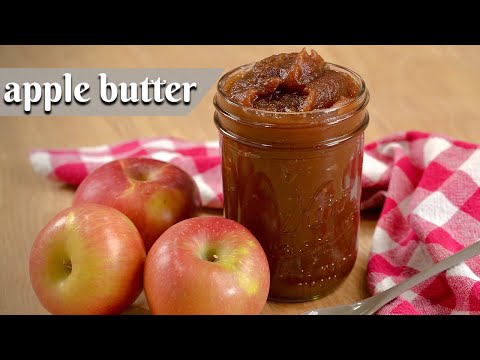
Apple butter relies on the natural pectin and acid content of apples to achieve a smooth, spreadable consistency without added thickeners. The sugar concentration stabilises the mixture by binding free water, preventing microbial growth and extending shelf life. Selecting apples with balanced tartness ensures the final spread maintains depth rather than cloying sweetness. The slow reduction process intensifies both flavour and colour as sugars caramelise and pectin chains shorten, yielding a dense, glossy texture. Acid from lemon juice maintains pH stability and prevents enzymatic browning during the initial cooking phase, ensuring a consistent amber tone throughout the batch.
Ingredients
Ingredients
Instructions
Instructions
Step 1
Combine chopped apples, apple juice, and lemon juice in a Dutch Oven over medium heat. Cover and simmer for 20–25 minutes until apples soften completely.Keep the lid slightly ajar to allow steam escape while preventing excessive evaporation early in the process.Step 2
Use a Stick Blender to purée the softened apples directly in the pot until completely smooth. Reduce heat to low.Blend while the mixture is hot for smoother integration; cooler purée tends to trap air bubbles affecting final texture.Step 3
Stir in sugar, cinnamon, cloves, and salt. Continue cooking uncovered on low heat, stirring frequently to prevent sticking.Use a Silicone Spatula to scrape the pot bottom regularly; sugar concentration increases burn risk as moisture reduces.Step 4
Simmer for 60–90 minutes until the mixture darkens and thickens. Test by placing a small amount on a chilled plate—if no liquid separates, reduction is complete.Maintain gentle bubbling; aggressive boiling accelerates evaporation unevenly and can cause scorching.Step 5
Remove from heat and allow to cool for 15 minutes. Transfer to sterilised Mason Jars and seal. Refrigerate once cooled completely.Fill jars while the spread is still warm to ensure vacuum formation during cooling, improving shelf stability.
Recommended Equipment

Nutrition Facts
Servings 12
Serving Size 1 portion
- Amount Per Serving
- Calories 140.13kcal
- % Daily Value *
- Total Fat 0.31g1%
- Saturated Fat 0.04g1%
- Sodium 50.89mg3%
- Potassium 158.82mg5%
- Total Carbohydrate 36.61g13%
- Dietary Fiber 3.18g13%
- Sugars 31.77g
- Protein 0.36g1%
- Vitamin A 68.5 IU
- Vitamin C 6.44 mg
- Calcium 11.97 mg
- Iron 0.21 mg
- Vitamin E 0.24 mg
- Vitamin K 2.88 mcg
- Thiamin 0.03 mg
- Riboflavin 0.04 mg
- Vitamin B6 0.06 mg
- Folate 4.01 mcg
- Phosphorus 15.56 mg
- Magnesium 7.66 mg
- Copper 0.04 mg
- Manganese 0.13 mg
* Nutrition information is provided as an estimate per serving and may vary depending on the ingredients, brands, substitutions, portion sizes and preparation methods used. Percent Daily Values (%DV) are based on U.S. FDA reference values for a 2,000-calorie diet and are intended as a general guide only. Individual nutritional needs vary. This information is not a substitute for advice from a registered dietitian or other qualified healthcare professional.
Note
Allow the dish to cool gradually before sealing. Rapid temperature shifts can create condensation, weakening texture and diluting surface flavour concentration. The resting phase supports structural stabilisation and moisture redistribution. Cutting or serving too early may compromise internal balance. In larger batches, maintain even heat distribution and avoid overcrowding during reheating to preserve structural integrity. Slow-cooked preparations often improve after several hours or overnight refrigeration as aromatic compounds integrate more fully. Acid balance may soften slightly over time; a final adjustment before serving restores clarity.


