
Recipe Snapshot
Recipe at a Glance
Key timing, yield and style details before you start cooking.
Acid-Fat Balance and Ingredient Interaction
The structural integrity of avocado salsa verde depends on balancing the fat density of ripe avocado with the acidity of tomatillos and lime juice. The tomatillos provide both liquid and acid, which prevent the avocado from oxidising while maintaining a pourable consistency. The inclusion of onion and jalapeño introduces volatile sulphur compounds and capsaicin that cut through the fat, creating a balanced mouthfeel. Salt calibrates the perception of acidity and enhances the chlorophyll-driven freshness of cilantro. The hydration level is controlled by the tomatillo’s natural moisture; excessive blending or added liquid can thin the emulsion and reduce cling on chips or proteins.
Heat Management and Blanching Control
Tomatillos require controlled heat exposure to develop mild caramelisation without losing their green acidity. Roasting or pan-searing them on a dry surface over medium-high heat promotes Maillard browning while evaporating surface moisture, concentrating flavour. Overheating risks bitterness and colour dulling. Jalapeños benefit from similar treatment to soften their skin and mellow raw heat. Carryover heat continues to cook the tomatillos briefly after removal, so cooling before blending is essential to prevent the avocado from warming and destabilising the emulsion. Proper sequencing ensures the salsa retains a bright green hue and stable viscosity.
Textural Transformation Through Blending
Blending integrates the fibrous tomatillo pulp with the creamy matrix of avocado, forming a semi-emulsified suspension. The mechanical shear from the blender ruptures cell walls, releasing pectin that thickens the mixture naturally. Over-blending can overheat the mixture and cause aeration, resulting in a lighter but less stable texture. The goal is a smooth but dense consistency that coats the back of a spoon without separation. The avocado’s lipid phase binds with the tomatillo’s aqueous phase, forming a stable dispersion that resists quick oxidation when acid levels are correctly maintained.
Workflow Efficiency and Mise en Place Logic
Efficiency in preparation relies on staging components by volatility and oxidation risk. Tomatillos and jalapeños should be roasted first and cooled while onions, cilantro, and lime juice are prepped. The avocado must be cut last to minimise exposure to air. Blending should occur in a single continuous phase to prevent oxidation layering. Cleaning the blender immediately after use prevents chlorophyll staining and flavour carryover. This workflow minimises downtime and preserves the salsa’s vivid colour and fresh aroma under service conditions.
Regional Technique Lineage and Adaptation
Avocado salsa verde originates from central Mexican culinary practice, where tomatillo-based salsas form a foundational condiment family. The integration of avocado is a regional adaptation from areas with abundant avocado cultivation, notably Puebla and Michoacán. Traditional versions used stone molcajetes for grinding, producing a coarser texture and slightly oxidised surface flavour. Modern blending methods yield smoother emulsions and longer shelf stability. The dish exemplifies Mexico’s balance between indigenous produce and evolving technique, maintaining authenticity through its raw-green acidity and fat-acid equilibrium.
Recipe Education
Learn the Skills Behind This Recipe
Build confidence with cooking skills, techniques, and tools used in this recipe.
Cooking Basics
Build safer knife preparation, heat control, timing, and everyday kitchen confidence.
Helpful when using chef knife during preparation.
Baking Tools Guide
Understand essential tools for mixing, measuring, and preparing recipes.
Helpful when using mixing bowl during preparation.
How to Substitute Ingredients
Swap ingredients more safely without damaging flavour, texture, or structure.
Helpful cooking knowledge for recipes like this.


Avocado Salsa Verde
Description
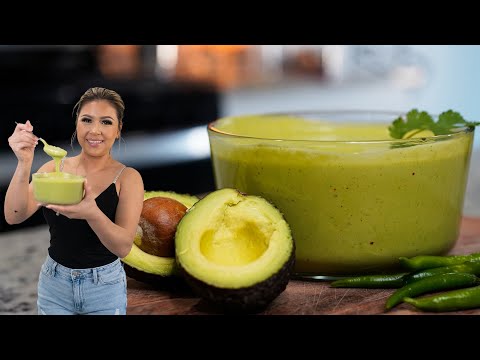
The structural integrity of avocado salsa verde depends on balancing the fat density of ripe avocado with the acidity of tomatillos and lime juice. The tomatillos provide both liquid and acid, which prevent the avocado from oxidising while maintaining a pourable consistency. The inclusion of onion and jalapeño introduces volatile sulphur compounds and capsaicin that cut through the fat, creating a balanced mouthfeel. Salt calibrates the perception of acidity and enhances the chlorophyll-driven freshness of cilantro. The hydration level is controlled by the tomatillo’s natural moisture; excessive blending or added liquid can thin the emulsion and reduce cling on chips or proteins.
Ingredients
Ingredients
Instructions
Instructions
Step 1
Heat a dry Grill Pan over medium-high heat. Place tomatillos and jalapeño on the surface and roast for 6–8 minutes, turning occasionally until blistered and lightly charred.Rotate frequently to avoid steam buildup; surface charring should occur without bursting the tomatillos.Step 2
Transfer roasted tomatillos and jalapeño to a bowl and allow to cool for 10 minutes to prevent residual heat from cooking the avocado during blending.Cooling stabilises acidity and preserves chlorophyll tone; blending while hot dulls colour.Step 3
In a Blender, combine cooled tomatillos, jalapeño, white onion, cilantro, lime juice, and salt. Blend on medium speed until smooth.Pulse in short bursts to control shear force; continuous blending can overheat and aerate the salsa.Step 4
Add the avocado to the blender and blend again until fully incorporated and creamy. Adjust with water to reach desired viscosity.Introduce water gradually; over-thinning reduces cling and dilutes flavour concentration.Step 5
Taste and adjust seasoning with additional salt or lime juice if required. Transfer to a bowl, cover with Cling Film pressed directly on the surface, and refrigerate for 20 minutes before serving.Direct contact with cling film limits oxidation and maintains the bright green colour during resting.
Recommended Equipment

Nutrition Facts
Servings 4
Serving Size 1 portion
- Amount Per Serving
- Calories 112.2kcal
- % Daily Value *
- Total Fat 8.19g13%
- Saturated Fat 1.18g6%
- Sodium 297.52mg13%
- Potassium 496.57mg15%
- Total Carbohydrate 10.61g4%
- Dietary Fiber 5.2g21%
- Sugars 4.01g
- Protein 1.98g4%
- Vitamin A 453.68 IU
- Vitamin C 22 mg
- Calcium 17.88 mg
- Iron 0.85 mg
- Vitamin E 1.56 mg
- Vitamin K 30.49 mcg
- Thiamin 0.08 mg
- Riboflavin 0.1 mg
- Niacin 2.37 mg
- Vitamin B6 0.21 mg
- Folate 51.89 mcg
- Pantothenic Acid 0.86 mg
- Phosphorus 62.06 mg
- Magnesium 32.72 mg
- Zinc 0.53 mg
- Copper 0.17 mg
- Manganese 0.22 mg
* Nutrition information is provided as an estimate per serving and may vary depending on the ingredients, brands, substitutions, portion sizes and preparation methods used. Percent Daily Values (%DV) are based on U.S. FDA reference values for a 2,000-calorie diet and are intended as a general guide only. Individual nutritional needs vary. This information is not a substitute for advice from a registered dietitian or other qualified healthcare professional.
Note
Allow the dish to cool gradually before sealing. Rapid temperature shifts can create condensation, weakening texture and diluting surface flavour concentration. The resting phase supports structural stabilisation and moisture redistribution. Cutting or serving too early may compromise internal balance. When reheating crisp components, use dry heat rather than microwave methods to maintain exterior texture. Monitor seasoning levels after storage, as salt perception can shift once chilled.


User Reviews
It’s simple but powerful.