
Recipe Snapshot
Recipe at a Glance
Key timing, yield and style details before you start cooking.
Ingredient Matrix and Structural Balance
The structural integrity of baked ziti depends on the starch-to-fat ratio and moisture retention within the pasta and cheese matrix. Ziti provides a tubular surface that traps sauce and melted cheese, while ricotta introduces a creamy binder through its milk fat and protein content. Mozzarella contributes elasticity and melt, balancing the ricotta’s density. Tomato sauce introduces acidity that cuts through the fat, preventing palate fatigue. Salt calibration is critical to offset ricotta’s mildness and to enhance the tomato base. Layering ensures even hydration and prevents the pasta from drying during baking, while grated Parmesan in the mix stabilises the emulsion and adds umami depth.
Thermal Control and Moisture Management
Temperature staging is essential to achieve both internal cohesion and surface caramelisation. The sauce must be simmered before assembly to reduce excess water, ensuring the baked structure remains firm. Baking at 190°C allows the cheese to melt uniformly without overbrowning before the interior reaches serving temperature. Covering the dish for the initial phase traps steam, hydrating the pasta and integrating the ricotta, while uncovering later promotes Maillard browning on the mozzarella surface. Carryover heat continues to set the layers post-bake, so resting is mandatory before slicing to prevent collapse and moisture bleed.
Transformation Through Baking
During baking, the starches in the pasta gelatinise further, binding with the sauce’s reduced tomato base. The ricotta’s whey evaporates slightly, concentrating its texture into a cohesive layer. Mozzarella transitions from solid to molten, then re-solidifies slightly as it cools, forming a flexible, cohesive top crust. The tomato sauce’s sugars caramelise at the edges, intensifying flavour concentration. The result is a layered matrix where each component contributes to a unified texture gradient—from crisp top to creamy interior. Proper resting time ensures the proteins and starches stabilise, allowing clean portioning without structural breakdown.
Workflow Efficiency and Assembly Logic
Efficient mise en place prevents temperature loss and overcooking. The sauce should be prepared and reduced before boiling the pasta, allowing immediate assembly once the pasta is drained. Pasta must be cooked slightly under al dente to account for continued cooking in the oven. Mixing part of the sauce with the pasta before layering ensures even coating and prevents dry pockets. Cheese distribution must be balanced—ricotta in dollops for texture contrast, mozzarella layered for melt coverage. Using preheated sauce and warm pasta reduces bake time and promotes even heat transfer through the assembled mass.
Regional Technique Lineage and Adaptation
Baked ziti originates from southern Italian cucina al forno traditions, where pasta al forno was used to repurpose cooked pasta with cheese and sauce. The technique evolved through Italian-American adaptation, emphasising heavier cheese ratios and tomato-forward sauces. In Italy, regional variants may use béchamel or meat ragù, while the American version standardised ricotta and mozzarella as the primary dairy components. The method reflects the southern Italian approach to layered baking, combining starch, dairy, and tomato acidity for preservation and reheating stability, adapted for modern ovens and larger family-style service.
Recipe Education
Learn the Skills Behind This Recipe
Build confidence with cooking skills, techniques, and tools used in this recipe.
Baking Tools Guide
Understand essential tools for mixing, measuring, and preparing recipes.
Recommended for the bake method used in this recipe.
How to Boil Properly
Learn boiling times, temperature control, and how to avoid overcooking.
Recommended for the boil method used in this recipe.
How to Sauté Properly
Master fast cooking, pan heat, and ingredient timing for better texture.
Recommended for the saute method used in this recipe.
Oven Temperature Conversions
Understand oven temperatures and how they affect baking and roasting.
Recommended for the bake method used in this recipe.
Cookware Guide
Learn which pots and pans work best for frying, sautéing, simmering, and roasting.
Helpful when using saucepan during preparation.
Batch Cooking
Cook once and prepare multiple meals more efficiently.
Selected for this type of recipe.


Baked Ziti with Ricotta and Mozzarella
Description
The structural integrity of baked ziti depends on the starch-to-fat ratio and moisture retention within the pasta and cheese matrix. Ziti provides a tubular surface that traps sauce and melted cheese, while ricotta introduces a creamy binder through its milk fat and protein content. Mozzarella contributes elasticity and melt, balancing the ricotta’s density. Tomato sauce introduces acidity that cuts through the fat, preventing palate fatigue. Salt calibration is critical to offset ricotta’s mildness and to enhance the tomato base. Layering ensures even hydration and prevents the pasta from drying during baking, while grated Parmesan in the mix stabilises the emulsion and adds umami depth.
Ingredients
Ingredients
Instructions
Instructions
Step 1
Preheat oven to 190°C. Bring a Stock Pot of salted water to a boil and cook ziti until slightly under al dente, about 8 minutes. Drain and set aside.Stop cooking the pasta just before full tenderness; it will finish cooking during baking, preventing a mushy texture.Step 2
In a Saucepan, heat olive oil over medium heat. Add minced garlic and sauté until fragrant, about 30 seconds. Stir in tomato sauce, oregano, salt, and pepper. Simmer for 10 minutes to reduce slightly.Maintain a gentle simmer to evaporate excess water without scorching the tomato base; this ensures a concentrated sauce.Step 3
Combine the drained pasta with half of the reduced tomato sauce in a Mixing Bowl, coating evenly to prevent sticking and ensure uniform flavour distribution.Mixing the sauce while pasta is warm enhances absorption and prevents dry zones in the final bake.Step 4
In a Casserole Dish, layer half the sauced pasta, then dollop half the ricotta evenly. Sprinkle half the mozzarella and Parmesan. Repeat with remaining pasta, ricotta, and cheeses. Top with remaining tomato sauce.Distribute ricotta in small portions rather than spreading; this maintains textural contrast between creamy pockets and firm pasta.Step 5
Cover the dish with Tin Foil and bake for 20 minutes. Remove foil and bake uncovered for another 10–15 minutes until the top is golden and bubbling. Rest for 10 minutes before serving.Allowing the dish to rest stabilises the cheese and sauce layers, ensuring clean slices and balanced moisture retention.
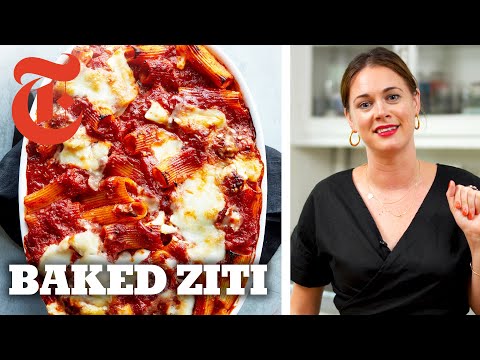
Recommended Equipment

Nutrition Facts
Servings 6
Serving Size 1 portion
- Amount Per Serving
- Calories 496.54kcal
- % Daily Value *
- Total Fat 18.63g29%
- Saturated Fat 9.76g49%
- Cholesterol 53.25mg18%
- Sodium 1178.45mg50%
- Potassium 491.83mg15%
- Total Carbohydrate 57.27g20%
- Dietary Fiber 3.62g15%
- Sugars 5.4g
- Protein 24.9g50%
- Vitamin A 855.6 IU
- Vitamin C 6.36 mg
- Calcium 386.93 mg
- Iron 2.23 mg
- Vitamin D 0.26 mcg
- Vitamin E 1.84 mg
- Vitamin K 7.41 mcg
- Thiamin 0.1 mg
- Riboflavin 0.3 mg
- Niacin 2.11 mg
- Vitamin B6 0.23 mg
- Folate 28.45 mcg
- Vitamin B12 1 mcg
- Pantothenic Acid 0.74 mg
- Phosphorus 393.2 mg
- Magnesium 64.55 mg
- Zinc 2.84 mg
- Selenium 56.4 mcg
- Copper 0.31 mg
- Manganese 0.77 mg
* Nutrition information is provided as an estimate per serving and may vary depending on the ingredients, brands, substitutions, portion sizes and preparation methods used. Percent Daily Values (%DV) are based on U.S. FDA reference values for a 2,000-calorie diet and are intended as a general guide only. Individual nutritional needs vary. This information is not a substitute for advice from a registered dietitian or other qualified healthcare professional.
Note
Allow the dish to cool gradually before sealing. Rapid temperature shifts can create condensation, weakening texture and diluting surface flavour concentration. The resting phase supports structural stabilisation and moisture redistribution. Cutting or serving too early may compromise internal balance. Dairy-based elements may thicken further upon cooling. Reheat gently to prevent separation or grainy texture. In larger batches, maintain even heat distribution and avoid overcrowding during reheating to preserve structural integrity. Slow-cooked preparations often improve after several hours or overnight refrigeration as aromatic compounds integrate more fully. Texture refinement often occurs naturally during resting due to internal moisture redistribution.


