
Recipe Snapshot
Recipe at a Glance
Key timing, yield and style details before you start cooking.
Protein and Mineral Integration
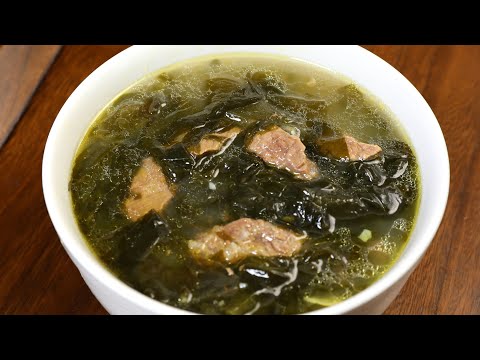
The structural base of beef seaweed soup relies on controlled extraction of collagen and amino acids from beef while balancing mineral salinity from dried seaweed. Soaking the seaweed rehydrates its cell walls, releasing glutamates that enhance umami depth. Lean beef, sliced thinly, provides protein clarity without excessive fat emulsification. Salt and soy sauce are introduced late to prevent premature tightening of muscle fibers, maintaining tenderness. The starch-free matrix allows direct perception of broth clarity, so fat skimming and particulate control are critical. The resulting equilibrium between marine and terrestrial proteins defines the broth’s structural integrity and mouthfeel.
Thermal Regulation and Broth Clarity
Temperature staging determines the final translucency and depth of the broth. Initial searing of beef at medium heat in a Saute Pan develops Maillard compounds that later dissolve into the simmering liquid. Once water is added, the heat must drop to a gentle simmer to prevent emulsification of surface fats, which would cloud the broth. Evaporation is managed by partial lid coverage, allowing reduction without excessive concentration. Carryover heat continues collagen extraction after the burner is turned off, so resting before final seasoning stabilizes the flavor profile. Continuous skimming during simmering ensures a clean, balanced broth.
Transformation Through Simmering
During simmering, connective tissue gelatinizes, converting into soluble gelatin that thickens the broth subtly without opacity. Seaweed softens, releasing polysaccharides that contribute to a silky texture. Aromatics such as garlic and sesame oil integrate fat-soluble compounds into the aqueous phase, enhancing aroma dispersion. The beef’s myofibrillar proteins denature gradually, maintaining structure while yielding to gentle heat. This transformation phase defines the soup’s body and cohesion, where timing precision prevents over-reduction or textural collapse of seaweed strands. The final broth should exhibit balanced viscosity and a clean umami finish.
Workflow Efficiency and Sequencing
Efficient mise en place minimizes idle time between hydration, searing, and simmering phases. Seaweed should soak while aromatics are prepared, and beef can be sliced during the initial heating of the Saute Pan. Parallelization of these tasks reduces total prep time without compromising control. Maintaining a consistent simmer temperature avoids reactive adjustments that can destabilize the broth. In professional service, the soup base can be held at low heat for extended periods, with seaweed added to order to preserve texture integrity. This sequencing ensures reproducibility and consistency across multiple servings.
Cultural and Regional Context
Beef seaweed soup, known as miyeok-guk in Korean cuisine, originates from traditional postpartum nourishment practices and ancestral rites. The dish’s evolution reflects Korea’s coastal access to seaweed and the integration of beef as a protein source during ceremonial meals. The technique emphasizes clarity and restraint rather than heavy seasoning, aligning with broader East Asian broth traditions. Modern adaptations maintain the same structural logic—hydration, searing, and controlled simmering—while adjusting salt levels for contemporary palates. The method remains a precise example of Korean simmering discipline and ingredient synergy.
Recipe Education
Learn the Skills Behind This Recipe
Build confidence with cooking skills, techniques, and tools used in this recipe.
How to Sauté Properly
Master fast cooking, pan heat, and ingredient timing for better texture.
Recommended for the saute method used in this recipe.
Simmer vs Boil
Learn when to simmer, when to boil, and how each affects recipe results.
Recommended for the simmer method used in this recipe.
Cookware Guide
Learn which pots and pans work best for frying, sautéing, simmering, and roasting.
Helpful when using frying pan during preparation.
Cups to Grams
Convert cup measurements more accurately to improve recipe consistency.
Helpful when using measuring cups during preparation.
Teaspoons to Grams
Use small-measure conversions more accurately in cooking and baking.
Helpful when using measuring spoons during preparation.
Baking Tools Guide
Understand essential tools for mixing, measuring, and preparing recipes.
Helpful when using mixing bowl during preparation.


Beef Seaweed Soup
Description
The structural base of beef seaweed soup relies on controlled extraction of collagen and amino acids from beef while balancing mineral salinity from dried seaweed. Soaking the seaweed rehydrates its cell walls, releasing glutamates that enhance umami depth. Lean beef, sliced thinly, provides protein clarity without excessive fat emulsification. Salt and soy sauce are introduced late to prevent premature tightening of muscle fibers, maintaining tenderness. The starch-free matrix allows direct perception of broth clarity, so fat skimming and particulate control are critical. The resulting equilibrium between marine and terrestrial proteins defines the broth’s structural integrity and mouthfeel.
Ingredients
Ingredients
Instructions
Instructions
Step 1
Soak the dried seaweed in cold water for 20 minutes until fully rehydrated, then drain and cut into manageable lengths using a Chef Knife on a Cutting Board.Avoid over-soaking; excessive hydration weakens seaweed texture and dilutes flavor intensity.Step 2
Heat sesame oil in a Saute Pan over medium heat. Add sliced beef brisket and sauté for 2–3 minutes until lightly browned but not fully cooked.Maintain medium heat to trigger Maillard browning without burning sesame oil, which has a low smoke point.Step 3
Add minced garlic to the beef and stir for 30 seconds until aromatic. Incorporate the drained seaweed and mix thoroughly to coat with oil and beef juices.Integrating seaweed at this stage allows fat-soluble compounds to bind before dilution with water.Step 4
Pour in 1.2 liters of water, bring to a boil, then reduce to a gentle simmer. Skim any foam or impurities using a Spider / Skimmer to maintain broth clarity.Consistent skimming prevents emulsified particles from clouding the broth during long simmering.Step 5
Simmer uncovered for 35–40 minutes until beef is tender and seaweed texture is supple. Season with soy sauce, salt, and black pepper in the final 5 minutes.Add salt and soy sauce late to avoid premature tightening of beef proteins and excessive reduction of sodium concentration.Step 6
Turn off heat and allow the soup to rest for 5 minutes before serving to stabilize flavor distribution and temperature.Resting equalizes dissolved solids and prevents surface oil separation during ladling.
Recommended Equipment

Nutrition Facts
Servings 4
Serving Size 1 portion
- Amount Per Serving
- Calories 121.1kcal
- % Daily Value *
- Total Fat 7.31g12%
- Saturated Fat 1.84g10%
- Cholesterol 31mg11%
- Sodium 933.98mg39%
- Potassium 196.93mg6%
- Total Carbohydrate 2.48g1%
- Dietary Fiber 0.34g2%
- Sugars 0.2g
- Protein 11.23g23%
- Calcium 48.18 mg
- Iron 1.67 mg
- Vitamin E 0.38 mg
- Vitamin K 14.54 mcg
- Thiamin 0.06 mg
- Riboflavin 0.12 mg
- Niacin 2.25 mg
- Vitamin B6 0.23 mg
- Folate 40.35 mcg
- Vitamin B12 1.22 mcg
- Pantothenic Acid 0.33 mg
- Phosphorus 116.02 mg
- Magnesium 40.9 mg
- Zinc 2.46 mg
- Selenium 8.48 mcg
- Copper 0.12 mg
- Manganese 0.1 mg
* Nutrition information is provided as an estimate per serving and may vary depending on the ingredients, brands, substitutions, portion sizes and preparation methods used. Percent Daily Values (%DV) are based on U.S. FDA reference values for a 2,000-calorie diet and are intended as a general guide only. Individual nutritional needs vary. This information is not a substitute for advice from a registered dietitian or other qualified healthcare professional.
Note
Allow the dish to cool gradually before sealing. Rapid temperature shifts can create condensation, weakening texture and diluting surface flavour concentration. The resting phase supports structural stabilisation and moisture redistribution. Cutting or serving too early may compromise internal balance. Spice intensity can deepen over time as volatile compounds settle. Taste and adjust seasoning after resting. Slow-cooked preparations often improve after several hours or overnight refrigeration as aromatic compounds integrate more fully. Acid balance may soften slightly over time; a final adjustment before serving restores clarity.


