
Recipe Snapshot
Recipe at a Glance
Key timing, yield and style details before you start cooking.
Ingredient Interaction and Structural Balance
The stew’s foundation relies on controlled collagen conversion from beef chuck, balanced by the acidity and tannins of red wine. The wine’s acid assists in protein denaturation, allowing connective tissue to soften during extended moist heat exposure. Tomato paste introduces glutamates and mild acidity, reinforcing umami depth while stabilising the sauce’s pH. Root vegetables contribute starch for natural thickening through gelatinisation, while the fat from seared beef integrates with the reduced wine base to form a stable emulsion. Salt is layered progressively to manage osmotic drawdown, ensuring even seasoning without premature moisture loss. The herb blend—thyme, bay, and rosemary—provides aromatic oils that infuse gradually, avoiding bitterness from overextraction.
Heat Management and Moisture Control
Searing the beef at high heat initiates Maillard reactions, generating a flavour base that carries through the braise. Once deglazed with red wine, the liquid captures caramelised fond, preventing scorching and ensuring even flavour distribution. The subsequent simmer must remain below boiling to avoid toughening the protein fibres. Evaporation is controlled by partial lid coverage, balancing reduction with moisture retention. Carryover heat during resting allows gelatin to stabilise, thickening the sauce naturally without flour-based interference. Temperature staging—sear, deglaze, simmer—ensures each phase achieves its structural purpose without compromising texture or clarity.
Transformation Through Slow Cooking
During the braise, collagen hydrolyses into gelatin, converting the initially firm beef into a tender, cohesive structure. Vegetables soften progressively, releasing sugars that caramelise subtly within the reduced liquid. The red wine’s tannins mellow through heat exposure, integrating into a rounded sauce profile. Reduction concentrates both flavour and viscosity, yielding a glossy finish that coats the protein evenly. The final texture depends on maintaining consistent low heat and avoiding agitation that could break down vegetable integrity. The stew’s transformation is complete when the sauce clings lightly to the spoon and the beef yields under minimal pressure.
Workflow Efficiency and Sequencing Logic
Efficient mise en place is critical: beef should be portioned and patted dry before searing to prevent steaming. Aromatics are pre-chopped and staged for rapid addition post-sear to capture residual heat for flavour extraction. Deglazing immediately after browning prevents carbonisation of fond. Vegetables are introduced in order of density—carrots and potatoes later—to avoid over-softening. Parallel tasks, such as herb preparation and stock heating, minimise idle time. The workflow ensures continuous utilisation of heat zones and prevents temperature drop during liquid incorporation, maintaining braising stability throughout service-scale execution.
Cultural and Regional Context
Beef stew with red wine and herbs aligns with the French braising tradition exemplified by dishes like boeuf bourguignon. The method evolved from rural necessity, using tougher cuts transformed through long, slow cooking in wine-rich regions where grape harvests provided abundant acidity and flavour. Over time, the dish became a standard of classical French cuisine, codified through Escoffier’s approach to structured braising. Modern adaptations maintain the same core logic—wine reduction, aromatic layering, and gelatin extraction—while adjusting vegetable ratios and stock concentration for contemporary service consistency.
Recipe Education
Learn the Skills Behind This Recipe
Build confidence with cooking skills, techniques, and tools used in this recipe.
Simmer vs Boil
Learn when to simmer, when to boil, and how each affects recipe results.
Recommended for the simmer method used in this recipe.
Cooking Basics
Build safer knife preparation, heat control, timing, and everyday kitchen confidence.
Helpful when using chef knife during preparation.
Cookware Guide
Learn which pots and pans work best for frying, sautéing, simmering, and roasting.
Helpful when using dutch oven during preparation.
Cups to Grams
Convert cup measurements more accurately to improve recipe consistency.
Helpful when using measuring cups during preparation.
Teaspoons to Grams
Use small-measure conversions more accurately in cooking and baking.
Helpful when using measuring spoons during preparation.


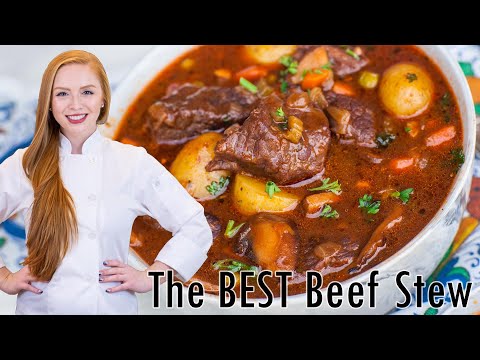
Beef Stew with Red Wine and Herbs
Description
The stew’s foundation relies on controlled collagen conversion from beef chuck, balanced by the acidity and tannins of red wine. The wine’s acid assists in protein denaturation, allowing connective tissue to soften during extended moist heat exposure. Tomato paste introduces glutamates and mild acidity, reinforcing umami depth while stabilising the sauce’s pH. Root vegetables contribute starch for natural thickening through gelatinisation, while the fat from seared beef integrates with the reduced wine base to form a stable emulsion. Salt is layered progressively to manage osmotic drawdown, ensuring even seasoning without premature moisture loss. The herb blend—thyme, bay, and rosemary—provides aromatic oils that infuse gradually, avoiding bitterness from overextraction.
Ingredients
Ingredients
Instructions
Instructions
Step 1
Pat beef chuck dry with paper towels. Season with half the salt and pepper. Heat olive oil in a Dutch Oven over medium-high heat and sear beef in batches until browned on all sides. Remove and set aside.Avoid overcrowding the Dutch Oven; crowding lowers surface temperature and inhibits proper Maillard browning.Step 2
Reduce heat to medium. Add chopped onion and garlic to the same pot. Sauté until translucent, scraping up browned bits with a Wooden Spoon.Use residual fond as a flavour base; do not allow it to darken beyond deep amber to prevent bitterness.Step 3
Stir in tomato paste and cook for 2 minutes to caramelise slightly. Deglaze with red wine, scraping the base to release all fond. Simmer until reduced by half.Monitor reduction visually; the wine should thicken slightly and lose its raw alcohol aroma before adding stock.Step 4
Return seared beef to the pot. Add beef stock, thyme, rosemary, and bay leaf. Bring to a gentle simmer, then cover partially and cook on low heat for 90 minutes.Maintain a steady simmer below boiling; excessive agitation toughens connective tissue and clouds the sauce.Step 5
Add carrots and potatoes. Continue simmering uncovered for 30–40 minutes until vegetables are tender and sauce has thickened. Adjust seasoning with remaining salt and pepper.If sauce consistency is too thin, whisk in flour mixed with a small amount of cooking liquid and simmer for 5 minutes to stabilise texture.Step 6
Remove bay leaf and herb stems. Allow stew to rest off heat for 10 minutes before serving to let gelatin set and flavours integrate.Resting equalises temperature gradients and allows the sauce to coat ingredients uniformly without separation.
Recommended Equipment

Nutrition Facts
Servings 4
Serving Size 1 portion
- Amount Per Serving
- Calories 709.6kcal
- % Daily Value *
- Total Fat 35.96g56%
- Saturated Fat 13.67g69%
- Cholesterol 172.5mg58%
- Sodium 1130.17mg48%
- Potassium 1842.56mg53%
- Total Carbohydrate 32.44g11%
- Dietary Fiber 4.41g18%
- Sugars 5.94g
- Protein 54.1g109%
- Vitamin A 5281.56 IU
- Vitamin C 28.6 mg
- Calcium 99.25 mg
- Iron 7.39 mg
- Vitamin D 0.25 mcg
- Vitamin E 2.04 mg
- Vitamin K 15.81 mcg
- Thiamin 0.36 mg
- Riboflavin 0.59 mg
- Niacin 13.94 mg
- Vitamin B6 1.5 mg
- Folate 46.6 mcg
- Vitamin B12 6.82 mcg
- Pantothenic Acid 2.04 mg
- Phosphorus 621.25 mg
- Magnesium 101.5 mg
- Zinc 19.64 mg
- Selenium 55.19 mcg
- Copper 0.41 mg
- Manganese 0.47 mg
* Nutrition information is provided as an estimate per serving and may vary depending on the ingredients, brands, substitutions, portion sizes and preparation methods used. Percent Daily Values (%DV) are based on U.S. FDA reference values for a 2,000-calorie diet and are intended as a general guide only. Individual nutritional needs vary. This information is not a substitute for advice from a registered dietitian or other qualified healthcare professional.
Note
Allow the dish to cool gradually before sealing. Rapid temperature shifts can create condensation, weakening texture and diluting surface flavour concentration. The resting phase supports structural stabilisation and moisture redistribution. Cutting or serving too early may compromise internal balance. Spice intensity can deepen over time as volatile compounds settle. Taste and adjust seasoning after resting. Slow-cooked preparations often improve after several hours or overnight refrigeration as aromatic compounds integrate more fully. When reheating crisp components, use dry heat rather than microwave methods to maintain exterior texture. Texture refinement often occurs naturally during resting due to internal moisture redistribution.


