
Recipe Snapshot
Recipe at a Glance
Key timing, yield and style details before you start cooking.
Collagen Conversion and Acid Balance
Beef stifado relies on the controlled breakdown of collagen into gelatin during long, moist cooking. The red wine and tomato base introduce acidity that assists in tenderising the beef while moderating the richness of the sauce. Onion quantity is deliberately high to provide natural sweetness that balances the wine’s tannins and tomato acidity. Cinnamon and clove contribute volatile aromatics that integrate into the fat phase, creating depth without overpowering the base. Salt is introduced gradually to avoid premature tightening of muscle fibres, ensuring the braise remains supple rather than stringy. The structural balance depends on maintaining a steady ratio between liquid volume and connective tissue mass.
Heat Regulation and Moisture Retention
Temperature staging is critical: initial high heat searing develops Maillard complexity, while subsequent low simmering preserves moisture and allows connective tissue to dissolve. Excessive evaporation during the reduction phase can lead to a sticky, over-concentrated sauce, so lid management and periodic liquid adjustment are essential. The Dutch Oven provides even heat distribution, preventing localized scorching. Carryover heat after removal from the burner continues gelatinisation, so resting time is built into the workflow. Controlled simmering rather than boiling ensures the onions retain structure and the sauce maintains clarity instead of emulsifying into a muddy consistency.
Transformation Through Slow Braising
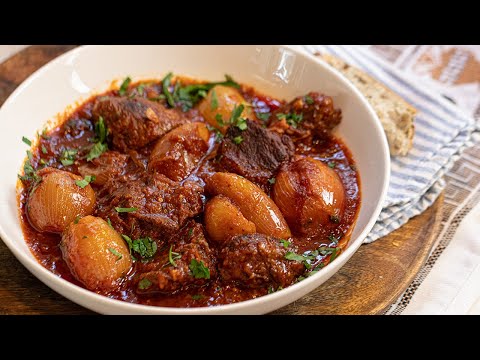
During the braise, the beef’s collagen converts into gelatin, thickening the sauce naturally without starch. The onions collapse, releasing sugars that caramelise into the liquid, producing a glossy, cohesive reduction. Red wine’s alcohol evaporates early, leaving behind concentrated fruit and tannin compounds that bind with the beef’s umami. The tomato paste undergoes mild caramelisation, deepening colour and flavour. Over time, the sauce transitions from thin and acidic to viscous and balanced. The final texture should coat the back of a spoon without separation of fat or liquid, indicating complete integration of protein, fat, and aromatic compounds.
Workflow Efficiency and Sequencing
Efficient mise en place prevents overcooking of aromatics. Onions should be peeled and trimmed before searing begins, as the browning phase demands full attention. Deglazing with wine immediately after searing captures fond before it burns. Once the braise is underway, minimal interference is required—occasional stirring prevents sticking but excessive agitation breaks down onions prematurely. Parallel preparation of starch accompaniments can occur during the final hour of cooking. Cooling and resting before service allow the sauce to stabilise, making portioning cleaner and reheating more consistent for service or batch production.
Cultural and Regional Context
Stifado originates from Greek island and mainland cooking traditions, historically adapted from Venetian stews introduced through maritime trade. The defining characteristic is the use of small onions or shallots and warm spices such as cinnamon and clove, reflecting spice route influences. Red wine versions are more common in northern Greece, where local varietals replace the vinegar or sweet wine used elsewhere. The dish exemplifies Mediterranean braising logic—balancing acidity, aromatics, and slow heat to transform tough cuts into tender, aromatic stews. Modern adaptations maintain the same structural principles while adjusting liquid ratios for contemporary service consistency.
Recipe Education
Learn the Skills Behind This Recipe
Build confidence with cooking skills, techniques, and tools used in this recipe.
Simmer vs Boil
Learn when to simmer, when to boil, and how each affects recipe results.
Recommended for the simmer method used in this recipe.
Cooking Basics
Build safer knife preparation, heat control, timing, and everyday kitchen confidence.
Helpful when using chef knife during preparation.
Cookware Guide
Learn which pots and pans work best for frying, sautéing, simmering, and roasting.
Helpful when using dutch oven during preparation.
Cups to Grams
Convert cup measurements more accurately to improve recipe consistency.
Helpful when using measuring cups during preparation.
Teaspoons to Grams
Use small-measure conversions more accurately in cooking and baking.
Helpful when using measuring spoons during preparation.
Batch Cooking
Cook once and prepare multiple meals more efficiently.
Selected for this type of recipe.


Beef Stifado with Red Wine
Description
Beef stifado relies on the controlled breakdown of collagen into gelatin during long, moist cooking. The red wine and tomato base introduce acidity that assists in tenderising the beef while moderating the richness of the sauce. Onion quantity is deliberately high to provide natural sweetness that balances the wine’s tannins and tomato acidity. Cinnamon and clove contribute volatile aromatics that integrate into the fat phase, creating depth without overpowering the base. Salt is introduced gradually to avoid premature tightening of muscle fibres, ensuring the braise remains supple rather than stringy. The structural balance depends on maintaining a steady ratio between liquid volume and connective tissue mass.
Ingredients
Ingredients
Instructions
Instructions
Step 1
Pat the beef cubes dry with paper towels. Heat olive oil in a Dutch Oven over medium-high heat and sear the beef in batches until evenly browned on all sides. Remove and set aside.Avoid overcrowding the Dutch Oven; crowding lowers surface temperature and inhibits proper Maillard browning.Step 2
Reduce heat to medium. Add the whole onions to the same pot and sauté until lightly golden. Add minced garlic and cook for 30 seconds until aromatic.Keep onions moving with a Wooden Spoon to prevent uneven caramelisation and scorching on the pot base.Step 3
Stir in tomato paste and cook for 2 minutes to caramelise slightly. Deglaze with red wine, scraping the bottom to release any browned residue.Allow the wine to simmer for 3–4 minutes to evaporate alcohol before adding stock; this prevents harsh acidity in the final sauce.Step 4
Return the beef to the pot. Add beef stock, bay leaves, cinnamon stick, and cloves. Bring to a gentle simmer, then reduce heat to low, cover, and cook for 2 hours, stirring occasionally.Maintain a steady low simmer; boiling will toughen the meat and cloud the sauce.Step 5
Remove the lid and continue simmering uncovered for 30–40 minutes until the sauce thickens and the beef is fork-tender. Adjust seasoning with salt, pepper, and red wine vinegar.Monitor reduction closely near the end; the sauce should coat the back of a spoon without separating.Step 6
Remove bay leaves, cinnamon, and cloves. Rest the stifado for 10 minutes before serving. Garnish with chopped parsley.Resting allows gelatin to stabilise, ensuring a cohesive sauce texture when plated.
Recommended Equipment

Nutrition Facts
Servings 6
Serving Size 1 portion
- Amount Per Serving
- Calories 547.74kcal
- % Daily Value *
- Total Fat 30.2g47%
- Saturated Fat 11.14g56%
- Cholesterol 138mg46%
- Sodium 684.77mg29%
- Potassium 1093.4mg32%
- Total Carbohydrate 16.94g6%
- Dietary Fiber 2.93g12%
- Sugars 6.99g
- Protein 41.1g83%
- Vitamin A 169.69 IU
- Vitamin C 12.4 mg
- Calcium 86.92 mg
- Iron 5.23 mg
- Vitamin D 0.2 mcg
- Vitamin E 1.68 mg
- Vitamin K 19.68 mcg
- Thiamin 0.22 mg
- Riboflavin 0.4 mg
- Niacin 9.52 mg
- Vitamin B6 1.02 mg
- Folate 34.65 mcg
- Vitamin B12 5.46 mcg
- Pantothenic Acid 1.44 mg
- Phosphorus 453.39 mg
- Magnesium 66.38 mg
- Zinc 15.51 mg
- Selenium 43.04 mcg
- Copper 0.23 mg
- Manganese 0.51 mg
* Nutrition information is provided as an estimate per serving and may vary depending on the ingredients, brands, substitutions, portion sizes and preparation methods used. Percent Daily Values (%DV) are based on U.S. FDA reference values for a 2,000-calorie diet and are intended as a general guide only. Individual nutritional needs vary. This information is not a substitute for advice from a registered dietitian or other qualified healthcare professional.
Note
Allow the dish to cool gradually before sealing. Rapid temperature shifts can create condensation, weakening texture and diluting surface flavour concentration. The resting phase supports structural stabilisation and moisture redistribution. Cutting or serving too early may compromise internal balance. Spice intensity can deepen over time as volatile compounds settle. Taste and adjust seasoning after resting. In larger batches, maintain even heat distribution and avoid overcrowding during reheating to preserve structural integrity. Slow-cooked preparations often improve after several hours or overnight refrigeration as aromatic compounds integrate more fully. When reheating crisp components, use dry heat rather than microwave methods to maintain exterior texture. Monitor seasoning levels after storage, as salt perception can shift once chilled.


