
Recipe Snapshot
Recipe at a Glance
Key timing, yield and style details before you start cooking.
Ingredient Interaction and Structural Balance
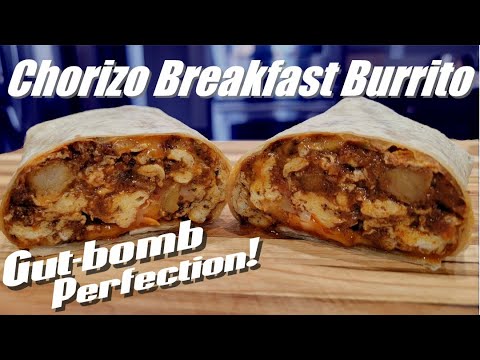
The structural integrity of a breakfast burrito depends on moisture control between the filling and tortilla. Chorizo provides fat and spice, which must be balanced by the starch absorption of diced potatoes. Eggs act as a protein binder, stabilising the filling once cooked. The tortilla’s flexibility relies on residual steam; over-drying it leads to cracking during assembly. Salt calibration must account for the chorizo’s inherent seasoning to prevent oversalting. The inclusion of cheese introduces fat and melt behaviour that binds the filling but requires temperature moderation to avoid oil separation. The final wrap benefits from a short rest to allow internal steam redistribution, ensuring cohesive slicing and handling.
Heat Management and Technique Control
Temperature staging is critical to maintain textural contrast. Potatoes require an initial medium heat sauté to develop surface browning without burning before moisture release softens the interior. Chorizo must be rendered separately to extract fat and intensify flavour through controlled Maillard reaction. Eggs should be cooked over low heat to achieve a soft curd structure, avoiding overcoagulation. Combining all components while warm ensures even distribution of fat and flavour. The final tortilla toasting phase must be brief and executed over medium heat to seal the burrito without drying the wrap or overcooking the interior.
Transformation Through Cooking and Texture Development
Cooking transforms raw starch and protein into a cohesive matrix. Potato starch gelatinises during sautéing, creating a creamy interior beneath a crisp surface. Chorizo fat renders and emulsifies with egg proteins, forming a rich, cohesive filling. Cheese melts into the mixture, reinforcing structure and mouthfeel. The tortilla’s brief toasting phase triggers light dehydration and surface caramelisation, improving grip and bite. Each component contributes a distinct texture layer—soft egg, crisp potato, elastic tortilla—resulting in a balanced handheld product that maintains integrity under service conditions.
Workflow Efficiency and Assembly Logic
Efficient mise en place prevents temperature loss and ingredient degradation. Potatoes can be par-cooked in advance to reduce final pan time. Chorizo should be rendered first, with fat reserved for sautéing potatoes to consolidate flavour. Eggs are cooked last to preserve moisture and softness. Assembly should occur immediately after cooking to utilise retained heat for cheese melting. Wrapping technique must be tight but not compressive, ensuring even distribution of filling and preventing rupture during toasting. Parallel preparation of tortillas during filling assembly optimises service flow in high-volume breakfast operations.
Regional and Cultural Context
The breakfast burrito originates from the American Southwest, particularly New Mexico and Texas, where Mexican culinary traditions merged with regional breakfast preferences. The combination of chorizo, eggs, and potatoes reflects adaptation of traditional Mexican breakfast components into a portable format suited to modern service. The technique parallels classic taco assembly but employs a larger flour tortilla for containment. Variations across regions may substitute local sausages or salsas, but the structural logic—protein, starch, and binder within a flexible wrap—remains consistent with its borderland culinary lineage.
Recipe Education
Learn the Skills Behind This Recipe
Build confidence with cooking skills, techniques, and tools used in this recipe.
How to Fry Properly
Understand pan heat, oil temperature, and how to get better frying results.
Recommended for the fry method used in this recipe.
How to Sauté Properly
Master fast cooking, pan heat, and ingredient timing for better texture.
Recommended for the saute method used in this recipe.
Cookware Guide
Learn which pots and pans work best for frying, sautéing, simmering, and roasting.
Helpful when using frying pan during preparation.
Teaspoons to Grams
Use small-measure conversions more accurately in cooking and baking.
Helpful when using measuring spoons during preparation.
Baking Tools Guide
Understand essential tools for mixing, measuring, and preparing recipes.
Helpful when using mixing bowl during preparation.
Cooking Basics
Build safer knife preparation, heat control, timing, and everyday kitchen confidence.
Helpful when using chef knife during preparation.


Breakfast Burrito with Potatoes and Chorizo
Description
The structural integrity of a breakfast burrito depends on moisture control between the filling and tortilla. Chorizo provides fat and spice, which must be balanced by the starch absorption of diced potatoes. Eggs act as a protein binder, stabilising the filling once cooked. The tortilla’s flexibility relies on residual steam; over-drying it leads to cracking during assembly. Salt calibration must account for the chorizo’s inherent seasoning to prevent oversalting. The inclusion of cheese introduces fat and melt behaviour that binds the filling but requires temperature moderation to avoid oil separation. The final wrap benefits from a short rest to allow internal steam redistribution, ensuring cohesive slicing and handling.
Ingredients
Ingredients
Instructions
Instructions
Step 1
Heat 15 ml vegetable oil in a Frying Pan over medium heat. Add diced potatoes and sauté for 10–12 minutes until golden and tender. Season lightly with salt and pepper.Maintain consistent pan contact by avoiding overcrowding; this ensures even browning and prevents steaming.Step 2
In the same Frying Pan, add chorizo and cook for 5–6 minutes until fat renders and meat browns. Remove chorizo and reserve rendered fat for later use.Allow chorizo to render slowly; excessive heat will cause tough texture and burnt spices.Step 3
Add remaining oil to the pan with onion and green chili. Sauté for 2–3 minutes until softened, then return potatoes and chorizo to the pan, mixing evenly.Deglaze lightly with a splash of water if fond begins to darken; this preserves flavour without bitterness.Step 4
Reduce heat to low and pour in beaten eggs. Stir continuously with a Silicone Spatula until softly set and cohesive. Remove from heat and fold in grated cheddar cheese and chopped coriander.Stop cooking when eggs are slightly underdone; residual heat will complete coagulation and maintain creaminess.Step 5
Lay warmed tortillas on a Cutting Board. Divide filling evenly, fold sides inward, and roll tightly. Toast each burrito seam-side down in a clean Non-stick Skillet over medium heat for 1–2 minutes per side until lightly crisped.Keep seam-side down first to seal the wrap through gentle toasting before rotating for even colour.
Recommended Equipment

Nutrition Facts
Servings 4
Serving Size 1 portion
- Amount Per Serving
- Calories 444.5kcal
- % Daily Value *
- Total Fat 26.93g42%
- Saturated Fat 11.21g57%
- Cholesterol 218.96mg73%
- Sodium 1038.55mg44%
- Potassium 452.1mg13%
- Total Carbohydrate 30.81g11%
- Dietary Fiber 3.35g14%
- Sugars 2.83g
- Protein 18.88g38%
- Vitamin A 706.57 IU
- Vitamin C 26.17 mg
- Calcium 233.4 mg
- Iron 3.08 mg
- Vitamin D 1 mcg
- Vitamin E 1.19 mg
- Vitamin K 17.98 mcg
- Thiamin 0.24 mg
- Riboflavin 0.4 mg
- Niacin 2.18 mg
- Vitamin B6 0.34 mg
- Folate 67.62 mcg
- Vitamin B12 0.6 mcg
- Pantothenic Acid 1.05 mg
- Phosphorus 287.39 mg
- Magnesium 36.27 mg
- Zinc 1.7 mg
- Selenium 26.16 mcg
- Copper 0.16 mg
- Manganese 0.33 mg
* Nutrition information is provided as an estimate per serving and may vary depending on the ingredients, brands, substitutions, portion sizes and preparation methods used. Percent Daily Values (%DV) are based on U.S. FDA reference values for a 2,000-calorie diet and are intended as a general guide only. Individual nutritional needs vary. This information is not a substitute for advice from a registered dietitian or other qualified healthcare professional.
Note
For best structural retention, cool uncovered briefly before storage to prevent trapped steam from softening exterior crust or caramelised surfaces. The resting phase supports structural stabilisation and moisture redistribution. Cutting or serving too early may compromise internal balance. Dairy-based elements may thicken further upon cooling. Reheat gently to prevent separation or grainy texture. When reheating crisp components, use dry heat rather than microwave methods to maintain exterior texture. Acid balance may soften slightly over time; a final adjustment before serving restores clarity.


