
Recipe Snapshot
Recipe at a Glance
Key timing, yield and style details before you start cooking.
Emulsification and Sweet-Acid Balance
The structural integrity of brown sugar honey mustard depends on the controlled emulsification between the aqueous phase of mustard and vinegar and the viscous sugars from honey and brown sugar. The sugar molecules moderate acidity while increasing viscosity, stabilising the suspension. Mustard’s natural emulsifiers—mucilage and proteins—bind the oil phase, preventing separation. The ratio of acid to sugar must remain balanced to avoid cloying sweetness or excessive sharpness. Brown sugar contributes molasses depth, while honey provides smooth sweetness and gloss. Proper sequencing—dissolving sugars before oil incorporation—ensures uniform dispersion and prevents graininess in the final emulsion.
Temperature and Mixing Control
Temperature management is critical during blending. Cold ingredients inhibit sugar dissolution and emulsifier activation, while excessive heat can thin the mixture and destabilise the emulsion. Room-temperature components integrate more efficiently, allowing the mustard’s natural stabilisers to function optimally. Mechanical agitation using a whisk or stick blender should be steady but not aggressive to avoid aeration, which can cause oxidation and dull flavour. The oil must be introduced gradually to maintain a stable emulsion. Overmixing can break the structure, while undermixing leaves visible oil streaks and uneven texture.
Flavour Development and Textural Transformation
As the mixture rests, molecular integration continues. The acid softens mustard seed particulates, mellowing sharpness, while sugar and honey bind water molecules, thickening the texture. This resting phase allows volatile aromatics to stabilise and the flavour profile to round out. The viscosity increases slightly as sugars hydrate fully, yielding a cohesive, spoonable consistency. The final product should coat the back of a spoon evenly without separation. If refrigerated, the mixture may firm slightly due to honey crystallisation but will return to optimal texture at ambient temperature.
Workflow Efficiency and Storage Stability
Efficient mise en place reduces handling time and prevents ingredient temperature drift. Pre-measure all components and ensure the mixing bowl is dry to prevent premature dilution. The sauce can be produced in small batches for service or scaled for bulk preparation using a stand mixer with paddle attachment. For storage, airtight containers prevent moisture absorption and flavour loss. The high sugar and acid content provide natural preservation, extending shelf life under refrigeration for up to two weeks. Stir before use to rehomogenise any minor separation.
Culinary Lineage and Regional Adaptation
Honey mustard originated in European and American culinary traditions as a sweet-acidic condiment balancing cured meats and fried foods. The addition of brown sugar is a modern adaptation, introducing molasses complexity typical of Southern American flavour profiles. This variant aligns with barbecue and glazing applications where caramelisation is desired. The emulsified structure mirrors classical vinaigrette techniques but with higher viscosity and sweetness, reflecting regional preferences for richer, more adhesive sauces suited to grilled proteins and roasted vegetables.
Recipe Education
Learn the Skills Behind This Recipe
Build confidence with cooking skills, techniques, and tools used in this recipe.
Cups to Grams
Convert cup measurements more accurately to improve recipe consistency.
Helpful when using measuring cups during preparation.
Teaspoons to Grams
Use small-measure conversions more accurately in cooking and baking.
Helpful when using measuring spoons during preparation.
Baking Tools Guide
Understand essential tools for mixing, measuring, and preparing recipes.
Helpful when using mixing bowl during preparation.
Cooking Basics
Build confidence with core skills and beginner-friendly cooking techniques.
Supports the beginner skill level of this recipe.
Batch Cooking
Cook once and prepare multiple meals more efficiently.
Selected for this type of recipe.


Brown Sugar Honey Mustard
Description
The structural integrity of brown sugar honey mustard depends on the controlled emulsification between the aqueous phase of mustard and vinegar and the viscous sugars from honey and brown sugar. The sugar molecules moderate acidity while increasing viscosity, stabilising the suspension. Mustard’s natural emulsifiers—mucilage and proteins—bind the oil phase, preventing separation. The ratio of acid to sugar must remain balanced to avoid cloying sweetness or excessive sharpness. Brown sugar contributes molasses depth, while honey provides smooth sweetness and gloss. Proper sequencing—dissolving sugars before oil incorporation—ensures uniform dispersion and prevents graininess in the final emulsion.
Ingredients
Ingredients
Instructions
Instructions
Step 1
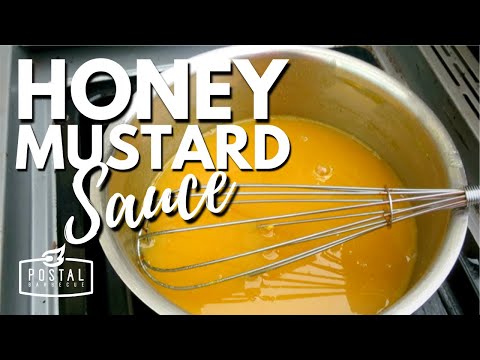
Combine Dijon mustard, brown sugar, and honey in a Mixing Bowl. Whisk until the sugar begins to dissolve and the mixture becomes uniform.Ensure the brown sugar is fully broken down before adding liquids to prevent grainy texture.Step 2
Add apple cider vinegar and whisk steadily to integrate the acid phase. Continue mixing until the sugar is fully dissolved.Use room-temperature vinegar to maintain consistent viscosity and prevent crystallisation.Step 3
Slowly drizzle in vegetable oil while whisking continuously to form a stable emulsion. The mixture should thicken slightly and turn glossy.Introduce oil in a thin stream to allow mustard proteins to bind fat molecules effectively.Step 4
Season with fine salt and black pepper. Whisk briefly to distribute seasoning evenly throughout the emulsion.Adjust seasoning only after full emulsification to avoid masking acidity or sweetness balance.Step 5
Transfer the sauce to a Food Storage Container and refrigerate for at least 30 minutes to allow flavours to integrate and texture to stabilise.Resting time enhances flavour cohesion and thickens the sauce through sugar hydration.
Recommended Equipment

Nutrition Facts
Servings 8
Serving Size 1 portion
- Amount Per Serving
- Calories 73.78kcal
- % Daily Value *
- Total Fat 3.73g6%
- Saturated Fat 0.55g3%
- Sodium 185.63mg8%
- Total Carbohydrate 10.46g4%
- Dietary Fiber 0.38g2%
- Sugars 9.99g
- Protein 0.37g1%
- Calcium 10.71 mg
- Iron 0.21 mg
- Vitamin E 0.31 mg
- Vitamin K 6.68 mcg
- Magnesium 4.71 mg
- Selenium 2.8 mcg
- Manganese 0.06 mg
* Nutrition information is provided as an estimate per serving and may vary depending on the ingredients, brands, substitutions, portion sizes and preparation methods used. Percent Daily Values (%DV) are based on U.S. FDA reference values for a 2,000-calorie diet and are intended as a general guide only. Individual nutritional needs vary. This information is not a substitute for advice from a registered dietitian or other qualified healthcare professional.
Note
Store in an airtight container under refrigeration, ensuring minimal air exposure to preserve flavour integrity and textural balance. The resting phase supports structural stabilisation and moisture redistribution. Cutting or serving too early may compromise internal balance. Spice intensity can deepen over time as volatile compounds settle. Taste and adjust seasoning after resting. In larger batches, maintain even heat distribution and avoid overcrowding during reheating to preserve structural integrity. Acid balance may soften slightly over time; a final adjustment before serving restores clarity.


