
Recipe Snapshot
Recipe at a Glance
Key timing, yield and style details before you start cooking.
Marinade Composition and Protein Absorption Dynamics
The bulgogi marinade relies on a calibrated balance of soy sauce, sugar, pear purée, garlic, and sesame oil to manage both enzymatic tenderisation and flavour penetration. The natural enzymes in pear assist in breaking down muscle fibres without compromising structure, while sugar and soy establish osmotic equilibrium that enhances moisture retention during high-heat cooking. Sesame oil contributes lipid-based flavour binding, moderating salt diffusion and preventing surface dehydration. Uniform slicing of beef across the grain ensures even absorption and consistent texture. The marinade’s pH balance is critical: excessive acidity would denature proteins prematurely, leading to a dry finish, while insufficient salt would limit flavour diffusion.
Heat Regulation and Moisture Retention During Searing
Effective bulgogi execution depends on precise heat staging. The pan must reach high temperature before protein contact to initiate Maillard reactions without steaming. Overcrowding the pan traps moisture, inhibiting browning and producing a boiled texture. Controlled batches maintain surface temperature stability and allow caramelisation of sugars from the marinade. Carryover heat continues mild cooking after removal, so resting briefly before assembly prevents excess moisture release into the rice base. The balance between direct sear and residual heat defines the final texture—tender interior with lacquered exterior glaze.
Transformation Through Cooking and Flavour Concentration
As the beef cooks, sugars and amino acids undergo Maillard reactions, generating complex umami depth. The marinade’s liquid component reduces to a glossy coating, binding aromatics and sesame oil into a cohesive glaze. The starch in the rice base absorbs released juices, integrating savoury-sweet notes into each grain. The transition from raw to cooked state involves controlled evaporation; excessive reduction would yield a sticky, burnt residue, while under-reduction leaves the sauce watery. Properly managed, the result is a balanced concentration of sweetness, salt, and roasted aroma.
Workflow Efficiency and Mise en Place Coordination
Professional execution requires parallel preparation: rice cooking, vegetable slicing, and beef marination can occur concurrently to minimise idle time. Rice should complete just before searing to maintain heat integrity for plating. Vegetables—typically carrots, spinach, and scallions—should be prepped and held dry to prevent dilution of the bowl’s structure. Efficient sequencing reduces thermal lag between components, ensuring cohesive temperature and texture contrast. In service conditions, pre-portioning marinated beef and maintaining a hot pan rotation prevents bottlenecks during plating.
Cultural and Regional Context of Bulgogi
Bulgogi originates from Korean culinary tradition, historically prepared with thinly sliced beef grilled over charcoal. The modern rice bowl adaptation integrates the same marinade principles but shifts the cooking method to pan-searing for accessibility. The dish reflects Korea’s emphasis on balance between savoury, sweet, and aromatic elements, with rice serving as a neutral carrier for concentrated flavours. Regional variations may include different cuts or added vegetables, but the structural logic—marinated protein paired with steamed rice—remains consistent across Korean dining formats.
Recipe Education
Learn the Skills Behind This Recipe
Build confidence with cooking skills, techniques, and tools used in this recipe.
How to Boil Properly
Learn boiling times, temperature control, and how to avoid overcooking.
Recommended for the boil method used in this recipe.
How to Fry Properly
Understand pan heat, oil temperature, and how to get better frying results.
Recommended for the fry method used in this recipe.
Cups to Grams
Convert cup measurements more accurately to improve recipe consistency.
Helpful when using measuring cups during preparation.
Teaspoons to Grams
Use small-measure conversions more accurately in cooking and baking.
Helpful when using measuring spoons during preparation.
Baking Tools Guide
Understand essential tools for mixing, measuring, and preparing recipes.
Helpful when using mixing bowl during preparation.
How to Sauté Properly
Master fast cooking, pan heat, and ingredient timing for better texture.
Recommended for the saute method used in this recipe.


Bulgogi Rice Bowl
Description
The bulgogi marinade relies on a calibrated balance of soy sauce, sugar, pear purée, garlic, and sesame oil to manage both enzymatic tenderisation and flavour penetration. The natural enzymes in pear assist in breaking down muscle fibres without compromising structure, while sugar and soy establish osmotic equilibrium that enhances moisture retention during high-heat cooking. Sesame oil contributes lipid-based flavour binding, moderating salt diffusion and preventing surface dehydration. Uniform slicing of beef across the grain ensures even absorption and consistent texture. The marinade’s pH balance is critical: excessive acidity would denature proteins prematurely, leading to a dry finish, while insufficient salt would limit flavour diffusion.
Ingredients
Ingredients
Instructions
Instructions
Step 1
Combine soy sauce, brown sugar, grated Asian pear, sesame oil, minced garlic, and grated ginger in a Mixing Bowl. Stir until sugar dissolves completely to form a uniform marinade.Ensure sugar is fully dissolved before adding beef to prevent uneven caramelisation during searing.Step 2
Add thinly sliced beef sirloin to the marinade, mix thoroughly to coat all surfaces, and refrigerate for 30 minutes to allow flavour absorption.Avoid marinating beyond 2 hours; excessive enzymatic action from pear can compromise meat texture.Step 3
Heat neutral oil in a Non-stick Skillet over high heat. Sear marinated beef in small batches for 2–3 minutes per side until browned and slightly glazed. Remove and hold warm.Do not overcrowd the skillet; maintain surface temperature to promote Maillard browning instead of steaming.Step 4
Blanch spinach briefly in boiling water, drain through a Colander / Strainer, and squeeze out excess moisture. Season lightly with salt.Immediate cooling after blanching preserves chlorophyll and prevents dull colouration.Step 5
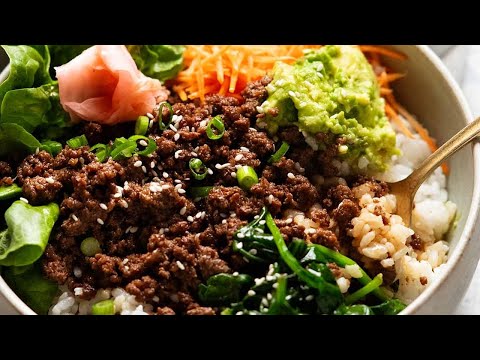
Arrange warm cooked short-grain rice in serving bowls. Top with seared beef, julienned carrot, seasoned spinach, and sliced scallions. Sprinkle toasted sesame seeds to finish.Assemble quickly while beef remains hot to maintain integrated temperature and aroma release.
Recommended Equipment

Nutrition Facts
Servings 2
Serving Size 1 portion
- Amount Per Serving
- Calories 1099.28kcal
- % Daily Value *
- Total Fat 33.14g51%
- Saturated Fat 5.33g27%
- Cholesterol 110mg37%
- Sodium 2196.53mg92%
- Potassium 1457.02mg42%
- Total Carbohydrate 140g47%
- Dietary Fiber 7.79g32%
- Sugars 18.51g
- Protein 59.04g119%
- Vitamin A 6576.28 IU
- Vitamin C 11.98 mg
- Calcium 180.3 mg
- Iron 8.4 mg
- Vitamin E 3.83 mg
- Vitamin K 148.49 mcg
- Thiamin 0.88 mg
- Riboflavin 0.46 mg
- Niacin 21.01 mg
- Vitamin B6 2.25 mg
- Folate 120.15 mcg
- Vitamin B12 2.5 mcg
- Pantothenic Acid 3.76 mg
- Phosphorus 890.32 mg
- Magnesium 309.88 mg
- Zinc 11.91 mg
- Selenium 59.93 mcg
- Copper 0.84 mg
- Manganese 6.23 mg
* Nutrition information is provided as an estimate per serving and may vary depending on the ingredients, brands, substitutions, portion sizes and preparation methods used. Percent Daily Values (%DV) are based on U.S. FDA reference values for a 2,000-calorie diet and are intended as a general guide only. Individual nutritional needs vary. This information is not a substitute for advice from a registered dietitian or other qualified healthcare professional.
Note
For best structural retention, cool uncovered briefly before storage to prevent trapped steam from softening exterior crust or caramelised surfaces. The resting phase supports structural stabilisation and moisture redistribution. Cutting or serving too early may compromise internal balance. Grains and starches continue absorbing moisture after cooking. Adjust liquid slightly when reheating to restore optimal consistency. When reheating crisp components, use dry heat rather than microwave methods to maintain exterior texture. Acid balance may soften slightly over time; a final adjustment before serving restores clarity.


