
Recipe Snapshot
Recipe at a Glance
Key timing, yield and style details before you start cooking.
Fat Distribution and Hydration Control in Biscuit Dough
The biscuit dough relies on cold butter dispersion within low-hydration flour to create steam pockets during baking. The buttermilk introduces both acidity and moisture, activating baking powder for lift while tenderising gluten strands. Maintaining minimal mixing prevents overdevelopment of gluten, preserving flakiness. The fat-to-flour ratio must remain balanced to avoid dense crumb formation. Acidic buttermilk also moderates browning by influencing Maillard reaction rates, ensuring even coloration. Salt levels are calibrated to enhance flavour without tightening the dough structure. Proper temperature staging—keeping butter below 10°C until lamination—ensures defined layers and consistent expansion under oven heat.
Heat Management in Fried Chicken Execution
Frying requires precise oil temperature control to achieve crisp exterior and fully cooked interior without excessive oil absorption. The chicken is first marinated in buttermilk to hydrate muscle fibres and introduce mild acidity, improving tenderness. Dredging in seasoned flour creates a moisture-sealing crust. Oil temperature must stabilise between 170–180°C; below this, crusts absorb oil, above this, coating burns before internal doneness. Carryover cooking continues for several minutes post-fry, so removal at 73°C internal temperature yields optimal juiciness. Consistent batch size prevents temperature drop, maintaining uniform texture and colour across portions.
Structural Transformation During Baking and Frying
Biscuit dough transitions from a cold, laminated matrix to a steam-leavened structure as butter melts and water vaporises. The protein network sets around expanding air pockets, defining crumb stratification. In contrast, chicken coating undergoes starch gelatinisation and protein denaturation, forming a rigid shell that locks moisture inside. The dual process—baking and frying—demands timing coordination so both components reach service temperature simultaneously. The biscuit’s internal crumb should register around 95°C for full starch gelatinisation, while fried chicken rests briefly to allow crust contraction and moisture redistribution before assembly.
Workflow Coordination and Service Efficiency
Professional execution requires sequencing the biscuit bake and chicken fry to minimise idle time. Biscuits can be mixed and portioned ahead, held chilled until oven preheat completion. Chicken marination proceeds concurrently, allowing flavour penetration without delaying service. Frying should occur during the final 10 minutes of biscuit baking to align readiness. Maintaining a clean fry station and preheated oven ensures seamless transition between components. Parallelisation reduces downtime and preserves textural contrast—hot, crisp chicken against freshly baked, tender biscuits. Proper mise en place and temperature monitoring prevent bottlenecks during plating.
Regional and Historical Context of Southern Biscuit-Fried Chicken Pairing
The combination originates from the American South, where buttermilk served as a common tenderising medium due to dairy by-products from butter churning. Biscuits evolved as quick-leavened breads suited to low-protein flours prevalent in the region. Fried chicken, influenced by Scottish frying methods and West African seasoning traditions, became a staple of Southern cuisine. The pairing reflects practical meal assembly—portable, high-energy, and texturally balanced. Modern adaptations maintain the core technique while refining oil quality and flour ratios for consistency. The dish remains a benchmark of Southern culinary engineering rooted in resource efficiency and flavour optimisation.
Recipe Education
Learn the Skills Behind This Recipe
Build confidence with cooking skills, techniques, and tools used in this recipe.
Baking Tools Guide
Understand essential tools for mixing, measuring, and preparing recipes.
Recommended for the bake method used in this recipe.
Oven Temperature Conversions
Understand oven temperatures and how they affect baking and roasting.
Recommended for the bake method used in this recipe.
How to Fry Properly
Understand pan heat, oil temperature, and how to get better frying results.
Recommended for the fry method used in this recipe.
Cookware Guide
Learn which pots and pans work best for frying, sautéing, simmering, and roasting.
Helpful when using frying pan during preparation.


Buttermilk Biscuits with Fried Chicken
Description
The biscuit dough relies on cold butter dispersion within low-hydration flour to create steam pockets during baking. The buttermilk introduces both acidity and moisture, activating baking powder for lift while tenderising gluten strands. Maintaining minimal mixing prevents overdevelopment of gluten, preserving flakiness. The fat-to-flour ratio must remain balanced to avoid dense crumb formation. Acidic buttermilk also moderates browning by influencing Maillard reaction rates, ensuring even coloration. Salt levels are calibrated to enhance flavour without tightening the dough structure. Proper temperature staging—keeping butter below 10°C until lamination—ensures defined layers and consistent expansion under oven heat.
Ingredients
Ingredients
Instructions
Instructions
Step 1
Combine flour, baking powder, and salt in a Mixing Bowl. Cut in cold butter using a Pastry Cutter until coarse crumbs form. Add 150 ml buttermilk and mix just until dough comes together.Keep butter pieces visible in the dough; they create steam pockets for flakiness.Step 2
Turn dough onto a lightly floured Cutting Board. Fold and press gently 3–4 times to build layers. Roll to 2.5 cm thickness with a Rolling Pin and cut rounds using a Pastry Ring Set.Avoid overworking; excess handling warms butter and reduces lift.Step 3
Place biscuits on a Baking Sheet lined with Parchment Paper. Bake at 220°C for 12–15 minutes until golden brown. Transfer to a Cooling Rack.Rotate the Baking Sheet halfway through baking to ensure even browning.Step 4
Marinate chicken thighs in remaining 30 ml buttermilk for 30 minutes. Mix plain flour, paprika, salt, and black pepper in a Mixing Bowl for dredging.Marination time allows acid to tenderise muscle fibres without breaking texture.Step 5
Heat vegetable oil in a Frying Pan to 175°C. Dredge chicken in seasoned flour, shake off excess, and fry 4–5 minutes per side until internal temperature reaches 73°C. Drain on a Sheet Rack.Monitor oil temperature with a Thermometer(Meat) to prevent soggy crusts.Step 6
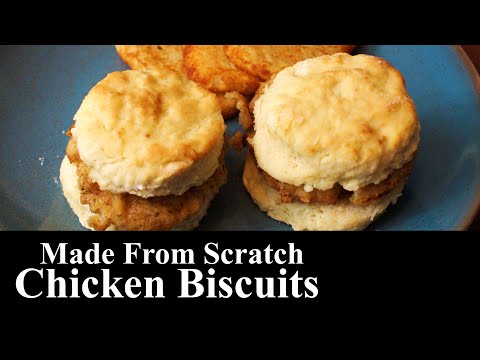
Split warm biscuits and layer with fried chicken. Optionally drizzle honey before serving.Rest fried chicken 3 minutes before assembly to stabilise crust and moisture.
Recommended Equipment

Nutrition Facts
Servings 4
Serving Size 1 portion
- Amount Per Serving
- Calories 1928.48kcal
- % Daily Value *
- Total Fat 166.91g257%
- Saturated Fat 40.72g204%
- Cholesterol 216.52mg73%
- Sodium 1209.45mg51%
- Potassium 496.96mg15%
- Total Carbohydrate 74.93g25%
- Dietary Fiber 2.77g12%
- Sugars 6.67g
- Protein 35.29g71%
- Vitamin A 1314.16 IU
- Calcium 236.43 mg
- Iron 5.62 mg
- Vitamin D 1.19 mcg
- Vitamin E 10.74 mg
- Vitamin K 218.88 mcg
- Thiamin 0.82 mg
- Riboflavin 0.73 mg
- Niacin 12.27 mg
- Vitamin B6 0.59 mg
- Folate 168.36 mcg
- Vitamin B12 1.22 mcg
- Pantothenic Acid 2.14 mg
- Phosphorus 435.62 mg
- Magnesium 55.9 mg
- Zinc 2.74 mg
- Selenium 59.82 mcg
- Copper 0.23 mg
- Manganese 0.71 mg
* Nutrition information is provided as an estimate per serving and may vary depending on the ingredients, brands, substitutions, portion sizes and preparation methods used. Percent Daily Values (%DV) are based on U.S. FDA reference values for a 2,000-calorie diet and are intended as a general guide only. Individual nutritional needs vary. This information is not a substitute for advice from a registered dietitian or other qualified healthcare professional.
Note
Allow the dish to cool gradually before sealing. Rapid temperature shifts can create condensation, weakening texture and diluting surface flavour concentration. The resting phase supports structural stabilisation and moisture redistribution. Cutting or serving too early may compromise internal balance. Dairy-based elements may thicken further upon cooling. Reheat gently to prevent separation or grainy texture. When reheating crisp components, use dry heat rather than microwave methods to maintain exterior texture. Acid balance may soften slightly over time; a final adjustment before serving restores clarity.


