
Recipe Snapshot
Recipe at a Glance
Key timing, yield and style details before you start cooking.
Fat Integration and Starch Surface Behaviour
New potatoes contain a higher moisture content and thinner skins than mature varieties, influencing how butter adheres and coats the surface. The starch layer released during boiling forms a microfilm that binds fat effectively once drained and agitated. Salt concentration in the water must be calibrated to penetrate the potato without causing skin rupture. Butter’s milk solids brown rapidly if exposed to direct heat, so emulsification occurs off the boil, allowing the fat to cling evenly. The balance between residual surface moisture and melted butter determines gloss and mouthfeel, making timing between draining and coating critical.
Thermal Control and Moisture Retention
Boiling new potatoes requires maintaining a steady simmer rather than a rolling boil to prevent skin splitting and uneven cooking. Starting in cold, salted water ensures gradual internal temperature rise, promoting uniform gelatinisation of starch. Overheating leads to waterlogging and loss of structure. After draining, residual steam must evaporate briefly before butter addition to avoid emulsification breakdown. Carryover heat from the potatoes melts butter efficiently without reheating, preserving the emulsion’s stability. Monitoring evaporation and timing the butter incorporation phase ensures a cohesive, glossy coating rather than greasy separation.
Textural Transformation and Flavour Layering
During cooking, cell walls soften and pectin weakens, yielding a tender yet intact texture. The butter phase introduces fat-soluble flavour compounds that absorb into the outer layer, while chopped parsley contributes volatile freshness and chlorophyll brightness. The contrast between the creamy fat coating and the herbaceous lift defines the dish’s sensory balance. Proper seasoning at the end, rather than during boiling, prevents mineral leaching and maintains clarity of flavour. The final toss integrates all components, ensuring even distribution of butter and herbs without bruising the parsley.
Workflow Efficiency and Service Readiness
For service, potatoes can be boiled ahead and held warm in their skins, then finished with butter and parsley to order. This separation of phases prevents over-softening and maintains surface integrity. Mise en place includes pre-chopped herbs and portioned butter for rapid finishing. Avoid holding the buttered potatoes under heat lamps, as the emulsion will break and herbs will darken. In high-volume operations, finishing in batches ensures consistent temperature and coating quality. The workflow prioritises timing precision and minimal holding to preserve both texture and colour.
Regional Context and Culinary Lineage
This preparation aligns with Northern and Western European culinary traditions, particularly British and French, where new-season potatoes are valued for their delicate skins and sweet flavour. The technique evolved from simple boiled potato service, refined through the addition of butter and herbs as seasonal garnishes. Parsley, a common finishing herb in classical French cuisine, provides freshness without masking the potato’s natural sweetness. The dish’s simplicity reflects regional emphasis on ingredient quality and seasonality, forming a foundational side in both rustic and formal contexts.
Recipe Education
Learn the Skills Behind This Recipe
Build confidence with cooking skills, techniques, and tools used in this recipe.
How to Boil Properly
Learn boiling times, temperature control, and how to avoid overcooking.
Recommended for the boil method used in this recipe.
Cookware Guide
Learn which pots and pans work best for frying, sautéing, simmering, and roasting.
Helpful when using saucepan during preparation.
Cooking Basics
Build confidence with core skills and beginner-friendly cooking techniques.
Supports the beginner skill level of this recipe.


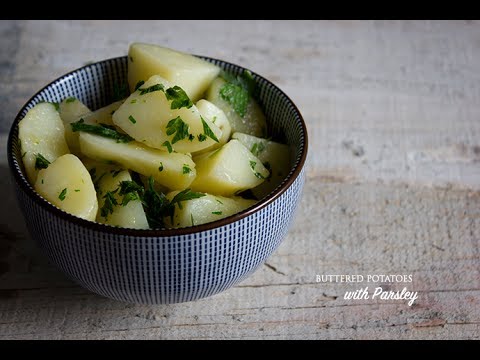
Buttery New Potatoes with Parsley
Description
New potatoes contain a higher moisture content and thinner skins than mature varieties, influencing how butter adheres and coats the surface. The starch layer released during boiling forms a microfilm that binds fat effectively once drained and agitated. Salt concentration in the water must be calibrated to penetrate the potato without causing skin rupture. Butter’s milk solids brown rapidly if exposed to direct heat, so emulsification occurs off the boil, allowing the fat to cling evenly. The balance between residual surface moisture and melted butter determines gloss and mouthfeel, making timing between draining and coating critical.
Ingredients
Ingredients
Instructions
Instructions
Step 1
Place the new potatoes in a Saucepan and cover with cold water. Add the salt and bring to a gentle simmer over medium heat.Starting in cold water ensures even internal cooking and prevents skin rupture from sudden temperature shock.Step 2
Simmer the potatoes for 15–20 minutes until tender when pierced with a Paring Knife but still structurally intact.Monitor simmer intensity; excessive bubbling agitates skins and causes surface tearing.Step 3
Drain the potatoes in a Colander / Strainer and allow steam to escape for 2–3 minutes to remove excess surface moisture.Allowing brief evaporation prevents butter from separating when introduced to residual water.Step 4
Return the potatoes to the warm Saucepan off the heat. Add the unsalted butter and olive oil, swirling gently until evenly coated.Use residual heat only; direct flame will brown milk solids and compromise the butter’s smooth coating.Step 5
Season with fine sea salt and black pepper, then fold through the chopped parsley using a Silicone Spatula until evenly distributed.Add parsley last to preserve colour and volatile aroma compounds; overmixing bruises the leaves.Step 6
Hold covered for up to 5 minutes before service to allow flavours to integrate and butter to set lightly on the surface.Short resting stabilises the emulsion film, improving gloss and preventing pooling at the base of the pan.
Recommended Equipment

Nutrition Facts
Servings 4
Serving Size 1 portion
- Amount Per Serving
- Calories 247.85kcal
- % Daily Value *
- Total Fat 10.61g17%
- Saturated Fat 5.51g28%
- Cholesterol 21.5mg8%
- Sodium 693.56mg29%
- Potassium 868.66mg25%
- Total Carbohydrate 35.34g12%
- Dietary Fiber 4.59g19%
- Sugars 1.6g
- Protein 4.26g9%
- Vitamin A 571.16 IU
- Vitamin C 44.39 mg
- Calcium 33.13 mg
- Iron 1.84 mg
- Vitamin E 0.61 mg
- Vitamin K 67.78 mcg
- Thiamin 0.16 mg
- Riboflavin 0.07 mg
- Niacin 2.16 mg
- Vitamin B6 0.59 mg
- Folate 38.04 mcg
- Pantothenic Acid 0.62 mg
- Phosphorus 118.97 mg
- Magnesium 48.52 mg
- Zinc 0.63 mg
- Selenium 0.72 mcg
- Copper 0.23 mg
- Manganese 0.35 mg
* Nutrition information is provided as an estimate per serving and may vary depending on the ingredients, brands, substitutions, portion sizes and preparation methods used. Percent Daily Values (%DV) are based on U.S. FDA reference values for a 2,000-calorie diet and are intended as a general guide only. Individual nutritional needs vary. This information is not a substitute for advice from a registered dietitian or other qualified healthcare professional.
Note
Allow the dish to cool gradually before sealing. Rapid temperature shifts can create condensation, weakening texture and diluting surface flavour concentration. The resting phase supports structural stabilisation and moisture redistribution. Cutting or serving too early may compromise internal balance. Spice intensity can deepen over time as volatile compounds settle. Taste and adjust seasoning after resting. Slow-cooked preparations often improve after several hours or overnight refrigeration as aromatic compounds integrate more fully. Acid balance may soften slightly over time; a final adjustment before serving restores clarity.


