
Recipe Snapshot
Recipe at a Glance
Key timing, yield and style details before you start cooking.
Fat and Starch Integration for Structural Body
The chowder’s viscosity depends on the emulsification between rendered fat from butter and the starch in the flour. This roux base stabilises the liquid phase, preventing separation once dairy is introduced. Crawfish tails contribute protein and natural gelatin, which reinforce mouthfeel. The inclusion of potatoes provides secondary starch release during simmering, thickening the broth without excessive flour. Acid from tomatoes and seasoning balance the fat load, ensuring the final texture remains creamy yet not greasy. Salt calibration must occur after reduction to avoid over-seasoning as the liquid concentrates.
Heat Management and Sequential Cooking Logic
Temperature staging is critical: aromatics must sweat at medium heat to extract sweetness without browning, while the roux develops a light golden tone before liquid addition. High heat at this stage risks scorching the flour and introducing bitterness. Once stock and cream are combined, simmering should remain gentle to prevent curdling and maintain emulsion stability. Crawfish tails are added late in the process to avoid overcooking, as their delicate proteins toughen quickly under prolonged heat exposure. Controlled simmering ensures even starch gelatinisation and consistent texture throughout the chowder.
Transformation Through Reduction and Protein Integration
During simmering, the chowder transitions from a loose suspension to a cohesive emulsion. The reduction phase concentrates aromatics, while the starch network traps fat droplets, yielding a smooth, glossy finish. Crawfish proteins denature and firm slightly, releasing subtle sweetness that integrates with the smoky spice base. The final texture should coat the spoon lightly without clumping. Over-reduction leads to heaviness and salt amplification, while under-reduction leaves the broth thin and underdeveloped. Proper timing ensures the chowder achieves balanced viscosity and flavour depth characteristic of Cajun-style soups.
Workflow Efficiency and Mise en Place Coordination
Efficient execution relies on staging ingredients by cooking order: aromatics pre-chopped, stock preheated, and dairy tempered. The roux demands uninterrupted attention, so all components must be within reach before heat application. Parallel tasks such as dicing potatoes and measuring spices can occur during the initial sweat phase. Maintaining a clean station prevents cross-contamination between seafood and vegetables. For service environments, the chowder base can be held warm below simmering temperature, with crawfish folded in à la minute to preserve texture and colour integrity.
Regional Technique and Cultural Lineage
Cajun crawfish chowder originates from Louisiana’s bayou cooking traditions, where shellfish abundance and French culinary influence intersect. The roux-based thickening method reflects French technique adapted to local ingredients, while the spice blend—paprika, cayenne, and thyme—embodies Cajun seasoning profiles. The use of crawfish tail meat evolved from regional crawfish boils, utilising leftovers in secondary dishes. Modern adaptations maintain the same structural logic but often incorporate cream for a smoother finish. The dish exemplifies the Cajun approach to resourceful, flavour-dense cooking grounded in regional produce and layered spice control.
Recipe Education
Learn the Skills Behind This Recipe
Build confidence with cooking skills, techniques, and tools used in this recipe.
How to Sauté Properly
Master fast cooking, pan heat, and ingredient timing for better texture.
Recommended for the saute method used in this recipe.
Simmer vs Boil
Learn when to simmer, when to boil, and how each affects recipe results.
Recommended for the simmer method used in this recipe.
Cookware Guide
Learn which pots and pans work best for frying, sautéing, simmering, and roasting.
Helpful when using dutch oven during preparation.
Cups to Grams
Convert cup measurements more accurately to improve recipe consistency.
Helpful when using measuring cups during preparation.
Teaspoons to Grams
Use small-measure conversions more accurately in cooking and baking.
Helpful when using measuring spoons during preparation.
Cooking Basics
Build safer knife preparation, heat control, timing, and everyday kitchen confidence.
Helpful when using chef knife during preparation.


Cajun Crawfish Chowder
Description
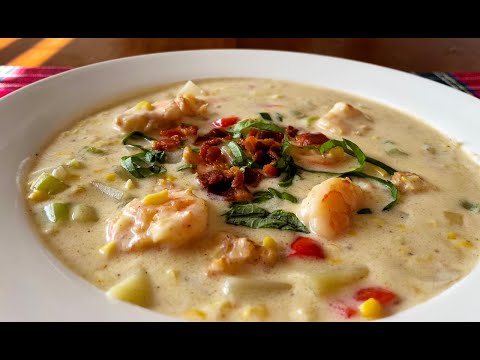
The chowder’s viscosity depends on the emulsification between rendered fat from butter and the starch in the flour. This roux base stabilises the liquid phase, preventing separation once dairy is introduced. Crawfish tails contribute protein and natural gelatin, which reinforce mouthfeel. The inclusion of potatoes provides secondary starch release during simmering, thickening the broth without excessive flour. Acid from tomatoes and seasoning balance the fat load, ensuring the final texture remains creamy yet not greasy. Salt calibration must occur after reduction to avoid over-seasoning as the liquid concentrates.
Ingredients
Ingredients
Instructions
Instructions
Step 1
Heat vegetable oil in a Dutch Oven over medium heat. Add onion, bell pepper, and celery. Sweat until translucent, about 5 minutes. Add garlic and cook 1 minute more without browning.Maintain medium heat to prevent caramelisation; sweating preserves sweetness and base clarity.Step 2
Add butter and allow it to melt fully. Stir in flour to form a roux. Cook, stirring constantly with a Wooden Spoon, until light golden and nutty, approximately 3–4 minutes.Continuous stirring prevents hot spots; a pale roux provides thickening without masking seafood flavour.Step 3
Gradually whisk in warm seafood stock using a Whisk to avoid lumps. Bring to a gentle simmer and add diced potatoes and tomatoes. Cook until potatoes are tender, about 15 minutes.Introduce stock slowly to maintain emulsion stability and prevent flour clumping.Step 4
Add paprika, cayenne pepper, thyme, salt, and black pepper. Stir to distribute evenly. Lower heat and add heavy cream, stirring constantly to integrate without curdling.Tempering cream before addition prevents thermal shock and maintains smooth consistency.Step 5
Fold in crawfish tails and simmer gently for 5 minutes until heated through. Remove from heat, adjust seasoning, and finish with lemon juice. Garnish with chopped parsley before serving.Add crawfish at the end to preserve tenderness; residual heat completes cooking without toughness.
Recommended Equipment

Nutrition Facts
Servings 4
Serving Size 1 portion
- Amount Per Serving
- Calories 444.55kcal
- % Daily Value *
- Total Fat 35.65g55%
- Saturated Fat 20.43g103%
- Cholesterol 108.99mg37%
- Sodium 1045.48mg44%
- Potassium 666.67mg20%
- Total Carbohydrate 23.9g8%
- Dietary Fiber 3.45g14%
- Sugars 5.36g
- Protein 9.58g20%
- Vitamin A 2146.81 IU
- Vitamin C 44.63 mg
- Calcium 130.84 mg
- Iron 2.22 mg
- Vitamin D 1.15 mcg
- Vitamin E 1.88 mg
- Vitamin K 58.68 mcg
- Thiamin 0.17 mg
- Riboflavin 0.27 mg
- Niacin 3.5 mg
- Vitamin B6 0.38 mg
- Folate 55.14 mcg
- Vitamin B12 0.62 mcg
- Pantothenic Acid 0.59 mg
- Phosphorus 174.95 mg
- Magnesium 37.72 mg
- Zinc 0.91 mg
- Selenium 10.21 mcg
- Copper 0.28 mg
- Manganese 0.38 mg
* Nutrition information is provided as an estimate per serving and may vary depending on the ingredients, brands, substitutions, portion sizes and preparation methods used. Percent Daily Values (%DV) are based on U.S. FDA reference values for a 2,000-calorie diet and are intended as a general guide only. Individual nutritional needs vary. This information is not a substitute for advice from a registered dietitian or other qualified healthcare professional.
Note
Allow the dish to cool gradually before sealing. Rapid temperature shifts can create condensation, weakening texture and diluting surface flavour concentration. The resting phase supports structural stabilisation and moisture redistribution. Cutting or serving too early may compromise internal balance. Dairy-based elements may thicken further upon cooling. Reheat gently to prevent separation or grainy texture. Slow-cooked preparations often improve after several hours or overnight refrigeration as aromatic compounds integrate more fully. Acid balance may soften slightly over time; a final adjustment before serving restores clarity.


