
Recipe Snapshot
Recipe at a Glance
Key timing, yield and style details before you start cooking.
Protein Structure and Ink Integration
Squid muscle contains fine connective tissue that tightens rapidly under heat, requiring controlled cooking to maintain tenderness. The ink introduces both pigment and glutamate-driven umami depth, binding with the squid’s natural gelatin to form a cohesive sauce. Tomato and wine acids balance marine salinity, while onion and garlic provide sweetness and aromatic base. The ink’s emulsifying properties stabilize the sauce when dispersed into the reduction phase, preventing separation. Proper sequencing—sauté aromatics, deglaze, then incorporate ink—ensures the sauce develops depth without bitterness or coagulation.
Heat Management and Moisture Control
The dish relies on precise temperature staging: initial high heat for aromatic development, followed by moderate simmering to tenderize the squid without contraction. Excessive heat causes protein tightening and ink bitterness. Maintaining a gentle simmer around 85–90°C allows collagen softening and even flavour diffusion. Evaporation must be balanced; too rapid reduction thickens prematurely, while insufficient reduction leaves the sauce watery. Controlled lid use—partially covered—manages moisture retention and concentration simultaneously, ensuring a glossy, cohesive sauce texture.
Transformation Through Reduction and Emulsification
During simmering, the sauce transitions from a thin broth to a dense emulsion as ink particles suspend in the reduced liquid. Tomato paste contributes pectin and natural sugars that caramelize slightly, deepening colour and flavour. The squid releases gelatin, which integrates with the ink to create a smooth, velvety mouthfeel. Proper reduction time aligns with squid tenderness; over-reduction risks salt concentration and sauce separation. The final texture should coat the back of a spoon, indicating correct emulsification and reduction balance.
Workflow Efficiency and Sequencing Logic
Mise en place is critical: squid cleaned and portioned, ink diluted, and aromatics prepped before heat application. Aromatic sautéing and deglazing occur sequentially without interruption to prevent scorching. Parallel tasks—such as preparing the ink mixture while onions soften—reduce idle time. Deglazing with wine must precede ink addition to avoid curdling. The workflow follows a linear reduction model: build base, introduce protein, integrate ink, then simmer to finish. This sequencing ensures consistent flavour layering and structural stability.
Regional Technique and Culinary Lineage
Calamares en su Tinta originates from Basque and broader Spanish coastal traditions, where squid ink was historically used to extend and enrich seafood stews. The technique evolved from fishermen’s necessity to utilize all parts of the catch, transforming ink into a flavouring and colouring agent. Modern versions maintain the same reduction-based structure but refine texture control and seasoning precision. The dish exemplifies Iberian reduction logic—balancing marine intensity with aromatic sweetness and acidity—while preserving its regional identity through ink-based emulsification.
Recipe Education
Learn the Skills Behind This Recipe
Build confidence with cooking skills, techniques, and tools used in this recipe.
How to Sauté Properly
Master fast cooking, pan heat, and ingredient timing for better texture.
Recommended for the saute method used in this recipe.
Simmer vs Boil
Learn when to simmer, when to boil, and how each affects recipe results.
Recommended for the simmer method used in this recipe.
Cookware Guide
Learn which pots and pans work best for frying, sautéing, simmering, and roasting.
Helpful when using frying pan during preparation.
Cups to Grams
Convert cup measurements more accurately to improve recipe consistency.
Helpful when using measuring cups during preparation.
Teaspoons to Grams
Use small-measure conversions more accurately in cooking and baking.
Helpful when using measuring spoons during preparation.
Baking Tools Guide
Understand essential tools for mixing, measuring, and preparing recipes.
Helpful when using mixing bowl during preparation.


Calamares en su Tinta (Squid in Black Ink Sauce)
Description
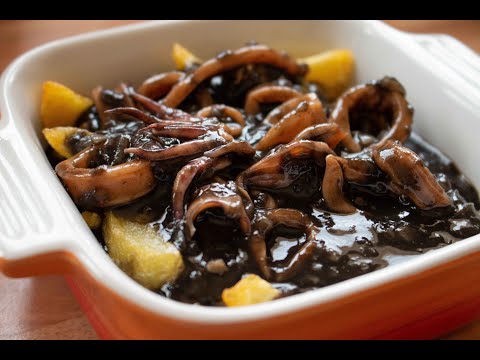
Squid muscle contains fine connective tissue that tightens rapidly under heat, requiring controlled cooking to maintain tenderness. The ink introduces both pigment and glutamate-driven umami depth, binding with the squid’s natural gelatin to form a cohesive sauce. Tomato and wine acids balance marine salinity, while onion and garlic provide sweetness and aromatic base. The ink’s emulsifying properties stabilize the sauce when dispersed into the reduction phase, preventing separation. Proper sequencing—sauté aromatics, deglaze, then incorporate ink—ensures the sauce develops depth without bitterness or coagulation.
Ingredients
Ingredients
Instructions
Instructions
Step 1
Heat olive oil in a Saute Pan over medium heat. Add chopped onion and cook until translucent, about 6 minutes. Add minced garlic and cook 1 minute more without browning.Maintain moderate heat to prevent garlic from turning bitter; translucent onions indicate correct moisture release.Step 2
Stir in tomato paste and cook for 2 minutes to caramelize slightly. Deglaze with white wine, scraping the base with a Wooden Spoon to lift any fond.Allow the wine to reduce by half before proceeding; this concentrates acidity and removes raw alcohol notes.Step 3
Add squid rings and tentacles to the pan. Sauté for 2–3 minutes until opaque edges appear. Pour in warm fish stock and bring to a gentle simmer.Avoid prolonged high heat at this stage; squid toughens quickly if boiled vigorously.Step 4
Stir in diluted squid ink, salt, and black pepper. Reduce heat to low and simmer uncovered for 25–30 minutes, stirring occasionally until sauce thickens and squid is tender.Monitor sauce viscosity; it should coat the back of a spoon without separating—adjust with a splash of stock if over-reduced.Step 5
Remove from heat and let rest for 5 minutes to stabilize the emulsion. Garnish with chopped parsley before serving.Resting allows residual heat to equalize and sauce particles to settle, improving gloss and flavour integration.
Recommended Equipment

Nutrition Facts
Servings 4
Serving Size 1 portion
- Amount Per Serving
- Calories 295.88kcal
- % Daily Value *
- Total Fat 10.22g16%
- Saturated Fat 1.79g9%
- Cholesterol 466mg156%
- Sodium 909.44mg38%
- Potassium 659.28mg19%
- Total Carbohydrate 11.4g4%
- Dietary Fiber 0.74g3%
- Sugars 2g
- Protein 33.18g67%
- Vitamin A 210.98 IU
- Vitamin C 14.04 mg
- Calcium 98.39 mg
- Iron 1.9 mg
- Vitamin E 3.69 mg
- Vitamin K 20.82 mcg
- Thiamin 0.06 mg
- Riboflavin 0.86 mg
- Niacin 5.45 mg
- Vitamin B6 0.19 mg
- Folate 20.05 mcg
- Vitamin B12 2.66 mcg
- Pantothenic Acid 1.07 mg
- Phosphorus 480.24 mg
- Magnesium 74.69 mg
- Zinc 3.26 mg
- Selenium 90.65 mcg
- Copper 3.85 mg
- Manganese 0.19 mg
* Nutrition information is provided as an estimate per serving and may vary depending on the ingredients, brands, substitutions, portion sizes and preparation methods used. Percent Daily Values (%DV) are based on U.S. FDA reference values for a 2,000-calorie diet and are intended as a general guide only. Individual nutritional needs vary. This information is not a substitute for advice from a registered dietitian or other qualified healthcare professional.
Note
Allow the dish to cool gradually before sealing. Rapid temperature shifts can create condensation, weakening texture and diluting surface flavour concentration. The resting phase supports structural stabilisation and moisture redistribution. Cutting or serving too early may compromise internal balance. Spice intensity can deepen over time as volatile compounds settle. Taste and adjust seasoning after resting. Slow-cooked preparations often improve after several hours or overnight refrigeration as aromatic compounds integrate more fully. Acid balance may soften slightly over time; a final adjustment before serving restores clarity.


