
Recipe Snapshot
Recipe at a Glance
Key timing, yield and style details before you start cooking.
Ingredient Matrix and Structural Balance
This dish relies on the interaction between starch from the pasta, protein from the chicken, and fat from the cream and cheese to form a cohesive baked structure. The pasta’s surface starch binds with the emulsified fat in the Alfredo sauce, preventing separation during baking. Proper hydration of the pasta before assembly ensures it absorbs sauce without drying out. Salt and acid balance are critical: salt enhances protein flavour, while a small acid component from Parmesan stabilises the emulsion. Butter and cream form the fat base, with cheese providing both thickening and umami reinforcement. The ratio of sauce to pasta must remain slightly higher than for a plated pasta to compensate for oven evaporation.
Thermal Control and Moisture Management
Temperature staging is essential to maintain sauce integrity and avoid curdling. The sauce must be built over medium heat to allow gradual emulsification of butter and cream before cheese incorporation. Overheating risks fat separation and grainy texture. When baking, the oven’s dry heat drives surface browning through Maillard reactions in the cheese layer while internal moisture stabilises the pasta. Covering during the first half of baking prevents premature crust formation, ensuring even internal heating. Carryover heat continues to thicken the sauce post-bake, so resting before serving is mandatory to allow the matrix to set without excess fluid release.
Transformation Through Cooking and Textural Development
During baking, the sauce transitions from a fluid emulsion to a semi-set coating as proteins denature and fats integrate with starch. The chicken’s surface proteins firm while internal moisture remains trapped by the sauce layer. The top cheese layer undergoes controlled browning, forming a crisp contrast to the creamy interior. Pasta absorbs residual sauce, achieving a cohesive yet distinct bite. The transformation depends on precise timing: underbaking yields a loose structure, while overbaking causes oil separation and rubbery protein. The final texture should present a layered gradient—creamy base, tender pasta, and lightly caramelised top.
Workflow Efficiency and Assembly Sequencing
Efficient mise en place reduces downtime between sauce preparation and assembly. Pre-cooking pasta to slightly under al dente prevents over-softening during baking. Chicken should be seared and rested before slicing to maintain moisture. Sauce preparation can proceed while pasta drains, ensuring minimal cooling before combination. Layering should be executed rapidly to preserve sauce fluidity for even coating. Using pre-grated cheese accelerates assembly but must be balanced against potential anti-caking agents that inhibit melt quality. Baking in a preheated oven ensures immediate thermal engagement, avoiding delayed set and uneven browning.
Cultural and Technical Lineage
The Chicken Alfredo Pasta Bake represents an American adaptation of Italian Alfredo principles, merging the Roman butter-and-Parmesan emulsion with North American casserole methodology. Traditional Fettuccine Alfredo relies on stovetop emulsification, but the baked variant evolved to suit family-style service and make-ahead practicality. The inclusion of chicken and baked cheese reflects mid-20th-century American dining trends prioritising protein integration and oven-finished convenience. While not a classical Italian preparation, it retains the core technique of dairy-based emulsification and controlled starch binding, demonstrating the transposition of Italian sauce logic into a baked format.
Recipe Education
Learn the Skills Behind This Recipe
Build confidence with cooking skills, techniques, and tools used in this recipe.
Cookware Guide
Learn which pots and pans work best for frying, sautéing, simmering, and roasting.
Helpful when using frying pan during preparation.
Baking Tools Guide
Understand essential tools for mixing, measuring, and preparing recipes.
Recommended for the bake method used in this recipe.
How to Boil Properly
Learn boiling times, temperature control, and how to avoid overcooking.
Recommended for the boil method used in this recipe.
How to Sauté Properly
Master fast cooking, pan heat, and ingredient timing for better texture.
Recommended for the saute method used in this recipe.
Oven Temperature Conversions
Understand oven temperatures and how they affect baking and roasting.
Recommended for the bake method used in this recipe.


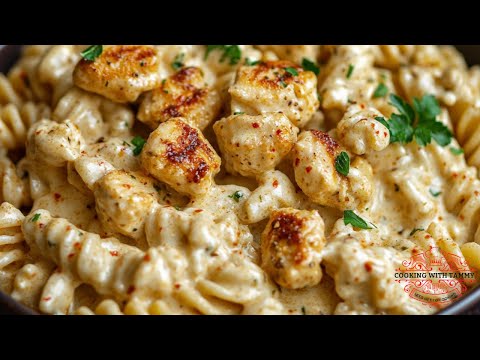
Chicken Alfredo Pasta Bake
Description
This dish relies on the interaction between starch from the pasta, protein from the chicken, and fat from the cream and cheese to form a cohesive baked structure. The pasta’s surface starch binds with the emulsified fat in the Alfredo sauce, preventing separation during baking. Proper hydration of the pasta before assembly ensures it absorbs sauce without drying out. Salt and acid balance are critical: salt enhances protein flavour, while a small acid component from Parmesan stabilises the emulsion. Butter and cream form the fat base, with cheese providing both thickening and umami reinforcement. The ratio of sauce to pasta must remain slightly higher than for a plated pasta to compensate for oven evaporation.
Ingredients
Ingredients
Instructions
Instructions
Step 1
Preheat the oven to 190°C. Bring a large Stock Pot of salted water to a boil and cook the penne pasta until just under al dente. Drain using a Colander / Strainer and set aside.Stop cooking the pasta 1–2 minutes early to prevent over-softening during baking.Step 2
Heat olive oil in a Frying Pan over medium-high heat. Sear the chicken strips until golden on both sides and cooked through, about 6–8 minutes total. Remove and rest briefly before slicing into bite-sized pieces.Allow the chicken to rest for a few minutes before slicing to retain internal moisture.Step 3
In a Saucepan, melt butter over medium heat. Add minced garlic and sauté for 30 seconds until aromatic. Pour in heavy cream and milk, stirring continuously with a Whisk until the mixture begins to steam.Keep the heat moderate to avoid scorching the dairy and splitting the emulsion.Step 4
Gradually add grated Parmesan cheese while whisking until fully melted and the sauce thickens slightly. Season with salt and black pepper. Remove from heat once smooth and cohesive.Add cheese in small increments to maintain a stable emulsion and prevent clumping.Step 5
Combine the cooked pasta, sliced chicken, and Alfredo sauce in a Mixing Bowl. Toss until evenly coated, then transfer to a Casserole Dish. Top with shredded mozzarella cheese.Mix while the sauce is still warm to ensure even coating and absorption by the pasta.Step 6
Cover the dish with Tin Foil and bake for 15 minutes. Remove the foil and continue baking for another 10 minutes until the top is golden and bubbling. Rest for 5 minutes before garnishing with chopped parsley.Resting allows the sauce to set and prevents excess liquid from pooling when served.
Recommended Equipment

Nutrition Facts
Servings 4
Serving Size 1 portion
- Amount Per Serving
- Calories 937.62kcal
- % Daily Value *
- Total Fat 55.65g86%
- Saturated Fat 30g150%
- Cholesterol 201.82mg68%
- Sodium 1211.11mg51%
- Potassium 704.6mg21%
- Total Carbohydrate 61.51g21%
- Dietary Fiber 2.54g11%
- Sugars 5.9g
- Protein 46.95g94%
- Vitamin A 1775.07 IU
- Vitamin C 3.62 mg
- Calcium 474.03 mg
- Iron 1.86 mg
- Vitamin D 1.9 mcg
- Vitamin E 2.25 mg
- Vitamin K 24.45 mcg
- Thiamin 0.18 mg
- Riboflavin 0.47 mg
- Niacin 11.89 mg
- Vitamin B6 0.95 mg
- Folate 25.45 mcg
- Vitamin B12 1.28 mcg
- Pantothenic Acid 2.19 mg
- Phosphorus 655.04 mg
- Magnesium 89.56 mg
- Zinc 3.25 mg
- Selenium 91.31 mcg
- Copper 0.27 mg
- Manganese 0.79 mg
* Nutrition information is provided as an estimate per serving and may vary depending on the ingredients, brands, substitutions, portion sizes and preparation methods used. Percent Daily Values (%DV) are based on U.S. FDA reference values for a 2,000-calorie diet and are intended as a general guide only. Individual nutritional needs vary. This information is not a substitute for advice from a registered dietitian or other qualified healthcare professional.
Note
Allow the dish to cool gradually before sealing. Rapid temperature shifts can create condensation, weakening texture and diluting surface flavour concentration. The resting phase supports structural stabilisation and moisture redistribution. Cutting or serving too early may compromise internal balance. Dairy-based elements may thicken further upon cooling. Reheat gently to prevent separation or grainy texture. Slow-cooked preparations often improve after several hours or overnight refrigeration as aromatic compounds integrate more fully. When reheating crisp components, use dry heat rather than microwave methods to maintain exterior texture. Texture refinement often occurs naturally during resting due to internal moisture redistribution.


