
Recipe Snapshot
Recipe at a Glance
Key timing, yield and style details before you start cooking.
Fat-to-Flour Ratio and Stock Integration
The structural base of chicken gravy depends on the controlled ratio between rendered chicken fat and flour. Equal mass ensures proper starch gelatinisation without raw flour flavour or greasy separation. The fat coats flour granules, moderating hydration when stock is introduced. Gradual liquid incorporation prevents lumping and allows full starch expansion. Salt and acid levels must be balanced against the stock’s sodium and collagen content to avoid over-seasoning or dullness. Using a well-reduced chicken stock provides body through natural gelatin, reducing the need for excessive roux thickening and maintaining a clean, glossy finish.
Temperature Staging and Reduction Control
Heat management defines the gravy’s texture and sheen. The roux must be cooked over medium heat until pale golden to eliminate raw starch taste while retaining thickening power. Introducing warm stock prevents thermal shock and maintains emulsification stability. Once combined, simmering rather than boiling allows controlled reduction and even thickening. Excessive heat can cause protein coagulation from the stock, resulting in grainy texture. Continuous whisking ensures uniform viscosity and prevents scorching at the pan base. Final reduction should target a nappe consistency that coats the back of a spoon without separation.
Transformation Through Cooking and Emulsification Stability
During simmering, starch granules swell and gelatinise, binding the fat and aqueous phases into a stable emulsion. The gelatin from the stock reinforces viscosity and mouthfeel. As water evaporates, flavour concentration intensifies, integrating roasted notes from the pan drippings. Properly strained gravy achieves a smooth, velvety texture free from particulate residue. The final seasoning adjustment must occur after reduction to account for concentration effects. A small addition of butter at the end enhances gloss and rounds the flavour through emulsified fat dispersion.
Workflow Efficiency and Common Error Correction
Efficient mise en place involves pre-measuring roux components and preheating stock to streamline integration. The most common technical errors include adding cold stock to hot roux, which causes lumping, or over-reducing, which yields excessive salinity. If thickening overshoots, incremental stock addition can restore flow. For service holding, maintain the gravy at 70–75°C to prevent skin formation while avoiding prolonged boiling. Straining through a fine sieve before service ensures consistency across batches and eliminates coagulated solids or flour residue.
Culinary Lineage and Regional Adaptation
Chicken gravy evolved from French velouté, one of the classical mother sauces, adapted in Anglo-American kitchens through the use of pan drippings instead of clarified stock bases. The technique spread through roast-based cookery traditions, where deglazing and reduction became standard for sauce recovery. Modern variations often use concentrated stock cubes or roasted carcass reductions to replicate depth in smaller kitchens. The method remains a cornerstone of Western sauce technique, bridging classical roux-based thickening with practical roast pan utilisation.
Recipe Education
Learn the Skills Behind This Recipe
Build confidence with cooking skills, techniques, and tools used in this recipe.
How to Sauté Properly
Master fast cooking, pan heat, and ingredient timing for better texture.
Recommended for the saute method used in this recipe.
Simmer vs Boil
Learn when to simmer, when to boil, and how each affects recipe results.
Recommended for the simmer method used in this recipe.
Cookware Guide
Learn which pots and pans work best for frying, sautéing, simmering, and roasting.
Helpful when using frying pan during preparation.
Cups to Grams
Convert cup measurements more accurately to improve recipe consistency.
Helpful when using measuring cups during preparation.
Teaspoons to Grams
Use small-measure conversions more accurately in cooking and baking.
Helpful when using measuring spoons during preparation.
Baking Tools Guide
Understand essential tools for mixing, measuring, and preparing recipes.
Helpful when using mixing bowl during preparation.


Chicken Gravy
Description
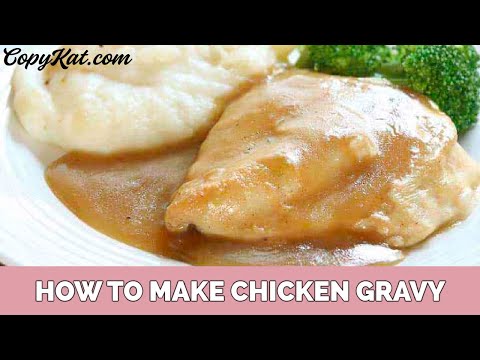
The structural base of chicken gravy depends on the controlled ratio between rendered chicken fat and flour. Equal mass ensures proper starch gelatinisation without raw flour flavour or greasy separation. The fat coats flour granules, moderating hydration when stock is introduced. Gradual liquid incorporation prevents lumping and allows full starch expansion. Salt and acid levels must be balanced against the stock’s sodium and collagen content to avoid over-seasoning or dullness. Using a well-reduced chicken stock provides body through natural gelatin, reducing the need for excessive roux thickening and maintaining a clean, glossy finish.
Ingredients
Ingredients
Instructions
Instructions
Step 1
Place the Frying Pan over medium heat and melt 40 g unsalted butter. Add 40 g plain flour and whisk continuously until the mixture forms a smooth roux and turns pale golden, about 3–4 minutes.Maintain moderate heat; excessive temperature darkens the roux and reduces thickening efficiency.Step 2
Gradually add warm chicken stock in small increments while whisking constantly to prevent lumps. Continue whisking until the mixture is fully combined and smooth.Introduce stock in thirds; allowing each addition to integrate before the next ensures stable emulsification.Step 3
Add chicken pan drippings and bring the mixture to a gentle simmer. Reduce heat to low and cook for 8–10 minutes, whisking occasionally until the gravy thickens to a nappe consistency.Simmering rather than boiling prevents protein coagulation and maintains a silky mouthfeel.Step 4
Season with fine salt and black pepper. Taste and adjust seasoning only after reduction is complete to account for concentration.Always season at the end; early salt addition can mislead balance as volume reduces.Step 5
Remove from heat and whisk in 10 g unsalted butter to finish. Strain through a Sieve into a clean bowl for a smooth texture. Hold warm until service.Finishing butter should be added off heat to prevent separation and preserve gloss.
Recommended Equipment

Nutrition Facts
Servings 4
Serving Size 1 portion
- Amount Per Serving
- Calories 239.58kcal
- % Daily Value *
- Total Fat 19.23g30%
- Saturated Fat 9.77g49%
- Cholesterol 37.79mg13%
- Sodium 387.99mg17%
- Potassium 150.21mg5%
- Total Carbohydrate 12.27g5%
- Dietary Fiber 0.33g2%
- Sugars 2.04g
- Protein 4.36g9%
- Vitamin A 317.55 IU
- Iron 0.76 mg
- Vitamin D 0.38 mcg
- Vitamin E 0.38 mg
- Vitamin K 1.57 mcg
- Thiamin 0.12 mg
- Riboflavin 0.16 mg
- Niacin 2.6 mg
- Vitamin B6 0.08 mg
- Folate 25.06 mcg
- Phosphorus 48.43 mg
- Magnesium 7.95 mg
- Zinc 0.27 mg
- Selenium 6.32 mcg
- Copper 0.09 mg
- Manganese 0.1 mg
* Nutrition information is provided as an estimate per serving and may vary depending on the ingredients, brands, substitutions, portion sizes and preparation methods used. Percent Daily Values (%DV) are based on U.S. FDA reference values for a 2,000-calorie diet and are intended as a general guide only. Individual nutritional needs vary. This information is not a substitute for advice from a registered dietitian or other qualified healthcare professional.
Note
Allow the dish to cool gradually before sealing. Rapid temperature shifts can create condensation, weakening texture and diluting surface flavour concentration. Spice intensity can deepen over time as volatile compounds settle. Taste and adjust seasoning after resting. Slow-cooked preparations often improve after several hours or overnight refrigeration as aromatic compounds integrate more fully. When reheating crisp components, use dry heat rather than microwave methods to maintain exterior texture. Acid balance may soften slightly over time; a final adjustment before serving restores clarity.


