
Recipe Snapshot
Recipe at a Glance
Key timing, yield and style details before you start cooking.
Protein Structure and Sauce Integration
Chicken Marsala relies on controlled protein denaturation and starch-assisted sauce binding. Thinly pounded chicken breasts ensure uniform heat penetration and rapid surface browning without internal dryness. The dredge of seasoned flour provides both surface adhesion for searing and starch for later sauce thickening. Marsala wine introduces sugar and acid, balancing the savoury base while aiding in deglazing. The butter and oil combination stabilises the fat phase, preventing scorching during sautéing. Mushrooms contribute glutamates and moisture, integrating into the sauce through reduction rather than dilution. Salt calibration must occur progressively to avoid over-seasoning once the wine reduces and concentrates.
Heat Management and Reduction Control
Temperature staging defines the success of this dish. Initial high heat in the Saute Pan promotes Maillard browning on the chicken surface, locking in moisture before removal. Subsequent medium heat allows mushrooms to release water and caramelise without steaming. Deglazing with Marsala wine requires maintaining a simmer to lift fond without burning residual sugars. Reduction continues until viscosity increases and alcohol vapours dissipate, ensuring balanced sweetness. Butter is reintroduced off direct heat to emulsify the sauce, preventing separation. Carryover heat from the pan completes the final thickening phase, so over-reduction must be avoided to maintain fluid coating consistency.
Textural and Flavour Transformation
During cooking, the chicken’s myofibrillar proteins firm while remaining tender due to brief exposure to high heat. Mushrooms undergo dehydration and flavour concentration, contributing umami depth. The Marsala reduction transforms from sharp alcohol to a rounded caramelised note as sugars oxidise and acids mellow. The flour coating hydrates and gelatinises, thickening the sauce naturally without additional starch. Butter emulsification integrates fat and liquid phases, producing a glossy, cohesive sauce. The final texture should coat the back of a spoon evenly, with chicken slices remaining supple and sauce clinging without pooling or breaking.
Workflow Efficiency and Sequencing Logic
Efficient mise en place ensures seamless execution. Chicken should be pounded, seasoned, and dredged before heating the pan. Mushrooms must be pre-sliced to allow immediate transition after searing. Deglazing ingredients should be measured and ready to prevent over-browning of fond. Sauce reduction can occur while chicken rests, aligning active and passive phases. Final assembly occurs in the same pan to minimise heat loss and dish transfer. Maintaining a clean, dry workspace prevents cross-contamination and ensures consistent browning. Parallel preparation of side starches or greens can occur during the reduction phase for service synchronisation.
Regional Technique Lineage
Chicken Marsala originates from Sicilian culinary tradition, where Marsala wine, a fortified product from the region, forms the flavour base. The technique reflects Italian scaloppine methods—thinly sliced meat quickly sautéed and finished in a reduction sauce. The dish evolved through Italian-American adaptation, incorporating butter for richness and mushrooms for depth, aligning with continental sauce structures. Modern versions maintain the reduction-emulsification sequence while adjusting sweetness levels to suit drier Marsala varieties. The method exemplifies Mediterranean balance between acidity, fat, and umami, executed through precise pan control and reduction timing.
Recipe Education
Learn the Skills Behind This Recipe
Build confidence with cooking skills, techniques, and tools used in this recipe.
How to Sauté Properly
Master fast cooking, pan heat, and ingredient timing for better texture.
Recommended for the saute method used in this recipe.
Cooking Basics
Build safer knife preparation, heat control, timing, and everyday kitchen confidence.
Helpful when using chef knife during preparation.
Cookware Guide
Learn which pots and pans work best for frying, sautéing, simmering, and roasting.
Helpful when using frying pan during preparation.
Cups to Grams
Convert cup measurements more accurately to improve recipe consistency.
Helpful when using measuring cups during preparation.
Teaspoons to Grams
Use small-measure conversions more accurately in cooking and baking.
Helpful when using measuring spoons during preparation.


Chicken Marsala with Mushrooms and Wine Sauce
Description
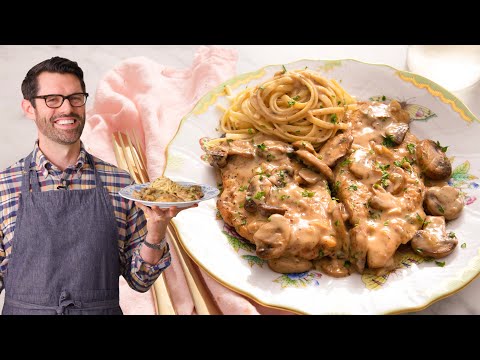
Chicken Marsala relies on controlled protein denaturation and starch-assisted sauce binding. Thinly pounded chicken breasts ensure uniform heat penetration and rapid surface browning without internal dryness. The dredge of seasoned flour provides both surface adhesion for searing and starch for later sauce thickening. Marsala wine introduces sugar and acid, balancing the savoury base while aiding in deglazing. The butter and oil combination stabilises the fat phase, preventing scorching during sautéing. Mushrooms contribute glutamates and moisture, integrating into the sauce through reduction rather than dilution. Salt calibration must occur progressively to avoid over-seasoning once the wine reduces and concentrates.
Ingredients
Ingredients
Instructions
Instructions
Step 1
Pat chicken breasts dry with paper towels. Season both sides with salt and black pepper, then dredge lightly in plain flour, shaking off excess.Ensure even flour coverage to promote uniform browning and prevent clumping during searing.Step 2
Heat olive oil and half the butter in a Saute Pan over medium-high heat. Add chicken and sear 3–4 minutes per side until golden. Remove and set aside on a plate.Avoid overcrowding the pan; sear in batches if necessary to maintain surface temperature and colour development.Step 3
Reduce heat to medium. Add sliced mushrooms and cook 5–6 minutes until moisture evaporates and edges brown. Add minced garlic and cook 30 seconds until aromatic.Allow mushrooms to release water fully before stirring to achieve proper caramelisation rather than steaming.Step 4
Deglaze the pan with Marsala wine, scraping up browned bits with a Wooden Spoon. Simmer 2–3 minutes to reduce by half and cook off alcohol.Maintain a steady simmer; boiling too rapidly can cause the wine sugars to scorch and introduce bitterness.Step 5
Add chicken stock and return chicken to the pan. Simmer gently 5–6 minutes until sauce thickens and chicken reaches 74°C internal temperature.Monitor sauce viscosity; it should coat the back of a spoon without separating or appearing greasy.Step 6
Remove pan from heat. Stir in remaining butter to emulsify the sauce. Adjust seasoning and garnish with chopped parsley before serving.Incorporate butter off heat to stabilise the emulsion and maintain sauce gloss without splitting.
Recommended Equipment

Nutrition Facts
Servings 4
Serving Size 1 portion
- Amount Per Serving
- Calories 260.55kcal
- % Daily Value *
- Total Fat 13.64g21%
- Saturated Fat 4.96g25%
- Cholesterol 17.91mg6%
- Sodium 258.66mg11%
- Potassium 389.85mg12%
- Total Carbohydrate 21.18g8%
- Dietary Fiber 0.9g4%
- Sugars 4.7g
- Protein 4.53g10%
- Vitamin A 295.6 IU
- Vitamin C 1.98 mg
- Calcium 23.91 mg
- Iron 1.28 mg
- Vitamin D 0.18 mcg
- Vitamin E 1.2 mg
- Vitamin K 25.69 mcg
- Thiamin 0.2 mg
- Riboflavin 0.43 mg
- Niacin 4.07 mg
- Vitamin B6 0.12 mg
- Folate 47.21 mcg
- Vitamin B12 0.08 mcg
- Pantothenic Acid 1.05 mg
- Phosphorus 111.06 mg
- Magnesium 15.53 mg
- Zinc 0.91 mg
- Selenium 22.88 mcg
- Copper 0.38 mg
- Manganese 0.28 mg
* Nutrition information is provided as an estimate per serving and may vary depending on the ingredients, brands, substitutions, portion sizes and preparation methods used. Percent Daily Values (%DV) are based on U.S. FDA reference values for a 2,000-calorie diet and are intended as a general guide only. Individual nutritional needs vary. This information is not a substitute for advice from a registered dietitian or other qualified healthcare professional.
Note
Allow the dish to cool gradually before sealing. Rapid temperature shifts can create condensation, weakening texture and diluting surface flavour concentration. The resting phase supports structural stabilisation and moisture redistribution. Cutting or serving too early may compromise internal balance. Spice intensity can deepen over time as volatile compounds settle. Taste and adjust seasoning after resting. Slow-cooked preparations often improve after several hours or overnight refrigeration as aromatic compounds integrate more fully. When reheating crisp components, use dry heat rather than microwave methods to maintain exterior texture. Texture refinement often occurs naturally during resting due to internal moisture redistribution.


