
Recipe Snapshot
Recipe at a Glance
Key timing, yield and style details before you start cooking.
Hydration and Protein-Starch Balance
The structural integrity of chicken rice soup depends on controlled hydration and starch release. Long-grain rice provides moderate gelatinisation, thickening the broth without clouding it excessively. Chicken breast or thigh contributes soluble proteins that enrich the stock through mild denaturation, while celery introduces aromatic bitterness balancing the fat content from rendered chicken. Salt calibration must account for reduction during simmering; over-seasoning early can lead to concentration beyond target salinity. The inclusion of onion and carrot stabilises sweetness and body, ensuring the soup maintains clarity and viscosity without requiring external thickeners.
Heat Management and Simmer Control
Maintaining a consistent low simmer is critical to prevent emulsifying surface fats into the broth, which would dull flavour definition. The initial sauté of aromatics in controlled fat initiates Maillard reactions, building base flavour before liquid addition. Once stock is introduced, temperature must remain below a rolling boil to avoid rice disintegration and protein tightening. Carryover heat continues cooking residual starch even after removal from direct flame, so timing the final rest ensures the rice remains tender but distinct. Evaporation rate should be monitored to maintain correct broth-to-solid ratio.
Texture Development and Flavour Integration
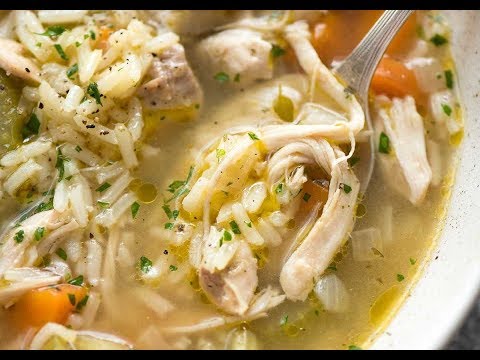
During simmering, rice starch gradually disperses, binding with collagen and soluble proteins from chicken to form a cohesive mouthfeel. Celery softens but retains slight crunch if added mid-phase rather than at the start. The final texture should show suspended grains and vegetables in a lightly thickened, translucent broth. Aromatic layering occurs sequentially: sautéed onion and carrot form the base, celery contributes mid-palate freshness, and parsley or lemon at finish introduces volatile brightness. Overcooking any component risks uniform mushiness and loss of structural contrast.
Workflow Efficiency and Mise en Place Logic
Preparation efficiency relies on sequencing knife work and heat phases. Dice all vegetables uniformly before heating the pot to prevent idle time once oil reaches temperature. Chicken should be trimmed and cut into even pieces to ensure consistent cooking. Rice must be rinsed to remove excess surface starch, preventing clumping. Stock should be pre-warmed to reduce temperature shock when added to the sauté base. Parallelisation—such as chopping herbs during simmer—optimises downtime and maintains service readiness without compromising texture control.
Cultural and Regional Context
Chicken rice soup aligns with European and American comfort traditions derived from classical consommé and broth-based preparations. The inclusion of celery, carrot, and onion mirrors the French mirepoix foundation, while rice replaces noodles common in Eastern European variants. Its evolution reflects accessibility of poultry and grains in temperate climates, serving as a utilitarian method to extend protein through starch and vegetable integration. Modern adaptations maintain the same structural logic, balancing hydration, protein extraction, and aromatic layering for a clean, restorative broth.
Recipe Education
Learn the Skills Behind This Recipe
Build confidence with cooking skills, techniques, and tools used in this recipe.
How to Boil Properly
Learn boiling times, temperature control, and how to avoid overcooking.
Recommended for the boil method used in this recipe.
How to Sauté Properly
Master fast cooking, pan heat, and ingredient timing for better texture.
Recommended for the saute method used in this recipe.
Cookware Guide
Learn which pots and pans work best for frying, sautéing, simmering, and roasting.
Helpful when using saucepan during preparation.
Cups to Grams
Convert cup measurements more accurately to improve recipe consistency.
Helpful when using measuring cups during preparation.
Teaspoons to Grams
Use small-measure conversions more accurately in cooking and baking.
Helpful when using measuring spoons during preparation.
Simmer vs Boil
Learn when to simmer, when to boil, and how each affects recipe results.
Recommended for the simmer method used in this recipe.


Chicken Rice Soup with Celery
Description
The structural integrity of chicken rice soup depends on controlled hydration and starch release. Long-grain rice provides moderate gelatinisation, thickening the broth without clouding it excessively. Chicken breast or thigh contributes soluble proteins that enrich the stock through mild denaturation, while celery introduces aromatic bitterness balancing the fat content from rendered chicken. Salt calibration must account for reduction during simmering; over-seasoning early can lead to concentration beyond target salinity. The inclusion of onion and carrot stabilises sweetness and body, ensuring the soup maintains clarity and viscosity without requiring external thickeners.
Ingredients
Ingredients
Instructions
Instructions
Step 1
Heat olive oil in a Stock Pot over medium heat. Add onion and carrot, sauté for 4–5 minutes until softened and lightly golden.Avoid high heat at this stage; gentle sweating preserves sweetness and prevents caramel bitterness.Step 2
Add diced celery and continue cooking for 2 minutes to release aroma without losing structure.Introduce celery after initial aromatics to retain slight crunch and prevent fibre collapse.Step 3
Add chicken cubes, season lightly with salt and pepper, and sauté until surfaces turn opaque, about 3 minutes.Do not brown the chicken; light searing maintains clarity of the final broth.Step 4
Pour in warm chicken stock and bring to a gentle simmer. Add rinsed rice and stir to distribute evenly.Pre-warming stock prevents temperature shock that can tighten chicken fibres and delay rice gelatinisation.Step 5
Simmer uncovered for 20–25 minutes on low heat until rice is tender and broth slightly thickened. Adjust seasoning.Monitor evaporation; add small amounts of hot stock if liquid reduces excessively before rice is cooked.Step 6
Remove from heat, rest for 5 minutes to allow carryover cooking. Stir in lemon juice and garnish with chopped parsley before serving.Resting stabilises starch suspension, preventing separation when ladled into bowls.
Recommended Equipment

Nutrition Facts
Servings 4
Serving Size 1 portion
- Amount Per Serving
- Calories 340.12kcal
- % Daily Value *
- Total Fat 8.76g14%
- Saturated Fat 1.8g9%
- Cholesterol 55.61mg19%
- Sodium 684.53mg29%
- Potassium 771.06mg23%
- Total Carbohydrate 38.35g13%
- Dietary Fiber 1.98g8%
- Sugars 6.47g
- Protein 25.18g51%
- Vitamin A 4531.3 IU
- Vitamin C 8.96 mg
- Calcium 47.4 mg
- Iron 1.42 mg
- Vitamin E 1 mg
- Vitamin K 54.86 mcg
- Thiamin 0.19 mg
- Riboflavin 0.34 mg
- Niacin 12.7 mg
- Vitamin B6 0.85 mg
- Folate 39.72 mcg
- Vitamin B12 0.15 mcg
- Pantothenic Acid 1.54 mg
- Phosphorus 282.97 mg
- Magnesium 46.65 mg
- Zinc 1.27 mg
- Selenium 34.35 mcg
- Copper 0.26 mg
- Manganese 0.46 mg
* Nutrition information is provided as an estimate per serving and may vary depending on the ingredients, brands, substitutions, portion sizes and preparation methods used. Percent Daily Values (%DV) are based on U.S. FDA reference values for a 2,000-calorie diet and are intended as a general guide only. Individual nutritional needs vary. This information is not a substitute for advice from a registered dietitian or other qualified healthcare professional.
Note
Allow the dish to cool gradually before sealing. Rapid temperature shifts can create condensation, weakening texture and diluting surface flavour concentration. The resting phase supports structural stabilisation and moisture redistribution. Cutting or serving too early may compromise internal balance. Grains and starches continue absorbing moisture after cooking. Adjust liquid slightly when reheating to restore optimal consistency. Slow-cooked preparations often improve after several hours or overnight refrigeration as aromatic compounds integrate more fully. Acid balance may soften slightly over time; a final adjustment before serving restores clarity.


