
Recipe Snapshot
Recipe at a Glance
Key timing, yield and style details before you start cooking.
Acid-Fat-Salt Balance and Aromatic Integration
This marinade relies on the controlled interaction between lime juice acidity and oil-based fat dispersion to penetrate protein fibres effectively. The acid denatures surface proteins, improving flavour absorption, while the oil stabilises volatile aromatics from chipotle and garlic. Salt concentration must remain moderate to avoid premature dehydration of the protein surface. The inclusion of honey provides osmotic balance, moderating acid sharpness and aiding caramelisation during cooking. Proper whisking ensures a stable temporary emulsion, preventing separation before application. The chipotle’s smoke compounds integrate best when hydrated in the acidic medium, allowing even distribution across the marinade matrix.
Temperature and Marination Control
Marination should occur under refrigeration between 2°C and 5°C to prevent bacterial growth while allowing gradual flavour diffusion. The acid’s activity increases with temperature, so maintaining a cold environment prevents over-denaturation of delicate proteins such as poultry or fish. Duration control is critical: 30 minutes for seafood, 2–4 hours for poultry, and up to 8 hours for red meat. Overexposure to acid can cause mushy texture due to excessive protein breakdown. The oil layer also acts as a moisture barrier, reducing oxidative flavour loss during marination. Always discard used marinade to avoid cross-contamination.
Flavour Development and Structural Transformation
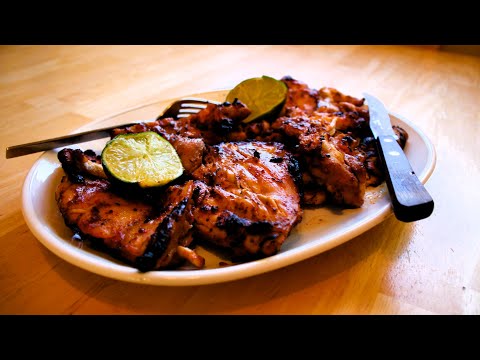
During cooking, residual marinade undergoes Maillard and caramelisation reactions, particularly from honey and chipotle solids. The lime’s citric acid volatilises partially, leaving a concentrated tang balanced by smoky depth. The oil component assists in even browning, while the sugars promote surface glaze formation. Chipotle’s capsaicin compounds intensify under heat, so surface control is essential to prevent bitterness. When used as a basting medium, the reduced marinade thickens slightly, forming a cohesive coating that enhances both aroma and mouthfeel. The transformation from raw acidity to integrated smokiness defines the marinade’s structural success.
Workflow Efficiency and Preparation Sequencing
Efficient mise en place ensures uniform flavour extraction. Combine dry spices first to prevent clumping, then introduce acid and sweetener before emulsifying with oil. This sequencing allows even dispersion of solids and prevents spice sedimentation. Preparing the marinade in advance (up to 24 hours) allows flavour harmonisation without degradation. Using a whisk or stick blender accelerates emulsion formation and ensures consistent viscosity. For service environments, batch production can be scaled easily by maintaining proportional acid-to-oil ratios. Label and date each batch to maintain rotation integrity and food safety compliance.
Regional Technique Lineage and Adaptation
Chipotle lime marinades originate from Mexican culinary practice, where smoked jalapeños (chipotles) and citrus acids were combined to preserve and flavour meats before grilling. The technique evolved through regional adaptations, integrating oil to stabilise the mixture for modern refrigeration and transport. Traditional versions relied solely on lime and dried chiles, while contemporary adaptations use honey or agave for balance. The method aligns with broader Latin American acid-based marinades that emphasise brightness and smoke synergy. Its versatility across proteins and vegetables reflects the adaptability of Mexican flavour engineering in global kitchens.
Recipe Education
Learn the Skills Behind This Recipe
Build confidence with cooking skills, techniques, and tools used in this recipe.
Cooking Basics
Build safer knife preparation, heat control, timing, and everyday kitchen confidence.
Helpful when using chef knife during preparation.
Cups to Grams
Convert cup measurements more accurately to improve recipe consistency.
Helpful when using measuring cups during preparation.
Teaspoons to Grams
Use small-measure conversions more accurately in cooking and baking.
Helpful when using measuring spoons during preparation.
Baking Tools Guide
Understand essential tools for mixing, measuring, and preparing recipes.
Helpful when using mixing bowl during preparation.


Chipotle Lime Marinade
Description
This marinade relies on the controlled interaction between lime juice acidity and oil-based fat dispersion to penetrate protein fibres effectively. The acid denatures surface proteins, improving flavour absorption, while the oil stabilises volatile aromatics from chipotle and garlic. Salt concentration must remain moderate to avoid premature dehydration of the protein surface. The inclusion of honey provides osmotic balance, moderating acid sharpness and aiding caramelisation during cooking. Proper whisking ensures a stable temporary emulsion, preventing separation before application. The chipotle’s smoke compounds integrate best when hydrated in the acidic medium, allowing even distribution across the marinade matrix.
Ingredients
Ingredients
Instructions
Instructions
Step 1
Combine lime juice, honey, and minced chipotle in a Mixing Bowl. Whisk until honey dissolves completely and chipotle disperses evenly.Ensure honey is at room temperature to integrate smoothly with acidic components and prevent crystallisation.Step 2
Add minced garlic, ground cumin, salt, and black pepper. Mix thoroughly to form a uniform base before adding oil.Incorporating dry seasonings before oil prevents clumping and ensures even flavour distribution.Step 3
Slowly drizzle olive oil into the mixture while whisking continuously to create a temporary emulsion.Maintain steady whisking speed to suspend oil droplets evenly, improving coating performance on proteins.Step 4
Transfer marinade to a Food Storage Container or resealable bag. Add protein or vegetables, ensuring full surface contact.Use minimal headspace in the container to maximise marinade contact and reduce oxidation exposure.Step 5
Refrigerate for the appropriate marination period based on protein type. Discard used marinade after use.Never reuse marinade from raw proteins; if a basting sauce is needed, reserve a separate portion before marination.

Recommended Equipment

Nutrition Facts
Servings 4
Serving Size 1 portion
- Amount Per Serving
- Calories 91.41kcal
- % Daily Value *
- Total Fat 7.14g11%
- Saturated Fat 0.98g5%
- Sodium 583.25mg25%
- Potassium 39.15mg2%
- Total Carbohydrate 7.75g3%
- Dietary Fiber 0.97g4%
- Sugars 5.09g
- Protein 0.28g1%
- Vitamin C 5.14 mg
- Calcium 11.37 mg
- Iron 0.64 mg
- Vitamin E 1.06 mg
- Vitamin K 4.76 mcg
- Vitamin B6 0.03 mg
- Manganese 0.08 mg
* Nutrition information is provided as an estimate per serving and may vary depending on the ingredients, brands, substitutions, portion sizes and preparation methods used. Percent Daily Values (%DV) are based on U.S. FDA reference values for a 2,000-calorie diet and are intended as a general guide only. Individual nutritional needs vary. This information is not a substitute for advice from a registered dietitian or other qualified healthcare professional.
Note
Store in an airtight container under refrigeration, ensuring minimal air exposure to preserve flavour integrity and textural balance. The resting phase supports structural stabilisation and moisture redistribution. Cutting or serving too early may compromise internal balance. Spice intensity can deepen over time as volatile compounds settle. Taste and adjust seasoning after resting. Monitor seasoning levels after storage, as salt perception can shift once chilled.


