
Recipe Snapshot
Recipe at a Glance
Key timing, yield and style details before you start cooking.
Hydration and Grain Structure Control
Couscous relies on precise hydration to achieve a light, separate grain texture. The ratio of hot liquid to semolina granules must be balanced to prevent clumping or sogginess. Olive oil coats the grains before steaming, limiting water absorption and maintaining integrity. Lemon juice introduces acidity that subtly tightens the starch network, enhancing definition. Salt must be dissolved in the liquid phase to ensure even distribution. The inclusion of fresh herbs adds volatile oils that integrate best when folded through warm, not hot, couscous to preserve aroma and colour stability.
Thermal Management and Steam Integration
The key thermal phase involves controlled steaming or steeping. Boiling water is poured over the couscous, then sealed to trap steam for uniform hydration. Excessive heat or prolonged contact with liquid causes gelatinisation beyond the surface, resulting in a dense mass. After initial steaming, fluffing with a fork separates granules and releases residual steam, preventing carryover cooking. The process depends on maintaining a closed environment for moisture equilibrium, followed by aeration to stabilise texture before seasoning adjustment.
Textural Transformation and Flavour Layering
During resting, couscous transitions from granular dryness to a tender, aerated matrix. The starches absorb moisture evenly, while olive oil and lemon zest distribute aromatic compounds. The herbs—typically parsley, mint, or coriander—introduce chlorophyll-based freshness that contrasts the mild base. The final toss integrates fat, acid, and salt, forming a balanced palate structure. Proper mixing ensures that no single component dominates; instead, the dish achieves a cohesive, bright flavour profile with a clean finish and resilient mouthfeel.
Workflow Efficiency and Mise en Place Logic
Efficient execution depends on sequencing hydration and chopping tasks. While water heats, herbs and lemon zest should be prepared to minimise idle time. The couscous must be fluffed immediately after steaming to avoid compaction. Using a wide Mixing Bowl allows even distribution of seasoning without crushing the grains. This workflow supports consistent results across batch sizes and prevents textural degradation during holding. In service conditions, the dish can be held warm under cover for short periods without loss of quality if moisture balance is maintained.
Regional Technique Lineage and Adaptation
Couscous originates from North African culinary systems, traditionally steamed in a couscoussier over aromatic broths. The lemon and herb variant reflects Mediterranean adaptation, integrating citrus acidity and fresh herbs common to coastal cuisines. Modern quick-steep methods replicate the hydration effect of traditional steaming with reduced equipment demands. This adaptation maintains the structural essence of Maghrebi couscous while aligning with contemporary kitchen efficiency. The balance of oil, acid, and herbs mirrors broader Mediterranean grain salad techniques, bridging regional practices through shared process logic.
Recipe Education
Learn the Skills Behind This Recipe
Build confidence with cooking skills, techniques, and tools used in this recipe.
Cooking Basics
Build safer knife preparation, heat control, timing, and everyday kitchen confidence.
Helpful when using chef knife during preparation.
Cookware Guide
Learn which pots and pans work best for frying, sautéing, simmering, and roasting.
Helpful when using saucepan during preparation.
Cups to Grams
Convert cup measurements more accurately to improve recipe consistency.
Helpful when using measuring cups during preparation.
Teaspoons to Grams
Use small-measure conversions more accurately in cooking and baking.
Helpful when using measuring spoons during preparation.
Baking Tools Guide
Understand essential tools for mixing, measuring, and preparing recipes.
Helpful when using mixing bowl during preparation.


Couscous with Lemon and Herbs
Description
Couscous relies on precise hydration to achieve a light, separate grain texture. The ratio of hot liquid to semolina granules must be balanced to prevent clumping or sogginess. Olive oil coats the grains before steaming, limiting water absorption and maintaining integrity. Lemon juice introduces acidity that subtly tightens the starch network, enhancing definition. Salt must be dissolved in the liquid phase to ensure even distribution. The inclusion of fresh herbs adds volatile oils that integrate best when folded through warm, not hot, couscous to preserve aroma and colour stability.
Ingredients
Ingredients
Instructions
Instructions
Step 1
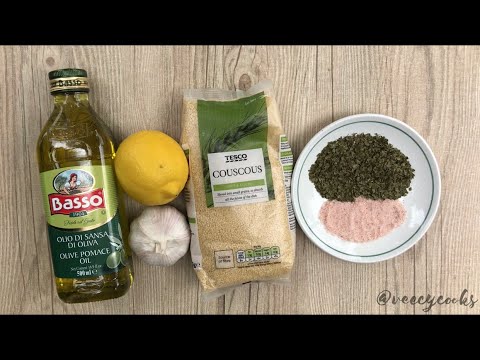
Place the couscous in a Mixing Bowl and drizzle with 1 tbsp of olive oil. Stir with a fork to coat all grains evenly.Coating the grains with oil before hydration prevents clumping and ensures even steam penetration.Step 2
Bring the water to a boil in a Saucepan, then stir in salt until fully dissolved.Dissolving salt in the liquid phase guarantees uniform seasoning without overmixing the hydrated couscous later.Step 3
Pour the boiling salted water over the couscous, cover tightly with a lid or Cling Film, and let stand for 5 minutes.A sealed environment traps steam efficiently, allowing consistent hydration without direct simmering.Step 4
Remove the cover and fluff the couscous gently with a fork to separate the grains and release excess steam.Fluffing while warm prevents compaction and maintains a light, aerated texture.Step 5
Add lemon juice, lemon zest, chopped parsley, chopped mint, black pepper, and the remaining 1 tbsp olive oil. Mix gently until evenly distributed.Incorporate herbs and acid only after the couscous cools slightly to preserve volatile aromas and colour integrity.
Recommended Equipment

Nutrition Facts
Servings 4
Serving Size 1 portion
- Amount Per Serving
- Calories 254.35kcal
- % Daily Value *
- Total Fat 7.39g12%
- Saturated Fat 1.04g6%
- Sodium 592.6mg25%
- Potassium 124.51mg4%
- Total Carbohydrate 39.74g14%
- Dietary Fiber 2.92g12%
- Sugars 0.15g
- Protein 6.62g14%
- Vitamin A 423.26 IU
- Vitamin C 7.88 mg
- Calcium 27 mg
- Iron 0.96 mg
- Vitamin E 1.04 mg
- Vitamin K 65.92 mcg
- Thiamin 0.09 mg
- Riboflavin 0.05 mg
- Niacin 1.84 mg
- Vitamin B6 0.06 mg
- Folate 19.39 mcg
- Pantothenic Acid 0.65 mg
- Phosphorus 89.56 mg
- Magnesium 27.03 mg
- Zinc 0.5 mg
- Copper 0.15 mg
- Manganese 0.44 mg
* Nutrition information is provided as an estimate per serving and may vary depending on the ingredients, brands, substitutions, portion sizes and preparation methods used. Percent Daily Values (%DV) are based on U.S. FDA reference values for a 2,000-calorie diet and are intended as a general guide only. Individual nutritional needs vary. This information is not a substitute for advice from a registered dietitian or other qualified healthcare professional.
Note
Store in an airtight container under refrigeration, ensuring minimal air exposure to preserve flavour integrity and textural balance. The resting phase supports structural stabilisation and moisture redistribution. Cutting or serving too early may compromise internal balance. Spice intensity can deepen over time as volatile compounds settle. Taste and adjust seasoning after resting. Monitor seasoning levels after storage, as salt perception can shift once chilled.


