
Recipe Snapshot
Recipe at a Glance
Key timing, yield and style details before you start cooking.
Emulsion Stability and Fat-Acid Balance
This sauce relies on a stable emulsion between egg yolk–based mayonnaise and the chili-acid matrix of sriracha. The fat phase from the mayonnaise must remain continuous to prevent separation when the acidic and aqueous sriracha is introduced. The key control point is gradual incorporation and consistent shear during mixing. The vinegar and chili paste in sriracha lower pH, tightening the emulsion and enhancing brightness. Sugar and salt within the chili base balance the fat’s richness, while the capsaicin disperses evenly through the lipid phase, ensuring consistent heat distribution without sharp spikes.
Temperature and Mixing Control
Temperature uniformity is critical when blending mayonnaise with sriracha. Cold mayonnaise resists integration, while overly warm conditions risk thinning and breaking the emulsion. Mixing should occur at refrigeration temperature plus a few degrees (around 6–8°C) to maintain viscosity. A Silicone Spatula or Whisk provides sufficient shear without aerating the mixture. Overmixing introduces air pockets that destabilize the structure, while undermixing leaves streaks of chili paste. Controlled folding ensures uniform color and texture, producing a smooth, glossy finish suitable for both dipping and dressing applications.
Texture and Flavor Transformation
The transformation from two distinct condiments into a cohesive sauce occurs through controlled emulsification and flavor diffusion. The chili paste’s water-soluble compounds migrate into the fat matrix, softening the heat profile and rounding acidity. The mayonnaise’s egg proteins and emulsifiers encapsulate chili oils, creating a creamy mouthfeel with delayed spice release. Resting the mixture for at least 20 minutes allows molecular equilibrium, improving flavor integration and viscosity. The result is a balanced condiment with controlled heat, creamy density, and a stable sheen that holds structure under refrigeration.
Workflow Efficiency and Scaling
For service environments, batch preparation should follow a consistent ratio of 3:1 mayonnaise to sriracha by weight. This ratio maintains viscosity across temperature fluctuations and allows predictable scaling. Mise en place should include pre-measured condiments and clean Mixing Bowls to prevent cross-contamination. The sauce can be portioned into Squeezy Bottles for line efficiency. Avoid preparing excessive volume beyond 48-hour service windows, as acidity and fat interaction gradually dull flavor intensity. Proper cold storage between 2–4°C preserves emulsion integrity and prevents microbial risk.
Regional and Culinary Context
Sriracha mayo represents a modern fusion of Southeast Asian chili paste and Western emulsified sauces. The base sriracha originates from coastal Thailand, where fermented chili, garlic, and vinegar form a balanced heat-acid profile. Its integration into mayonnaise reflects Japanese and American adaptation trends in the late 20th century, particularly within sushi and fast-casual kitchens. The technique aligns with global condiment evolution—combining fat-based emulsions with fermented spice pastes to achieve both richness and brightness. This hybridization demonstrates how emulsification principles transcend regional boundaries while maintaining structural precision.
Recipe Education
Learn the Skills Behind This Recipe
Build confidence with cooking skills, techniques, and tools used in this recipe.
Cups to Grams
Convert cup measurements more accurately to improve recipe consistency.
Helpful when using measuring cups during preparation.
Teaspoons to Grams
Use small-measure conversions more accurately in cooking and baking.
Helpful when using measuring spoons during preparation.
Baking Tools Guide
Understand essential tools for mixing, measuring, and preparing recipes.
Helpful when using mixing bowl during preparation.
Cooking Basics
Build confidence with core skills and beginner-friendly cooking techniques.
Supports the beginner skill level of this recipe.


Creamy Sriracha Mayo
Description
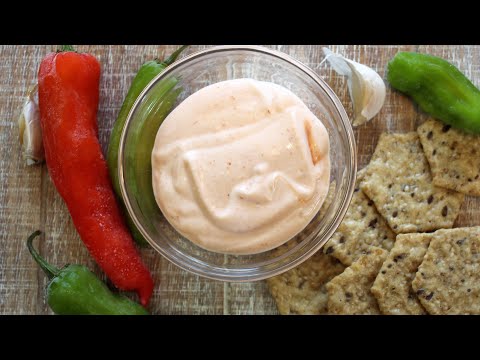
This sauce relies on a stable emulsion between egg yolk–based mayonnaise and the chili-acid matrix of sriracha. The fat phase from the mayonnaise must remain continuous to prevent separation when the acidic and aqueous sriracha is introduced. The key control point is gradual incorporation and consistent shear during mixing. The vinegar and chili paste in sriracha lower pH, tightening the emulsion and enhancing brightness. Sugar and salt within the chili base balance the fat’s richness, while the capsaicin disperses evenly through the lipid phase, ensuring consistent heat distribution without sharp spikes.
Ingredients
Ingredients
Instructions
Instructions
Step 1
Place the mayonnaise into a Mixing Bowl and allow it to sit at room temperature for 5 minutes to slightly soften.Avoid using cold mayonnaise directly from refrigeration; slight softening improves emulsion responsiveness.Step 2
Add the sriracha sauce gradually while stirring with a Silicone Spatula until the mixture begins to turn uniformly orange.Introduce the chili base in increments to prevent localized acid shock that can thin the emulsion.Step 3
Incorporate lime juice, salt, and garlic powder, mixing until fully homogeneous and glossy.Add acidic components last to fine-tune viscosity and prevent premature thinning during blending.Step 4
Transfer the sauce into a Squeezy Bottle or Food Storage Container, cover, and refrigerate for at least 20 minutes.Resting allows flavor diffusion and stabilizes the emulsion, improving mouthfeel and color uniformity.Step 5
Before service, stir briefly with a Silicone Spatula to re-emulsify any slight separation and check seasoning.A quick re-stir restores structure without overworking the emulsion; avoid whisking at this stage.
Recommended Equipment

Nutrition Facts
Servings 8
Serving Size 1 portion
- Amount Per Serving
- Calories 154.4kcal
- % Daily Value *
- Total Fat 16.86g26%
- Saturated Fat 2.64g14%
- Cholesterol 9.44mg4%
- Sodium 438.08mg19%
- Total Carbohydrate 0.4g1%
- Sugars 0.24g
- Protein 0.28g1%
- Vitamin C 5.8 mg
- Vitamin E 0.75 mg
- Vitamin K 36.86 mcg
* Nutrition information is provided as an estimate per serving and may vary depending on the ingredients, brands, substitutions, portion sizes and preparation methods used. Percent Daily Values (%DV) are based on U.S. FDA reference values for a 2,000-calorie diet and are intended as a general guide only. Individual nutritional needs vary. This information is not a substitute for advice from a registered dietitian or other qualified healthcare professional.
Note
Store in an airtight container under refrigeration, ensuring minimal air exposure to preserve flavour integrity and textural balance. The resting phase supports structural stabilisation and moisture redistribution. Cutting or serving too early may compromise internal balance. In larger batches, maintain even heat distribution and avoid overcrowding during reheating to preserve structural integrity. Monitor seasoning levels after storage, as salt perception can shift once chilled.


