
Recipe Snapshot
Recipe at a Glance
Key timing, yield and style details before you start cooking.
Hydration and Starch Gelation Control
Daifuku relies on the precise hydration of glutinous rice flour to achieve a cohesive yet elastic mochi shell. The water-to-flour ratio determines the degree of gelatinisation during steaming, directly influencing chewiness and pliability. Excess water weakens the starch network, causing stickiness and tearing, while insufficient hydration results in a brittle, dry texture. Sugar not only sweetens but also moderates retrogradation, delaying hardening after cooling. Cornstarch or potato starch used for dusting prevents surface adhesion without altering internal moisture balance. The filling’s moisture content must remain lower than the mochi’s to prevent osmotic migration that softens the outer layer over time.
Heat Management and Steaming Precision
Steaming the mochi mixture requires stable, saturated heat to activate starch gelatinisation uniformly. Uneven steam distribution or fluctuating temperature leads to partial cooking and inconsistent elasticity. Maintaining a constant high steam environment ensures full starch swelling and translucency. Over-steaming, however, can cause excessive water absorption, making the dough too soft to handle. Immediate kneading post-steam is critical to align starch chains and build elasticity while the dough remains hot and malleable. Cooling must be controlled to prevent condensation, which would compromise surface dryness and handling during shaping.
Textural Transformation and Filling Integration
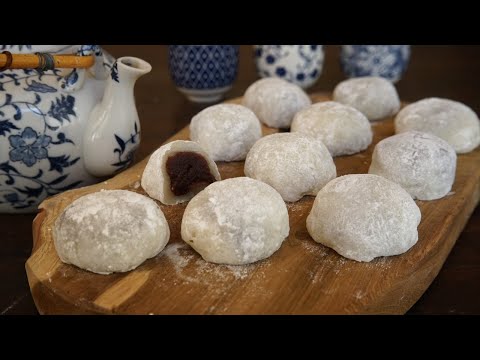
The transformation from opaque paste to translucent, elastic mochi indicates proper gelatinisation. Once kneaded, the dough develops a smooth, cohesive structure capable of stretching without tearing. The sweet bean filling introduces a contrasting dense texture and mild sweetness, balancing the neutral chew of the mochi. Proper wrapping technique ensures even thickness and prevents rupture under pressure. The final product stabilises as it cools, with the outer layer firming slightly while retaining internal softness. This balance between elasticity and tenderness defines the ideal Daifuku mouthfeel.
Workflow Efficiency and Handling Strategy
Efficient production depends on synchronising dough preparation and filling readiness. The sweet bean paste should be pre-portioned and chilled to maintain firmness during wrapping. The mochi dough must be handled quickly after steaming to prevent overcooling, which reduces stretchability. Dusting surfaces and hands with starch minimises sticking without over-drying the dough. Working in small batches prevents moisture loss and ensures consistent shaping. In professional settings, maintaining a controlled humidity workspace reduces surface cracking and extends workable time before the mochi sets.
Cultural and Regional Context of Daifuku
Daifuku originates from Japan’s Edo period, evolving from simple rice cakes (mochi) into filled confections as sweet bean paste became widely available. The technique reflects Japan’s mastery of rice starch manipulation and balance between texture and sweetness. Regional variations include strawberry-filled ichigo daifuku and yomogi daifuku flavoured with mugwort. Modern adaptations use microwave steaming or alternative fillings, but the structural principle—gelatinised glutinous rice enclosing a sweet core—remains constant. The dish exemplifies Japanese wagashi craftsmanship, where precision in texture and moisture defines quality.
Recipe Education
Learn the Skills Behind This Recipe
Build confidence with cooking skills, techniques, and tools used in this recipe.
Baking Tools Guide
Understand essential tools for mixing, measuring, and preparing recipes.
Helpful when using mixing bowl during preparation.
Batch Cooking
Cook once and prepare multiple meals more efficiently.
Selected for this type of recipe.
Cooking Basics
Build confidence with core skills and beginner-friendly cooking techniques.
Helpful cooking knowledge for recipes like this.


Daifuku (Mochi Filled with Sweet Bean)
Description
Daifuku relies on the precise hydration of glutinous rice flour to achieve a cohesive yet elastic mochi shell. The water-to-flour ratio determines the degree of gelatinisation during steaming, directly influencing chewiness and pliability. Excess water weakens the starch network, causing stickiness and tearing, while insufficient hydration results in a brittle, dry texture. Sugar not only sweetens but also moderates retrogradation, delaying hardening after cooling. Cornstarch or potato starch used for dusting prevents surface adhesion without altering internal moisture balance. The filling’s moisture content must remain lower than the mochi’s to prevent osmotic migration that softens the outer layer over time.
Ingredients
Ingredients
Instructions
Instructions
Step 1
Divide the sweet red bean paste into 8 equal portions and roll each into a firm ball. Chill for 15 minutes to maintain shape during wrapping.Chilling the filling slightly increases firmness, preventing it from deforming the mochi during assembly.Step 2
In a Mixing Bowl, combine glutinous rice flour and sugar. Gradually add water while stirring with a Silicone Spatula until a smooth, lump-free batter forms.Add water incrementally to control viscosity; the mixture should flow slowly off the spatula without separating.Step 3
Transfer the mixture to a Steamer Basket lined with Parchment Paper. Steam over high heat for 12–15 minutes until the dough becomes translucent and cohesive.Maintain consistent steam pressure; lifting the lid mid-process releases heat and can cause uneven gelatinisation.Step 4
Using a Silicone Spatula, knead the hot mochi on a dusted Cutting Board until smooth and elastic. Allow to cool slightly until warm but pliable.Kneading while warm aligns starch chains, improving elasticity and preventing tearing during shaping.Step 5
Dust hands and surface with cornstarch. Divide the mochi into 8 pieces. Flatten each piece into a disc and wrap around a chilled bean paste ball, sealing the edges underneath.Work quickly; as the mochi cools, its extensibility decreases, increasing risk of surface cracking.Step 6
Lightly dust finished Daifuku with cornstarch to prevent sticking. Allow to rest for 10 minutes before serving to stabilise texture.A short rest allows surface moisture to equalise, yielding a uniform chew and preventing condensation in storage.
Recommended Equipment

Nutrition Facts
Servings 8
Serving Size 1 portion
- Amount Per Serving
- Calories 175.68kcal
- % Daily Value *
- Total Fat 0.13g1%
- Saturated Fat 0.02g1%
- Sodium 2.46mg1%
- Total Carbohydrate 40.5g14%
- Dietary Fiber 1.29g6%
- Sugars 18.13g
- Protein 2.5g5%
- Iron 0.67 mg
- Thiamin 0.03 mg
- Niacin 0.4 mg
- Pantothenic Acid 0.15 mg
- Phosphorus 13.8 mg
- Magnesium 4.57 mg
- Zinc 0.23 mg
- Selenium 2.97 mcg
- Copper 0.04 mg
- Manganese 0.18 mg
* Nutrition information is provided as an estimate per serving and may vary depending on the ingredients, brands, substitutions, portion sizes and preparation methods used. Percent Daily Values (%DV) are based on U.S. FDA reference values for a 2,000-calorie diet and are intended as a general guide only. Individual nutritional needs vary. This information is not a substitute for advice from a registered dietitian or other qualified healthcare professional.
Note
Store in an airtight container under refrigeration, ensuring minimal air exposure to preserve flavour integrity and textural balance. The resting phase supports structural stabilisation and moisture redistribution. Cutting or serving too early may compromise internal balance. Grains and starches continue absorbing moisture after cooking. Adjust liquid slightly when reheating to restore optimal consistency. In larger batches, maintain even heat distribution and avoid overcrowding during reheating to preserve structural integrity. Acid balance may soften slightly over time; a final adjustment before serving restores clarity.


