
Recipe Snapshot
Recipe at a Glance
Key timing, yield and style details before you start cooking.
Protein Gelatinisation and Grain Hydration Control
Dakjuk relies on the controlled hydration of short-grain rice and the gradual release of starch to achieve a cohesive, creamy texture without dairy. The rice must be soaked to ensure even swelling and to reduce cooking time, while the chicken provides both gelatin and soluble proteins that enrich the broth. Fat from the chicken skin emulsifies naturally during simmering, creating a balanced mouthfeel. Salt is introduced late to prevent premature tightening of the rice starch network, maintaining a smooth consistency. The ratio of liquid to rice is critical; excessive liquid yields a thin soup, while insufficient hydration leads to uneven grain breakdown.
Temperature Staging and Moisture Retention
The cooking process requires precise heat modulation. Initial high heat brings the mixture to a simmer, activating starch release, followed by a sustained low simmer to prevent scorching and over-thickening. Carryover heat continues gelatin extraction from the chicken bones even after the burner is reduced. Evaporation must be balanced with periodic stirring to prevent rice adhesion to the pot base. Covering partially allows moisture retention while still permitting gentle reduction for flavour concentration. Overheating risks protein tightening and dryness in the shredded chicken, so timing of reintroduction is crucial.
Transformation Through Simmering and Reduction
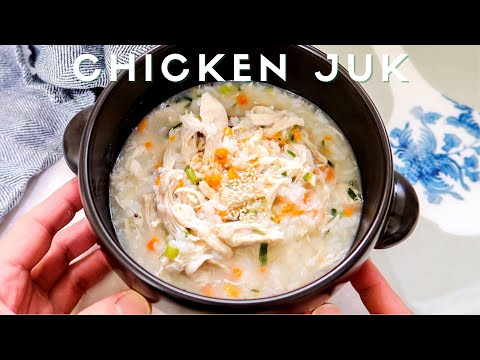
During simmering, rice granules burst and release amylose, thickening the broth naturally. The chicken’s collagen converts to gelatin, providing body and sheen. Aromatics such as garlic and ginger infuse volatile compounds that mellow under heat, integrating into the starch matrix. The final texture should be cohesive but fluid, with visible rice grains suspended in a glossy porridge base. Over-reduction results in a paste-like consistency, while undercooking leaves the rice granular. The transformation is complete when the mixture coats the spoon lightly and the chicken fibres remain tender and moist.
Workflow Efficiency and Timing Coordination
Efficient mise en place reduces downtime. Soaking rice while the chicken stock is prepared allows parallel processing. Aromatics should be minced and ready before simmering begins to avoid delays during active heat stages. Shredding the chicken while the rice cooks ensures immediate reintegration at the correct viscosity point. Maintaining a clean work area and staged ingredient layout prevents overcooking during final seasoning adjustments. Professional kitchens often batch the base porridge and finish portions to order with fresh garnishes to maintain optimal texture and temperature.
Regional and Cultural Lineage
Dakjuk originates from Korean culinary tradition as a restorative porridge, historically served to the ill or elderly due to its digestibility and nutrient density. The technique parallels other East Asian congee variants but distinguishes itself through the use of chicken stock rather than plain water, and the inclusion of aromatics like garlic and sesame oil. Modern adaptations maintain the same slow-simmering foundation but may incorporate boneless cuts for convenience. The dish exemplifies Korea’s broader porridge culture, where texture precision and subtle seasoning define authenticity more than visual presentation.
Recipe Education
Learn the Skills Behind This Recipe
Build confidence with cooking skills, techniques, and tools used in this recipe.
How to Boil Properly
Learn boiling times, temperature control, and how to avoid overcooking.
Recommended for the boil method used in this recipe.
Simmer vs Boil
Learn when to simmer, when to boil, and how each affects recipe results.
Recommended for the simmer method used in this recipe.
Cookware Guide
Learn which pots and pans work best for frying, sautéing, simmering, and roasting.
Helpful when using saucepan during preparation.
Cups to Grams
Convert cup measurements more accurately to improve recipe consistency.
Helpful when using measuring cups during preparation.
Cooking Basics
Build safer knife preparation, heat control, timing, and everyday kitchen confidence.
Helpful when using chef knife during preparation.


Dakjuk (Chicken Porridge)
Description
Dakjuk relies on the controlled hydration of short-grain rice and the gradual release of starch to achieve a cohesive, creamy texture without dairy. The rice must be soaked to ensure even swelling and to reduce cooking time, while the chicken provides both gelatin and soluble proteins that enrich the broth. Fat from the chicken skin emulsifies naturally during simmering, creating a balanced mouthfeel. Salt is introduced late to prevent premature tightening of the rice starch network, maintaining a smooth consistency. The ratio of liquid to rice is critical; excessive liquid yields a thin soup, while insufficient hydration leads to uneven grain breakdown.
Ingredients
Ingredients
Instructions
Instructions
Step 1
Place the whole chicken, water, ginger, and half of the minced garlic in a Stock Pot. Bring to a boil over high heat, then reduce to low and simmer for 40 minutes, skimming any foam.Maintain a gentle simmer to extract collagen without emulsifying surface fat excessively, which can cloud the broth.Step 2
Remove the chicken from the Stock Pot and set aside to cool slightly. Strain the broth through a Sieve to remove solids, returning the clear liquid to the pot.Straining while hot ensures fat separation remains manageable and prevents sediment from re-suspending.Step 3
Add the soaked rice to the strained broth and bring to a gentle simmer. Stir occasionally with a Wooden Spoon to prevent sticking and ensure even starch release.Frequent stirring during the first 10 minutes promotes uniform gelatinisation and prevents rice from settling at the base.Step 4
While the rice cooks, shred the cooled chicken meat using clean hands or Shears, discarding bones and skin. Reserve the shredded meat for later incorporation.Shred along the muscle grain to preserve texture and prevent the meat from disintegrating when reheated in the porridge.Step 5
After 25–30 minutes of simmering, when the rice has broken down and thickened the broth, add the shredded chicken and remaining minced garlic. Stir and cook for 5 minutes more.Introduce the chicken only after the rice base reaches proper viscosity to avoid overcooking and dryness.Step 6
Season with salt and black pepper, drizzle sesame oil, and stir to combine. Serve hot, garnished with sliced spring onion.Add sesame oil off heat to preserve its aromatic compounds and prevent bitterness from overheating.
Recommended Equipment

Nutrition Facts
Servings 4
Serving Size 1 portion
- Amount Per Serving
- Calories 415.58kcal
- % Daily Value *
- Total Fat 20.3g32%
- Saturated Fat 5.56g28%
- Cholesterol 90mg30%
- Sodium 597.2mg25%
- Potassium 383.39mg11%
- Total Carbohydrate 31.21g11%
- Dietary Fiber 1.72g7%
- Sugars 0.26g
- Protein 25.58g52%
- Vitamin A 230.82 IU
- Vitamin C 4.23 mg
- Calcium 53.64 mg
- Iron 1.98 mg
- Vitamin D 0.24 mcg
- Vitamin E 0.43 mg
- Vitamin K 15.25 mcg
- Thiamin 0.24 mg
- Riboflavin 0.17 mg
- Niacin 9.86 mg
- Vitamin B6 0.66 mg
- Folate 19.26 mcg
- Vitamin B12 0.37 mcg
- Pantothenic Acid 1.69 mg
- Phosphorus 284.7 mg
- Magnesium 87.59 mg
- Zinc 2.46 mg
- Selenium 17.8 mcg
- Copper 0.27 mg
- Manganese 1.56 mg
* Nutrition information is provided as an estimate per serving and may vary depending on the ingredients, brands, substitutions, portion sizes and preparation methods used. Percent Daily Values (%DV) are based on U.S. FDA reference values for a 2,000-calorie diet and are intended as a general guide only. Individual nutritional needs vary. This information is not a substitute for advice from a registered dietitian or other qualified healthcare professional.
Note
Allow the dish to cool gradually before sealing. Rapid temperature shifts can create condensation, weakening texture and diluting surface flavour concentration. The resting phase supports structural stabilisation and moisture redistribution. Cutting or serving too early may compromise internal balance. Grains and starches continue absorbing moisture after cooking. Adjust liquid slightly when reheating to restore optimal consistency. Slow-cooked preparations often improve after several hours or overnight refrigeration as aromatic compounds integrate more fully. Acid balance may soften slightly over time; a final adjustment before serving restores clarity.


