
Recipe Snapshot
Recipe at a Glance
Key timing, yield and style details before you start cooking.
Starch and Fat Interaction in Layered Potato Structure
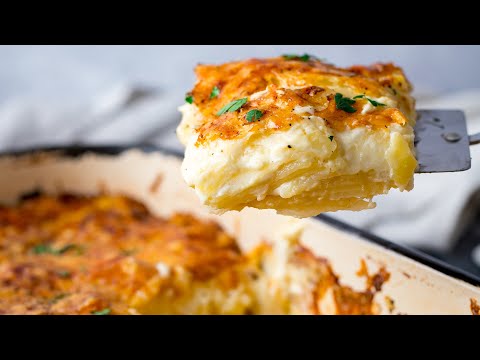
The structural integrity of Dauphinoise potatoes depends on the controlled release of starch from thinly sliced potatoes and its interaction with dairy fat. The starch acts as a natural binder, thickening the cream during baking to create a cohesive, sliceable texture. Full-fat cream ensures sufficient emulsification and prevents curdling under prolonged heat. Salt must be distributed evenly between layers to draw moisture and season the interior uniformly. The balance between hydration and fat saturation determines whether the final texture is creamy or greasy. Using waxy potatoes maintains defined layers, while floury varieties risk collapse through excessive starch release.
Thermal Management and Moisture Retention During Baking
Temperature staging is critical to achieving a tender interior and a caramelised surface. The initial covered bake allows steam to soften the potato layers without excessive evaporation. Removing the cover later promotes Maillard browning and reduction of surface moisture. Oven calibration should be verified with a thermometer to maintain consistent heat distribution. Overheating can cause the cream to split, while insufficient heat leaves the centre undercooked. The correct balance of covered and uncovered time ensures both internal tenderness and a golden crust. Carryover heat continues to thicken the cream post-bake, so resting is essential before slicing.
Textural Transformation Through Controlled Reduction
As the dish bakes, the cream reduces and concentrates, forming a stable emulsion with the potato starch. The top layer undergoes browning, developing a nutty aroma and crisp contrast to the soft interior. The gradual gelatinisation of starch within the cream binds the layers without additional thickeners. The transformation from raw potato to cohesive gratin relies on even heat penetration and consistent slice thickness. Uneven slicing disrupts cooking uniformity, leading to variable texture. Proper reduction yields a sauce that clings to each layer rather than pooling at the base, a hallmark of well-executed Dauphinoise.
Workflow Efficiency and Layer Assembly Control
Efficient mise en place reduces oxidation and maintains workflow precision. Potatoes should be sliced immediately before layering or held briefly in cold water to prevent browning, then dried thoroughly to avoid diluting the cream. Layering should be systematic, alternating potato, seasoning, and cream to ensure even distribution. Preheating the cream with garlic infuses flavour uniformly and shortens bake time. Using a mandoline guarantees consistent thickness, improving heat transfer and reducing overcooked edges. In service environments, partial pre-baking allows rapid regeneration without compromising texture or colour.
Regional Adaptation and British Café Interpretation
While originating from the Dauphiné region of France, the British café adaptation simplifies the classical technique for volume service. The cream-to-potato ratio is slightly reduced to produce a firmer slice suitable for plating alongside roasts or pies. Garlic and nutmeg are retained for aromatic depth, but cheese is often omitted to maintain a lighter dairy profile. This version reflects post-war British catering practices that prioritised efficiency and portion stability. The method remains faithful to the French principle of slow, moist baking but adjusted for commercial ovens and service holding requirements.
Recipe Education
Learn the Skills Behind This Recipe
Build confidence with cooking skills, techniques, and tools used in this recipe.
Oven Temperature Conversions
Understand oven temperatures and how they affect baking and roasting.
Recommended for the bake method used in this recipe.
Cookware Guide
Learn which pots and pans work best for frying, sautéing, simmering, and roasting.
Helpful when using saucepan during preparation.
Baking Tools Guide
Understand essential tools for mixing, measuring, and preparing recipes.
Recommended for the bake method used in this recipe.
Batch Cooking
Cook once and prepare multiple meals more efficiently.
Selected for this type of recipe.


Dauphinoise Potatoes (British Café Style)
Description
The structural integrity of Dauphinoise potatoes depends on the controlled release of starch from thinly sliced potatoes and its interaction with dairy fat. The starch acts as a natural binder, thickening the cream during baking to create a cohesive, sliceable texture. Full-fat cream ensures sufficient emulsification and prevents curdling under prolonged heat. Salt must be distributed evenly between layers to draw moisture and season the interior uniformly. The balance between hydration and fat saturation determines whether the final texture is creamy or greasy. Using waxy potatoes maintains defined layers, while floury varieties risk collapse through excessive starch release.
Ingredients
Ingredients
Instructions
Instructions
Step 1
Preheat oven to 160°C. Grease a Casserole Dish with unsalted butter to prevent sticking and ensure even browning.Verify oven temperature with an Oven Thermometer to maintain consistent heat for uniform cooking.Step 2
In a Saucepan, combine double cream, whole milk, crushed garlic, salt, black pepper, and nutmeg. Heat gently over low flame until just below simmering, then remove from heat.Avoid boiling the cream; excessive heat can cause fat separation and curdling.Step 3
Using a Mandoline, slice the peeled potatoes into uniform 2 mm rounds. Pat dry with a Tea Towel to remove surface moisture.Consistent thickness ensures even gelatinisation and prevents uneven cooking across layers.Step 4
Arrange one-third of the potato slices in the prepared dish, overlapping slightly. Pour over one-third of the warm cream mixture. Repeat layering twice more, finishing with cream on top.Press each layer lightly with a Silicone Spatula to eliminate air pockets and promote cohesive layering.Step 5
Cover the dish with Tin Foil and bake for 60 minutes. Remove foil and continue baking for 25–30 minutes until the top is golden and the potatoes are tender when pierced with a Paring Knife.If the top browns too quickly, reduce oven temperature by 10°C to allow interior layers to finish cooking evenly.Step 6
Remove from oven and rest for 15 minutes before slicing. This allows the cream to set and layers to stabilise.Resting prevents liquid separation and ensures clean, defined portions when serving.
Recommended Equipment

Nutrition Facts
Servings 6
Serving Size 1 portion
- Amount Per Serving
- Calories 466.78kcal
- % Daily Value *
- Total Fat 34.11g53%
- Saturated Fat 21.57g108%
- Cholesterol 104.99mg35%
- Sodium 456.6mg20%
- Potassium 1035.74mg30%
- Total Carbohydrate 35.86g12%
- Dietary Fiber 3.48g14%
- Sugars 6.31g
- Protein 7.12g15%
- Vitamin A 1372.47 IU
- Vitamin C 18.02 mg
- Calcium 110.8 mg
- Iron 1.58 mg
- Vitamin D 1.67 mcg
- Vitamin E 0.88 mg
- Vitamin K 9.08 mcg
- Thiamin 0.2 mg
- Riboflavin 0.26 mg
- Niacin 2.39 mg
- Vitamin B6 0.4 mg
- Folate 39.58 mcg
- Vitamin B12 0.28 mcg
- Pantothenic Acid 0.88 mg
- Phosphorus 199.45 mg
- Magnesium 53.74 mg
- Zinc 0.99 mg
- Selenium 4.19 mcg
- Copper 0.28 mg
- Manganese 0.33 mg
* Nutrition information is provided as an estimate per serving and may vary depending on the ingredients, brands, substitutions, portion sizes and preparation methods used. Percent Daily Values (%DV) are based on U.S. FDA reference values for a 2,000-calorie diet and are intended as a general guide only. Individual nutritional needs vary. This information is not a substitute for advice from a registered dietitian or other qualified healthcare professional.
Note
Allow the dish to cool gradually before sealing. Rapid temperature shifts can create condensation, weakening texture and diluting surface flavour concentration. The resting phase supports structural stabilisation and moisture redistribution. Cutting or serving too early may compromise internal balance. Dairy-based elements may thicken further upon cooling. Reheat gently to prevent separation or grainy texture. In larger batches, maintain even heat distribution and avoid overcrowding during reheating to preserve structural integrity. Slow-cooked preparations often improve after several hours or overnight refrigeration as aromatic compounds integrate more fully. Texture refinement often occurs naturally during resting due to internal moisture redistribution.


