
Recipe Snapshot
Recipe at a Glance
Key timing, yield and style details before you start cooking.
Balancing Sweetness, Spice, and Acidity in Honey-Based Sauces
Honey forms the structural base of this drizzle, providing viscosity and natural sweetness that binds aromatic compounds effectively. The inclusion of berbere spice introduces capsaicin and volatile oils that cut through the sugar density, preventing cloying heaviness. Lemon juice contributes citric acid, moderating pH and stabilising the emulsion when combined with warm water. The salt addition enhances perception of depth while suppressing excessive sweetness. Proper sequencing—dissolving spices before integrating honey—ensures even dispersion and prevents granular residue. The final texture should remain fluid but cohesive, coating the back of a spoon without crystallisation or separation.
Temperature Control and Infusion Management
Heat application must remain controlled to avoid degrading honey’s enzymatic compounds and volatile aromatics. Maintaining the mixture below 60°C preserves floral notes while allowing spice oils to bloom. Overheating leads to caramelisation and bitterness, compromising clarity and pourability. Using a Saucepan over low heat ensures gradual infusion, while continuous stirring prevents localised scorching. Once the spices have released aroma, immediate removal from heat halts further Maillard progression. Cooling slightly before straining stabilises the emulsion and prevents trapped steam from thinning the final consistency.
Transformation Through Controlled Reduction and Cooling
During gentle heating, water reduction slightly thickens the syrup, concentrating both sweetness and spice. As the mixture cools, viscosity increases due to honey’s glucose crystallisation threshold. The key transformation lies in achieving a balanced reduction—enough to intensify flavour without reaching a sticky or taffy-like stage. Proper cooling on a trivet allows residual heat to complete mild thickening. Once cooled, the drizzle should exhibit a smooth, glossy texture with suspended spice particulates evenly distributed, indicating correct emulsification and reduction control.
Workflow Efficiency and Storage Stability
Efficient mise en place simplifies execution: pre-measure spices, juice, and honey before heating to minimise dwell time on heat. Straining immediately after infusion prevents sedimentation. For service environments, batch preparation can be scaled and stored in sterilised Mason Jars. The high sugar concentration provides natural preservation, but refrigeration extends shelf life and maintains viscosity. Rewarming gently in a Water Bath or Microwave before service restores fluidity without structural breakdown. Avoid repeated reheating cycles, which accelerate crystallisation and flavour dulling.
Cultural and Regional Context of Ethiopian Spice Integration
This drizzle draws from Ethiopian flavour architecture, where berbere spice blends—typically containing chili, fenugreek, ginger, and korarima—anchor both savoury and sweet applications. Honey, a staple in Ethiopian mead (tej) and ceremonial cooking, provides a natural bridge between heat and floral sweetness. The technique of warm infusion parallels regional sauce preparations that rely on controlled spice blooming rather than aggressive frying. Modern adaptations extend its use beyond traditional breads and cheeses to roasted vegetables or grilled meats, maintaining fidelity to Ethiopian balance principles of heat, acid, and sweetness.
Recipe Education
Learn the Skills Behind This Recipe
Build confidence with cooking skills, techniques, and tools used in this recipe.
Cookware Guide
Learn which pots and pans work best for frying, sautéing, simmering, and roasting.
Helpful when using saucepan during preparation.
Baking Tools Guide
Understand essential tools for mixing, measuring, and preparing recipes.
Helpful when using mixing bowl during preparation.
Cooking Basics
Build confidence with core skills and beginner-friendly cooking techniques.
Supports the beginner skill level of this recipe.
Batch Cooking
Cook once and prepare multiple meals more efficiently.
Selected for this type of recipe.


Ethiopian Spiced Honey Drizzle
Description
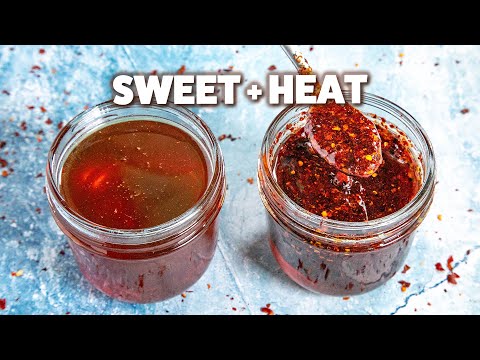
Honey forms the structural base of this drizzle, providing viscosity and natural sweetness that binds aromatic compounds effectively. The inclusion of berbere spice introduces capsaicin and volatile oils that cut through the sugar density, preventing cloying heaviness. Lemon juice contributes citric acid, moderating pH and stabilising the emulsion when combined with warm water. The salt addition enhances perception of depth while suppressing excessive sweetness. Proper sequencing—dissolving spices before integrating honey—ensures even dispersion and prevents granular residue. The final texture should remain fluid but cohesive, coating the back of a spoon without crystallisation or separation.
Ingredients
Ingredients
Instructions
Instructions
Step 1
Combine water, berbere spice blend, and salt in a Saucepan over low heat. Stir with a Silicone Spatula until the mixture begins to steam but does not boil.Keep temperature below 60°C to preserve spice aromatics and prevent bitterness.Step 2
Add honey and continue stirring until fully dissolved and homogeneous. Avoid vigorous boiling to maintain clarity.Introduce honey off direct flame to prevent caramelisation and maintain smooth viscosity.Step 3
Incorporate lemon juice and optional neutral oil, whisking gently to emulsify. Maintain low heat for 1–2 minutes to integrate flavours.Add acid after honey integration to prevent premature thickening or crystallisation.Step 4
Remove from heat and allow the mixture to rest for 5 minutes. Strain through a Sieve into a clean Mixing Bowl to remove spice solids.Strain while warm to ensure smooth flow and prevent sediment settling.Step 5
Transfer the strained drizzle into a sterilised Mason Jar and cool completely before sealing. Store refrigerated.Cool uncovered until room temperature to avoid condensation that could dilute the syrup.
Recommended Equipment

Nutrition Facts
Servings 8
Serving Size 1 portion
- Amount Per Serving
- Calories 73.22kcal
- % Daily Value *
- Total Fat 0.56g1%
- Saturated Fat 0.04g1%
- Sodium 63.6mg3%
- Total Carbohydrate 18.09g7%
- Dietary Fiber 0.3g2%
- Sugars 17.69g
- Protein 0.07g1%
- Vitamin C 1.34 mg
- Iron 0.59 mg
* Nutrition information is provided as an estimate per serving and may vary depending on the ingredients, brands, substitutions, portion sizes and preparation methods used. Percent Daily Values (%DV) are based on U.S. FDA reference values for a 2,000-calorie diet and are intended as a general guide only. Individual nutritional needs vary. This information is not a substitute for advice from a registered dietitian or other qualified healthcare professional.
Note
Store in an airtight container under refrigeration, ensuring minimal air exposure to preserve flavour integrity and textural balance. The resting phase supports structural stabilisation and moisture redistribution. Cutting or serving too early may compromise internal balance. Spice intensity can deepen over time as volatile compounds settle. Taste and adjust seasoning after resting. In larger batches, maintain even heat distribution and avoid overcrowding during reheating to preserve structural integrity. Acid balance may soften slightly over time; a final adjustment before serving restores clarity.


