
Recipe Snapshot
Recipe at a Glance
Key timing, yield and style details before you start cooking.
Fat Interaction and Structural Balance
The sandwich relies on controlled fat layering: rendered bacon fat, egg yolk richness, and avocado oil content. Each fat type contributes differently—bacon fat provides crispness and salt, egg yolk adds emulsified creaminess, and avocado delivers smooth mouthfeel. Bread selection must absorb without collapsing; medium-density sandwich bread or brioche maintains integrity under moisture load. Salt calibration is critical since bacon introduces variable salinity. The avocado’s mild fat buffers salt intensity and stabilises texture. Acid from optional lemon or tomato slices can sharpen the profile, preventing overall heaviness. Proper sequencing—bacon first, then egg, then avocado—ensures heat distribution and structural cohesion during assembly.
Heat Control and Moisture Management
Temperature staging defines the sandwich’s success. Bacon requires medium heat to render fat without burning; eggs demand moderate-low heat to set whites while preserving yolk fluidity. Bread toasting should occur on residual bacon fat or controlled dry heat to achieve even browning without oil saturation. Moisture from avocado and egg yolk must be balanced by crisp bread surfaces to prevent sogginess. Timing overlap—frying eggs while bacon drains—optimises workflow and temperature retention. Carryover heat from the egg continues to soften avocado slightly, integrating textures. Overheating any component destabilises the sandwich’s internal moisture gradient and reduces contrast.
Textural Transformation During Cooking
Cooking transitions each element through distinct texture phases: bacon from pliable to crisp, egg from viscous to set, and bread from soft to toasted. These transformations create layered resistance and release during biting. The Maillard reaction on bread and bacon intensifies savoury depth, while the avocado’s raw creaminess offsets the crunch. Egg yolk viscosity acts as a natural binder, reducing the need for added condiments. Controlled heat ensures the yolk remains molten but not raw, maintaining a cohesive internal structure. The final sandwich achieves balance through alternating crisp, creamy, and tender textures that remain stable during handling.
Workflow Efficiency and Assembly Logic
Efficient execution depends on sequencing and temperature retention. Begin with bacon to generate rendered fat for subsequent bread toasting, reducing pan transitions. While bacon drains, eggs can be fried in the same pan, utilising residual heat for even cooking. Bread should be toasted last to align with final assembly timing, ensuring warmth and crispness. Avocado should be sliced or mashed immediately before layering to prevent oxidation. Assembly order—bread base, avocado, bacon, egg, top slice—maintains structural integrity and prevents slippage. This workflow minimises downtime and ensures all components reach the plate at optimal temperature and texture.
Cultural and Regional Context
The fried egg sandwich evolved from early American diner breakfasts where quick protein-fat combinations were prioritised for efficiency. Bacon and eggs formed the base, later adapted with avocado through Californian and modern brunch influences. The integration of avocado reflects West Coast produce availability and nutritional preference for unsaturated fats. The sandwich’s structure mirrors British bacon butty and European croque-style layering, but with lighter fat balance and fresher components. Its current form represents a convergence of traditional breakfast technique and contemporary ingredient substitution, maintaining the core logic of heat-managed protein and fat layering.
Recipe Education
Learn the Skills Behind This Recipe
Build confidence with cooking skills, techniques, and tools used in this recipe.
How to Fry Properly
Understand pan heat, oil temperature, and how to get better frying results.
Recommended for the fry method used in this recipe.
Cooking Basics
Build safer knife preparation, heat control, timing, and everyday kitchen confidence.
Helpful when using chef knife during preparation.
Cookware Guide
Learn which pots and pans work best for frying, sautéing, simmering, and roasting.
Helpful when using frying pan during preparation.
Teaspoons to Grams
Use small-measure conversions more accurately in cooking and baking.
Helpful when using measuring spoons during preparation.
Baking Tools Guide
Understand essential tools for mixing, measuring, and preparing recipes.
Helpful when using mixing bowl during preparation.


Fried Egg Sandwich with Avocado and Bacon
Description
The sandwich relies on controlled fat layering: rendered bacon fat, egg yolk richness, and avocado oil content. Each fat type contributes differently—bacon fat provides crispness and salt, egg yolk adds emulsified creaminess, and avocado delivers smooth mouthfeel. Bread selection must absorb without collapsing; medium-density sandwich bread or brioche maintains integrity under moisture load. Salt calibration is critical since bacon introduces variable salinity. The avocado’s mild fat buffers salt intensity and stabilises texture. Acid from optional lemon or tomato slices can sharpen the profile, preventing overall heaviness. Proper sequencing—bacon first, then egg, then avocado—ensures heat distribution and structural cohesion during assembly.
Ingredients
Ingredients
Instructions
Instructions
Step 1
Place the bacon slices in a cold Frying Pan and bring heat to medium. Cook until fat renders and bacon becomes crisp, about 6–8 minutes, turning occasionally. Transfer to a paper towel to drain.Start bacon in a cold pan to promote even fat rendering and prevent curling.Step 2
Remove excess fat from the Frying Pan, leaving a thin film. Add butter and toast the bread slices on medium heat until golden on both sides. Set aside on a Cooling Rack to prevent steam softening.Allow toasted bread to rest briefly on a rack to maintain surface crispness.Step 3
Add vegetable oil to the same Frying Pan and heat over medium-low. Crack eggs in and fry until whites are set but yolks remain soft, approximately 2–3 minutes. Season with salt and black pepper.Lower heat once whites begin to set to avoid overcooking the yolk through residual pan heat.Step 4
Mash or slice the avocado and drizzle with lemon juice if using. Spread evenly over two toasted bread slices to create a stable base layer.Apply lemon juice immediately after slicing to slow enzymatic browning and maintain colour.Step 5
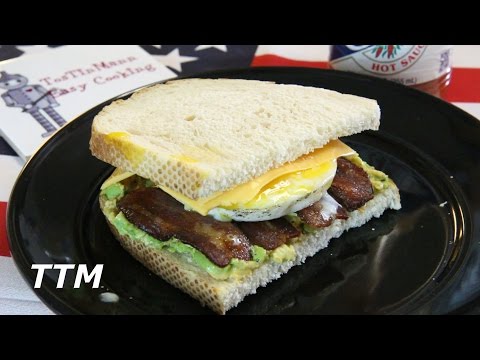
Layer bacon over the avocado, then top with fried eggs. Cap with remaining toasted bread slices and press lightly to secure structure. Serve immediately while warm.Light pressure during assembly prevents yolk rupture while ensuring cohesive layering.
Recommended Equipment

Nutrition Facts
Servings 2
Serving Size 1 portion
- Amount Per Serving
- Calories 537.29kcal
- % Daily Value *
- Total Fat 40.34g63%
- Saturated Fat 11.26g57%
- Cholesterol 43.07mg15%
- Sodium 763mg32%
- Potassium 644.91mg19%
- Total Carbohydrate 34.24g12%
- Dietary Fiber 8.02g33%
- Sugars 3.41g
- Protein 12.51g26%
- Vitamin A 291.69 IU
- Vitamin C 11.05 mg
- Calcium 123.96 mg
- Iron 2.48 mg
- Vitamin D 0.2 mcg
- Vitamin E 2.7 mg
- Vitamin K 26.6 mcg
- Thiamin 0.44 mg
- Riboflavin 0.28 mg
- Niacin 5.91 mg
- Vitamin B6 0.43 mg
- Folate 138.12 mcg
- Vitamin B12 0.24 mcg
- Pantothenic Acid 1.94 mg
- Phosphorus 176.25 mg
- Magnesium 49.16 mg
- Zinc 1.63 mg
- Selenium 21.23 mcg
- Copper 0.28 mg
- Manganese 0.51 mg
* Nutrition information is provided as an estimate per serving and may vary depending on the ingredients, brands, substitutions, portion sizes and preparation methods used. Percent Daily Values (%DV) are based on U.S. FDA reference values for a 2,000-calorie diet and are intended as a general guide only. Individual nutritional needs vary. This information is not a substitute for advice from a registered dietitian or other qualified healthcare professional.
Note
For best structural retention, cool uncovered briefly before storage to prevent trapped steam from softening exterior crust or caramelised surfaces. The resting phase supports structural stabilisation and moisture redistribution. Cutting or serving too early may compromise internal balance. Spice intensity can deepen over time as volatile compounds settle. Taste and adjust seasoning after resting. When reheating crisp components, use dry heat rather than microwave methods to maintain exterior texture. Acid balance may soften slightly over time; a final adjustment before serving restores clarity.


