
Recipe Snapshot
Recipe at a Glance
Key timing, yield and style details before you start cooking.
Ingredient Structure and Balance
The sandwich relies on ripe plantains as both starch and structural element, replacing bread with caramelised slices that provide sweetness and pliable texture. Their high sugar content drives Maillard browning, while residual moisture ensures flexibility for compression. The filling’s protein and fat components—typically eggs, cheese, or seasoned meat—counterbalance the plantain’s sweetness through salt and umami. Acidic or fresh elements such as tomato or pickled onion are essential to cut through the caramelised sugars and oil. Salt must be applied post-frying to avoid premature moisture draw, which would inhibit surface crisping. The ratio between plantain thickness and filling density determines bite integrity and prevents collapse under pressure.
Heat Control and Frying Technique
Plantain slices require controlled shallow frying at medium heat to achieve uniform caramelisation without burning. Excessive heat causes surface scorching before internal softening, while low heat leads to oil absorption and soggy texture. Oil temperature should stabilise around 170°C, monitored visually by steady bubbling. After the first fry, slices are pressed and refried briefly to reinforce structure. Carryover heat continues sugar caramelisation post-removal, so resting on a rack prevents steam entrapment. The filling components must be cooked separately to avoid moisture transfer that would soften the plantain exterior. Assembly occurs only once all elements reach stable serving temperature.
Textural Transformation and Layer Integration
Through frying, plantain starches gelatinise and sugars caramelise, producing a crisp exterior and tender interior. This dual texture forms the sandwich’s defining contrast. When compressed around the filling, the plantain acts as both binder and flavour carrier, absorbing rendered fat and seasoning. The filling’s heat slightly reactivates surface sugars, creating adhesion without additional binders. Cheese, if used, melts into the plantain’s microstructure, stabilising the layers. Proper resting before cutting allows internal steam to dissipate, preventing slippage. The final texture should show cohesive layering with audible crispness on bite and balanced chew from the plantain core.
Workflow Efficiency and Assembly Logic
Efficient execution requires parallel preparation: plantains fried and held warm while fillings are cooked. Mise en place includes pre-sliced vegetables, pre-grated cheese, and seasoning blends ready for immediate assembly. The pressing phase benefits from using a flat spatula or weighted pan to ensure even compression. Excess oil should be drained before assembly to maintain grip between layers. The sandwich should be built on a clean surface and served immediately to preserve structural crispness. Delayed assembly or stacking under heat lamps compromises integrity through moisture migration. Proper sequencing avoids bottlenecks during service.
Regional and Cultural Context
The fried plantain sandwich, known in several Caribbean and Latin American regions as a patacón or toston sandwich, evolved from the practice of using twice-fried plantains as a starch base. Originating in coastal Colombia and Venezuela, the technique reflects resource adaptation where bread was less accessible. The method aligns with broader Caribbean frying traditions that emphasise textural contrast and efficient use of local produce. Modern adaptations incorporate global fillings while retaining the defining plantain structure. Its continued presence in street food culture demonstrates the durability of the double-fry technique as both preservation and texture control method.
Recipe Education
Learn the Skills Behind This Recipe
Build confidence with cooking skills, techniques, and tools used in this recipe.
How to Fry Properly
Understand pan heat, oil temperature, and how to get better frying results.
Recommended for the fry method used in this recipe.
Cooking Basics
Build safer knife preparation, heat control, timing, and everyday kitchen confidence.
Helpful when using chef knife during preparation.
Cookware Guide
Learn which pots and pans work best for frying, sautéing, simmering, and roasting.
Helpful when using frying pan during preparation.


Fried Plantain Sandwich
Description
The sandwich relies on ripe plantains as both starch and structural element, replacing bread with caramelised slices that provide sweetness and pliable texture. Their high sugar content drives Maillard browning, while residual moisture ensures flexibility for compression. The filling’s protein and fat components—typically eggs, cheese, or seasoned meat—counterbalance the plantain’s sweetness through salt and umami. Acidic or fresh elements such as tomato or pickled onion are essential to cut through the caramelised sugars and oil. Salt must be applied post-frying to avoid premature moisture draw, which would inhibit surface crisping. The ratio between plantain thickness and filling density determines bite integrity and prevents collapse under pressure.
Ingredients
Ingredients
Instructions
Instructions
Step 1
Heat vegetable oil in a Frying Pan over medium heat to approximately 170°C. Add plantain slices and fry for 2–3 minutes per side until golden and slightly softened.Monitor oil temperature with a Thermometer (Infrared) to prevent sugar scorching and uneven caramelisation.Step 2
Remove plantains and place on a Cooling Rack to drain excess oil. Using a Spatula, gently press each slice to flatten evenly to about 5 mm thickness.Press while the plantains are still warm; starch flexibility decreases rapidly as they cool.Step 3
Return flattened plantains to the Frying Pan and refry for 1–2 minutes per side until crisp and deep golden. Transfer again to the Cooling Rack and season immediately with salt.Season while surface oil is still hot to ensure salt adhesion and even distribution.Step 4
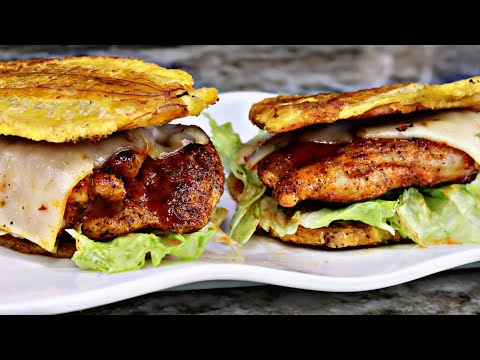
Spread mayonnaise on one side of two plantain slices. Layer shredded chicken, cheese, tomato, and pickled red onion between them to form a sandwich.Keep fillings warm but not wet; excess moisture will soften the plantain crust and reduce structural integrity.Step 5
Return the assembled sandwich briefly to the Frying Pan or a Grill Pan for 30–45 seconds per side to melt cheese and seal layers. Serve immediately.Apply gentle pressure with a Turner Spatula during reheating to promote adhesion without crushing the structure.
Recommended Equipment

Nutrition Facts
Servings 2
Serving Size 1 portion
- Amount Per Serving
- Calories 723.87kcal
- % Daily Value *
- Total Fat 40.79g63%
- Saturated Fat 10.89g55%
- Cholesterol 108.8mg37%
- Sodium 374.76mg16%
- Potassium 1240.19mg36%
- Total Carbohydrate 60.1g21%
- Dietary Fiber 3.67g15%
- Sugars 32.9g
- Protein 34.45g69%
- Vitamin A 2732.35 IU
- Vitamin C 39.54 mg
- Calcium 222.15 mg
- Iron 2.4 mg
- Vitamin D 0.2 mcg
- Vitamin E 2.02 mg
- Vitamin K 103.34 mcg
- Thiamin 0.2 mg
- Riboflavin 0.42 mg
- Niacin 9.36 mg
- Vitamin B6 0.91 mg
- Folate 58.72 mcg
- Vitamin B12 0.6 mcg
- Pantothenic Acid 1.7 mg
- Phosphorus 392.79 mg
- Magnesium 98.64 mg
- Zinc 2.99 mg
- Selenium 35.54 mcg
- Copper 0.23 mg
- Manganese 0.34 mg
* Nutrition information is provided as an estimate per serving and may vary depending on the ingredients, brands, substitutions, portion sizes and preparation methods used. Percent Daily Values (%DV) are based on U.S. FDA reference values for a 2,000-calorie diet and are intended as a general guide only. Individual nutritional needs vary. This information is not a substitute for advice from a registered dietitian or other qualified healthcare professional.
Note
Use sterilised containers and ensure full submersion where applicable to maintain product safety and prevent microbial instability during storage. The resting phase supports structural stabilisation and moisture redistribution. Cutting or serving too early may compromise internal balance. Dairy-based elements may thicken further upon cooling. Reheat gently to prevent separation or grainy texture. When reheating crisp components, use dry heat rather than microwave methods to maintain exterior texture. Acid balance may soften slightly over time; a final adjustment before serving restores clarity.


