
Recipe Snapshot
Recipe at a Glance
Key timing, yield and style details before you start cooking.
Starch Gelatinisation and Fat Interaction
Sweet potato provides both starch and natural sugars that determine the dough’s binding and crisping behaviour. When mashed, its moisture content must be balanced with starch addition to prevent oil absorption during frying. The starch granules gelatinise upon heating, forming a cohesive matrix that traps steam and expands slightly, producing a light interior. Sugar caramelises at the surface, enhancing browning and flavour depth. Proper salt calibration sharpens sweetness perception while maintaining structural integrity. Excess moisture or insufficient starch leads to collapse or soggy texture, so the hydration ratio must be tightly controlled before shaping.
Temperature Control and Frying Dynamics
Oil temperature stability is critical to achieving uniform expansion and colour. At 170–180°C, surface dehydration occurs rapidly, sealing the exterior before internal steam pressure builds. If the oil is too cool, the dough absorbs fat and becomes greasy; too hot, and the exterior burns before the interior sets. Batch size must be limited to maintain temperature recovery between loads. Continuous monitoring with a thermometer ensures consistent results. The frying phase should be brief, just long enough to achieve a golden crust while preserving a soft, aerated interior.
Textural Transformation During Cooking
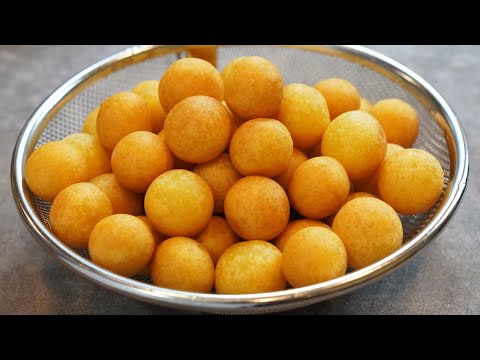
As the sweet potato balls fry, starches gelatinise and sugars caramelise, creating a crisp shell that contrasts with the tender core. The internal moisture converts to steam, expanding the structure slightly and contributing to the hollow, airy texture characteristic of well-executed versions. The Maillard reaction intensifies surface colour and aroma, while residual heat continues to firm the interior after removal from oil. Resting on a rack allows excess oil to drain and prevents condensation that would soften the crust.
Workflow Efficiency and Shaping Consistency
Uniform portioning ensures even cooking and predictable texture. Using a small scoop or weighing each portion maintains consistency across batches. Rolling with lightly oiled hands prevents sticking and promotes smooth surfaces that fry evenly. Preheating oil while shaping the final batch optimises workflow. Avoid overcrowding the frying vessel to maintain oil temperature stability. Cooling the mashed sweet potato before mixing prevents premature starch activation and ensures a pliable, cohesive dough that holds shape under heat.
Regional Technique Lineage and Adaptation
Fried sweet potato balls are rooted in East and Southeast Asian street food traditions, particularly Taiwanese and Thai variants. The method evolved from rice flour-based fritters, adapting local tubers for sweetness and colour. The technique relies on controlled deep frying to achieve a puffed, crisp shell without leavening agents. Modern adaptations often adjust starch ratios or incorporate glutinous rice flour for elasticity. Despite regional differences, the defining principle remains the same: precise moisture control and temperature management to balance chew and crunch.
Recipe Education
Learn the Skills Behind This Recipe
Build confidence with cooking skills, techniques, and tools used in this recipe.
How to Fry Properly
Understand pan heat, oil temperature, and how to get better frying results.
Recommended for the fry method used in this recipe.
Cookware Guide
Learn which pots and pans work best for frying, sautéing, simmering, and roasting.
Helpful when using saucepan during preparation.
Baking Tools Guide
Understand essential tools for mixing, measuring, and preparing recipes.
Helpful when using mixing bowl during preparation.


Fried Sweet Potato Balls
Description
Sweet potato provides both starch and natural sugars that determine the dough’s binding and crisping behaviour. When mashed, its moisture content must be balanced with starch addition to prevent oil absorption during frying. The starch granules gelatinise upon heating, forming a cohesive matrix that traps steam and expands slightly, producing a light interior. Sugar caramelises at the surface, enhancing browning and flavour depth. Proper salt calibration sharpens sweetness perception while maintaining structural integrity. Excess moisture or insufficient starch leads to collapse or soggy texture, so the hydration ratio must be tightly controlled before shaping.
Ingredients
Ingredients
Instructions
Instructions
Step 1
Steam peeled sweet potatoes until tender, then mash thoroughly in a Mixing Bowl until smooth and free of lumps.Ensure the mash is cooled to room temperature before adding starch to prevent premature gelatinisation.Step 2
Add tapioca starch, caster sugar, fine salt, and 15 ml vegetable oil to the mashed sweet potato. Mix until a cohesive dough forms.Adjust with small increments of starch if the dough feels sticky; it should be pliable but not wet.Step 3
Divide the dough into equal portions of about 20 g each and roll into smooth balls using lightly oiled hands on a clean surface.Uniform size ensures even expansion and consistent frying colour across all pieces.Step 4
Heat 500 ml vegetable oil in a Saucepan to 175°C, checking with a Thermometer(Meat). Fry the balls in small batches for 4–5 minutes, turning occasionally until golden brown.Maintain oil temperature between 170–180°C; fluctuations cause uneven puffing or greasy texture.Step 5
Remove fried sweet potato balls with a Spider / Skimmer and drain on a Cooling Rack lined with Parchment Paper. Allow to rest for 2 minutes before serving.Resting briefly allows residual steam to escape, preserving the crisp exterior.
Recommended Equipment

Nutrition Facts
Servings 4
Serving Size 1 portion
- Amount Per Serving
- Calories 1201.33kcal
- % Daily Value *
- Total Fat 118.68g183%
- Saturated Fat 18.11g91%
- Sodium 151.9mg7%
- Potassium 341.02mg10%
- Total Carbohydrate 45.02g16%
- Dietary Fiber 3g12%
- Sugars 4.18g
- Protein 1.57g4%
- Vitamin A 14187 IU
- Vitamin C 2.4 mg
- Calcium 30.06 mg
- Iron 0.87 mg
- Vitamin E 9.96 mg
- Vitamin K 219.97 mcg
- Thiamin 0.08 mg
- Riboflavin 0.06 mg
- Niacin 0.56 mg
- Vitamin B6 0.21 mg
- Folate 11 mcg
- Pantothenic Acid 0.8 mg
- Phosphorus 49.6 mg
- Magnesium 25 mg
- Zinc 0.3 mg
- Copper 0.15 mg
- Manganese 0.26 mg
* Nutrition information is provided as an estimate per serving and may vary depending on the ingredients, brands, substitutions, portion sizes and preparation methods used. Percent Daily Values (%DV) are based on U.S. FDA reference values for a 2,000-calorie diet and are intended as a general guide only. Individual nutritional needs vary. This information is not a substitute for advice from a registered dietitian or other qualified healthcare professional.
Note
For best structural retention, cool uncovered briefly before storage to prevent trapped steam from softening exterior crust or caramelised surfaces. The resting phase supports structural stabilisation and moisture redistribution. Cutting or serving too early may compromise internal balance. When reheating crisp components, use dry heat rather than microwave methods to maintain exterior texture. Monitor seasoning levels after storage, as salt perception can shift once chilled.


