
Recipe Snapshot
Recipe at a Glance
Key timing, yield and style details before you start cooking.
Ingredient Matrix and Emulsion Stability
The structural integrity of Gaeng Kiew Wan Talay depends on the controlled emulsification between coconut fat and aqueous curry base. The coconut milk’s fat phase must remain stable under moderate heat to prevent separation, while the green curry paste’s aromatic compounds—primarily from lemongrass, galangal, and green chilies—require oil solubilisation for full flavour release. Salt and fish sauce regulate ionic balance, enhancing protein hydration in seafood while maintaining muscle firmness. Sugar moderates capsaicin intensity and rounds acidity from kaffir lime. The inclusion of Thai basil and lime leaves at the end preserves volatile oils that would otherwise degrade under prolonged heat exposure.
Thermal Control and Moisture Management
Temperature staging is critical to prevent overcooking delicate seafood proteins. The curry base must reach a controlled simmer before seafood introduction to ensure even heat distribution without aggressive boiling. Evaporation must be limited to maintain sauce viscosity; excessive reduction destabilises the coconut emulsion. Carryover heat continues cooking shrimp and squid post-removal from direct heat, so timing must anticipate residual temperature rise. Maintaining a consistent medium heat during paste frying ensures aromatic development without scorching, while the final simmer phase integrates flavours without breaking the fat layer.
Transformation and Flavour Layering
During cooking, the curry undergoes a transformation from raw paste to a cohesive aromatic matrix. The initial sautéing of curry paste in coconut cream triggers Maillard reactions that deepen colour and complexity. As the base simmers, starches from vegetables slightly thicken the sauce, while seafood proteins denature and release subtle umami compounds. The final addition of fresh herbs and lime juice introduces brightness, balancing the concentrated savoury depth. The resulting texture should be fluid yet coating, with a glossy surface indicating proper emulsification and controlled reduction.
Workflow Efficiency and Sequencing Logic
Efficient mise en place is essential: curry paste, coconut milk, seafood, and vegetables must be prepped and portioned before heat application. The process follows a linear sequence—paste activation, base formation, protein cooking, and aromatic finishing—minimising idle time. Parallel preparation of garnishes and rice allows immediate service upon completion. Overlapping tasks, such as slicing vegetables during the initial paste fry, risk overcooking the base. Maintaining a clean station and pre-measured liquids ensures seamless transitions between stages, preventing emulsion destabilisation from delayed additions.
Regional Technique and Culinary Lineage
Gaeng Kiew Wan originates from Central Thailand, where coconut-based curries evolved through trade-influenced spice integration. The seafood variant, Talay, reflects coastal adaptation, substituting land proteins with mixed shellfish and fish. The green curry’s distinctive hue derives from fresh green chilies rather than dried forms used in red curries, producing a sharper, herbaceous profile. Modern Thai kitchens maintain the traditional mortar-ground paste method but often employ blenders for consistency. The dish exemplifies Thai balance principles—spicy, sweet, salty, and aromatic—executed through precise heat and ingredient timing.
Recipe Education
Learn the Skills Behind This Recipe
Build confidence with cooking skills, techniques, and tools used in this recipe.
How to Sauté Properly
Master fast cooking, pan heat, and ingredient timing for better texture.
Recommended for the saute method used in this recipe.
Simmer vs Boil
Learn when to simmer, when to boil, and how each affects recipe results.
Recommended for the simmer method used in this recipe.
Cookware Guide
Learn which pots and pans work best for frying, sautéing, simmering, and roasting.
Helpful when using frying pan during preparation.
Cups to Grams
Convert cup measurements more accurately to improve recipe consistency.
Helpful when using measuring cups during preparation.
Teaspoons to Grams
Use small-measure conversions more accurately in cooking and baking.
Helpful when using measuring spoons during preparation.
Baking Tools Guide
Understand essential tools for mixing, measuring, and preparing recipes.
Helpful when using mixing bowl during preparation.


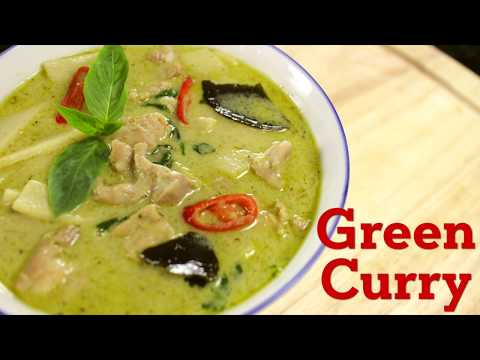
Gaeng Kiew Wan Talay (Seafood Green Curry)
Description
The structural integrity of Gaeng Kiew Wan Talay depends on the controlled emulsification between coconut fat and aqueous curry base. The coconut milk’s fat phase must remain stable under moderate heat to prevent separation, while the green curry paste’s aromatic compounds—primarily from lemongrass, galangal, and green chilies—require oil solubilisation for full flavour release. Salt and fish sauce regulate ionic balance, enhancing protein hydration in seafood while maintaining muscle firmness. Sugar moderates capsaicin intensity and rounds acidity from kaffir lime. The inclusion of Thai basil and lime leaves at the end preserves volatile oils that would otherwise degrade under prolonged heat exposure.
Ingredients
Ingredients
Instructions
Instructions
Step 1
Heat vegetable oil in a Saute Pan over medium heat. Add 100 ml of the thick coconut cream and green curry paste. Fry for 2–3 minutes until fragrant and the oil separates slightly.Maintain medium heat to allow aromatic oils to bloom without burning the paste; visible oil separation indicates correct activation.Step 2
Add the remaining coconut milk and stir to combine. Bring to a gentle simmer, ensuring the mixture does not boil vigorously.Avoid rapid boiling to prevent coconut fat from splitting; consistent small bubbles maintain emulsion stability.Step 3
Add eggplant and bamboo shoots. Simmer for 5–6 minutes until the vegetables begin to soften.Monitor texture—eggplant should yield slightly under pressure but retain structure to avoid mushiness.Step 4
Add shrimp, squid, and fish fillet. Simmer gently for 3–4 minutes until seafood is just cooked through.Introduce seafood only when the base is stable; overcooking will toughen proteins and cloud the sauce.Step 5
Season with fish sauce, palm sugar, and salt. Stir until dissolved and balanced. Add kaffir lime leaves and Thai basil leaves off the heat.Add herbs after removing from heat to preserve volatile oils and maintain bright aroma.Step 6
Finish with lime juice and adjust seasoning. Rest for 2 minutes before serving to allow flavours to integrate.Resting stabilises the emulsion and allows residual heat to equalise across the sauce.
Recommended Equipment

Nutrition Facts
Servings 4
Serving Size 1 portion
- Amount Per Serving
- Calories 371.05kcal
- % Daily Value *
- Total Fat 26.18g41%
- Saturated Fat 19.36g97%
- Cholesterol 186.63mg63%
- Sodium 1403.81mg59%
- Potassium 663.03mg19%
- Total Carbohydrate 10.72g4%
- Dietary Fiber 1.45g6%
- Sugars 4.36g
- Protein 26.74g54%
- Vitamin A 2111.08 IU
- Vitamin C 6.6 mg
- Calcium 99.32 mg
- Iron 4.54 mg
- Vitamin D 1.15 mcg
- Vitamin E 1.09 mg
- Vitamin K 32.58 mcg
- Thiamin 0.06 mg
- Riboflavin 0.2 mg
- Niacin 3.34 mg
- Vitamin B6 0.19 mg
- Folate 39.17 mcg
- Vitamin B12 1.12 mcg
- Pantothenic Acid 0.63 mg
- Phosphorus 358.97 mg
- Magnesium 107.85 mg
- Zinc 2.09 mg
- Selenium 33.45 mcg
- Copper 1.21 mg
- Manganese 0.95 mg
* Nutrition information is provided as an estimate per serving and may vary depending on the ingredients, brands, substitutions, portion sizes and preparation methods used. Percent Daily Values (%DV) are based on U.S. FDA reference values for a 2,000-calorie diet and are intended as a general guide only. Individual nutritional needs vary. This information is not a substitute for advice from a registered dietitian or other qualified healthcare professional.
Note
Allow the dish to cool gradually before sealing. Rapid temperature shifts can create condensation, weakening texture and diluting surface flavour concentration. The resting phase supports structural stabilisation and moisture redistribution. Cutting or serving too early may compromise internal balance. Dairy-based elements may thicken further upon cooling. Reheat gently to prevent separation or grainy texture. Slow-cooked preparations often improve after several hours or overnight refrigeration as aromatic compounds integrate more fully. When reheating crisp components, use dry heat rather than microwave methods to maintain exterior texture. Texture refinement often occurs naturally during resting due to internal moisture redistribution.


