
Recipe Snapshot
Recipe at a Glance
Key timing, yield and style details before you start cooking.
Ingredient Matrix and Structural Balance
Gaeng Pa Moo relies on a lean-to-fat ratio that supports rapid flavour absorption without excessive oil separation. The curry base omits coconut milk, so hydration control depends on stock volume and vegetable moisture release. Pork shoulder or leg provides sufficient collagen for body while maintaining chew. The spice paste integrates dried chilies, galangal, lemongrass, and kaffir lime peel, forming a volatile oil network that binds with pork proteins during simmering. Salt and fish sauce act as ionic bridges, tightening muscle fibres early, while acidity from green peppercorns and kaffir lime leaves balances the savoury depth. The absence of coconut fat demands precise liquid management to avoid astringency or over-concentration.
Thermal Management and Moisture Regulation
Heat staging determines the curry’s aromatic clarity. The paste must be sautéed in oil at medium heat until its moisture evaporates and the natural oils separate, signalling full spice activation. Introducing pork too early risks steaming rather than browning, while excessive heat scorches the aromatics. Once the paste is cooked, stock is added incrementally to maintain a controlled simmer. Evaporation is managed by partial lid coverage, balancing reduction and hydration. Carryover heat continues flavour diffusion after removal from the burner, so resting ensures even spice distribution. Temperature discipline prevents bitterness from over-fried paste and maintains the curry’s clean, sharp finish.
Transformation and Flavour Integration
During simmering, connective tissue in the pork converts to gelatin, enriching the broth without added fat. The spice paste’s fibrous components soften, releasing essential oils into the liquid phase. Vegetables such as bamboo shoots and Thai eggplants absorb the seasoned broth, contributing texture contrast. Reduction concentrates the base, aligning salt, acid, and umami intensity. The final texture should be fluid but not watery, coating the protein evenly. Proper reduction timing ensures the curry remains bright and aromatic rather than muddy. The transformation phase defines the dish’s structural integrity, where balance between spice heat, salinity, and herbal freshness is achieved.
Workflow Efficiency and Sequencing Logic
Mise en place discipline is critical due to the fast aromatic transitions. The curry paste, pre-cut pork, and measured stock must be staged before heat application. Parallel preparation of vegetables during the initial simmer optimises workflow. The sequence—paste activation, protein sear, liquid addition, vegetable integration—prevents congestion at the sauté stage. Overcrowding the pan lowers surface temperature, compromising Maillard reactions. Efficient sequencing also reduces total cook time while maintaining flavour depth. Professional execution depends on anticipating reduction rate and adjusting stock additions dynamically to maintain consistent simmer intensity without diluting flavour concentration.
Regional Technique Lineage and Cultural Context
Gaeng Pa originates from Northern and Northeastern Thailand, where coconut palms are scarce, leading to water-based curries with sharper herbal profiles. The dish evolved from forest-hunting traditions using wild boar and locally foraged herbs. Modern adaptations use domestic pork while preserving the spice intensity and absence of coconut milk. The technique reflects regional resource adaptation—balancing protein preservation with high spice concentration for antimicrobial benefit. Its lineage contrasts with Southern Thai curries, which rely on coconut fat for body. Gaeng Pa’s lean, aromatic structure exemplifies Northern Thai culinary identity focused on clarity, heat, and herbal complexity.
Recipe Education
Learn the Skills Behind This Recipe
Build confidence with cooking skills, techniques, and tools used in this recipe.
How to Sauté Properly
Master fast cooking, pan heat, and ingredient timing for better texture.
Recommended for the saute method used in this recipe.
Simmer vs Boil
Learn when to simmer, when to boil, and how each affects recipe results.
Recommended for the simmer method used in this recipe.
Cookware Guide
Learn which pots and pans work best for frying, sautéing, simmering, and roasting.
Helpful when using frying pan during preparation.
Cups to Grams
Convert cup measurements more accurately to improve recipe consistency.
Helpful when using measuring cups during preparation.
Teaspoons to Grams
Use small-measure conversions more accurately in cooking and baking.
Helpful when using measuring spoons during preparation.
Baking Tools Guide
Understand essential tools for mixing, measuring, and preparing recipes.
Helpful when using mixing bowl during preparation.


Gaeng Pa Moo (Wild Pork Curry)
Description
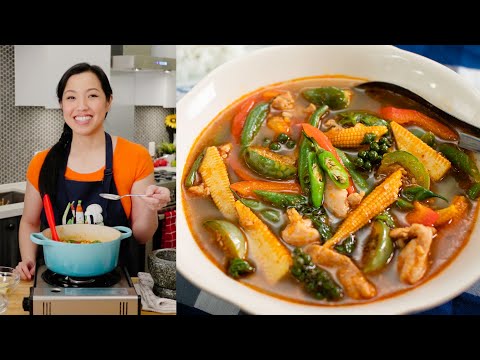
Gaeng Pa Moo relies on a lean-to-fat ratio that supports rapid flavour absorption without excessive oil separation. The curry base omits coconut milk, so hydration control depends on stock volume and vegetable moisture release. Pork shoulder or leg provides sufficient collagen for body while maintaining chew. The spice paste integrates dried chilies, galangal, lemongrass, and kaffir lime peel, forming a volatile oil network that binds with pork proteins during simmering. Salt and fish sauce act as ionic bridges, tightening muscle fibres early, while acidity from green peppercorns and kaffir lime leaves balances the savoury depth. The absence of coconut fat demands precise liquid management to avoid astringency or over-concentration.
Ingredients
Ingredients
Instructions
Instructions
Step 1
Heat vegetable oil in a Saute Pan over medium heat. Add Thai red curry paste and cook for 2–3 minutes until fragrant and oil begins to separate from the paste.Monitor the paste closely; once the moisture evaporates and oil surfaces, aromatics are fully activated without scorching.Step 2
Add pork shoulder cubes to the pan and stir to coat evenly with the curry paste. Sauté for 3–4 minutes until the surface begins to brown lightly.Avoid overcrowding; maintain even contact with the pan surface to promote Maillard development rather than steaming.Step 3
Pour in half of the chicken stock, scraping the bottom to deglaze. Bring to a gentle simmer, then add lemongrass and kaffir lime leaves.Deglazing lifts caramelised solids, integrating them into the broth for depth and colour consistency.Step 4
Add remaining stock, bamboo shoots, and Thai eggplants. Simmer uncovered for 25–30 minutes until pork is tender and liquid reduces by roughly one-third.Maintain a steady simmer; excessive boiling toughens the pork and dulls the herbal brightness.Step 5
Season with fish sauce, palm sugar, and salt. Stir in green peppercorns and Thai basil leaves just before removing from heat.Add basil off heat to preserve volatile oils and prevent oxidation that would darken the leaves.Step 6
Allow the curry to rest for 5 minutes before serving to stabilise flavour distribution and temperature.Resting equalises salt and acid gradients, ensuring balanced flavour in every portion.
Recommended Equipment

Nutrition Facts
Servings 4
Serving Size 1 portion
- Amount Per Serving
- Calories 293.05kcal
- % Daily Value *
- Total Fat 16.89g26%
- Saturated Fat 4.51g23%
- Cholesterol 65.11mg22%
- Sodium 1619.8mg68%
- Potassium 566.41mg17%
- Total Carbohydrate 11.28g4%
- Dietary Fiber 2.08g9%
- Sugars 6.12g
- Protein 22.8g46%
- Vitamin A 4123.1 IU
- Vitamin C 4.55 mg
- Calcium 66.45 mg
- Iron 2.44 mg
- Vitamin E 0.85 mg
- Vitamin K 26.71 mcg
- Thiamin 0.87 mg
- Riboflavin 0.42 mg
- Niacin 6.36 mg
- Vitamin B6 0.55 mg
- Folate 24.8 mcg
- Vitamin B12 0.81 mcg
- Pantothenic Acid 0.86 mg
- Phosphorus 234.92 mg
- Magnesium 47.29 mg
- Zinc 3.32 mg
- Selenium 30.82 mcg
- Copper 0.23 mg
- Manganese 0.23 mg
* Nutrition information is provided as an estimate per serving and may vary depending on the ingredients, brands, substitutions, portion sizes and preparation methods used. Percent Daily Values (%DV) are based on U.S. FDA reference values for a 2,000-calorie diet and are intended as a general guide only. Individual nutritional needs vary. This information is not a substitute for advice from a registered dietitian or other qualified healthcare professional.
Note
Allow the dish to cool gradually before sealing. Rapid temperature shifts can create condensation, weakening texture and diluting surface flavour concentration. The resting phase supports structural stabilisation and moisture redistribution. Cutting or serving too early may compromise internal balance. Spice intensity can deepen over time as volatile compounds settle. Taste and adjust seasoning after resting. Slow-cooked preparations often improve after several hours or overnight refrigeration as aromatic compounds integrate more fully. Acid balance may soften slightly over time; a final adjustment before serving restores clarity.


