
Recipe Snapshot
Recipe at a Glance
Key timing, yield and style details before you start cooking.
Ingredient Matrix and Structural Balance
The structural integrity of Gaeng Ped Moo depends on the interplay between coconut fat, red curry paste aromatics, and pork protein. Coconut milk provides both emulsification and fat distribution, stabilising the spice oils released from the curry paste. Pork shoulder or belly offers collagen and intramuscular fat that convert to gelatin during simmering, enriching mouthfeel. Fish sauce and palm sugar balance salt and sweetness, while kaffir lime leaves and Thai basil introduce volatile aromatics that lift the dense fat phase. The sequencing of paste frying before liquid addition is critical to activate Maillard reactions and release oil-soluble pigments for colour depth.
Thermal Control and Moisture Management
Temperature staging defines the curry’s clarity and depth. The curry paste must be sautéed over medium heat until the coconut oil separates, signalling proper moisture evaporation and aromatic activation. Introducing pork at this stage ensures surface sealing and flavour absorption before dilution. Once coconut milk and stock are added, the heat must drop to a gentle simmer to prevent fat separation. Excessive boiling destabilises the emulsion, while insufficient heat leaves the protein underdeveloped. Controlled reduction concentrates the sauce without scorching, maintaining a glossy, cohesive texture.
Transformation and Flavour Development
During simmering, the pork’s connective tissue softens, releasing gelatin that thickens the curry naturally. The coconut milk’s fat integrates with spice oils, forming a stable emulsion that coats the meat evenly. The red curry paste’s chili and lemongrass compounds mellow, while galangal and kaffir lime retain brightness. Palm sugar caramelises slightly, rounding the spice profile. The final addition of Thai basil and fresh chilies introduces a volatile aromatic layer that contrasts the slow-cooked base. Proper resting before service allows the fat phase to stabilise and flavours to integrate fully.
Workflow Efficiency and Sequencing Logic
A disciplined mise en place prevents overcooking and flavour imbalance. Pre-measure curry paste, coconut milk, and stock to streamline transitions between heat stages. Slice pork uniformly to ensure even cooking and consistent texture. Prepare aromatics and garnishes in advance, as the active cooking phase requires constant attention to heat and reduction. Avoid crowding the pan to maintain evaporation rate and prevent steaming. Parallel preparation of rice or accompaniments during the simmering phase optimises total service time without compromising sauce concentration.
Regional Technique Lineage and Adaptation
Gaeng Ped originates from central Thailand, where coconut-based curries evolved through trade influences introducing dried chilies and spices. The red curry variant reflects a balance between southern heat intensity and central sweetness. Pork became a common protein substitution for duck or beef due to availability and fat content suitable for long simmering. Modern adaptations often reduce oil separation for aesthetic reasons, but traditional technique values visible oil as a marker of proper paste frying. The dish exemplifies Thai curry’s layered balance of sweet, salty, spicy, and aromatic dimensions.
Recipe Education
Learn the Skills Behind This Recipe
Build confidence with cooking skills, techniques, and tools used in this recipe.
How to Sauté Properly
Master fast cooking, pan heat, and ingredient timing for better texture.
Recommended for the saute method used in this recipe.
Simmer vs Boil
Learn when to simmer, when to boil, and how each affects recipe results.
Recommended for the simmer method used in this recipe.
Cookware Guide
Learn which pots and pans work best for frying, sautéing, simmering, and roasting.
Helpful when using frying pan during preparation.
Cups to Grams
Convert cup measurements more accurately to improve recipe consistency.
Helpful when using measuring cups during preparation.
Teaspoons to Grams
Use small-measure conversions more accurately in cooking and baking.
Helpful when using measuring spoons during preparation.
Baking Tools Guide
Understand essential tools for mixing, measuring, and preparing recipes.
Helpful when using mixing bowl during preparation.


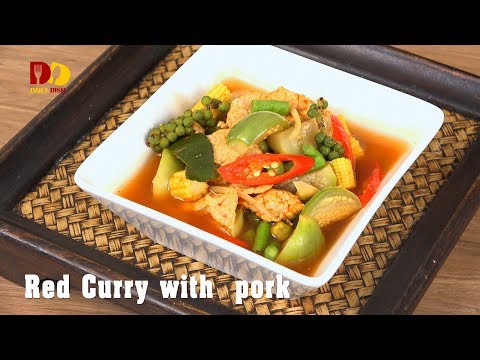
Gaeng Ped Moo (Pork Red Curry)
Description
The structural integrity of Gaeng Ped Moo depends on the interplay between coconut fat, red curry paste aromatics, and pork protein. Coconut milk provides both emulsification and fat distribution, stabilising the spice oils released from the curry paste. Pork shoulder or belly offers collagen and intramuscular fat that convert to gelatin during simmering, enriching mouthfeel. Fish sauce and palm sugar balance salt and sweetness, while kaffir lime leaves and Thai basil introduce volatile aromatics that lift the dense fat phase. The sequencing of paste frying before liquid addition is critical to activate Maillard reactions and release oil-soluble pigments for colour depth.
Ingredients
Ingredients
Instructions
Instructions
Step 1
Heat vegetable oil in a Saute Pan over medium heat. Add red curry paste and fry for 2–3 minutes until fragrant and the oil begins to separate from the paste.Monitor the paste closely; visible oil separation indicates correct moisture reduction and spice activation.Step 2
Add pork shoulder cubes and stir to coat evenly with the fried paste. Cook for 3–4 minutes until the meat is lightly browned on the surface.Ensure even contact with the pan surface to promote uniform browning and flavour absorption.Step 3
Pour in half of the coconut milk and stir until the mixture returns to a gentle simmer. Allow it to reduce slightly for 5 minutes to thicken the base.Keep heat moderate; rapid boiling can cause coconut fat to split and destabilise the emulsion.Step 4
Add the remaining coconut milk, chicken stock, fish sauce, palm sugar, and kaffir lime leaves. Stir and simmer uncovered for 25–30 minutes until the pork is tender and the sauce has reduced to a glossy consistency.Maintain a steady simmer; excessive agitation can break the emulsion and toughen the meat fibres.Step 5
Remove from heat and stir in Thai basil leaves and sliced red chili. Allow the curry to rest for 5 minutes before serving to stabilise the fat layer.Resting equalises temperature gradients and allows aromatic oils to integrate fully into the sauce.
Recommended Equipment

Nutrition Facts
Servings 4
Serving Size 1 portion
- Amount Per Serving
- Calories 430.77kcal
- % Daily Value *
- Total Fat 34.88g54%
- Saturated Fat 21.73g109%
- Cholesterol 62.45mg21%
- Sodium 498.13mg21%
- Potassium 665.22mg20%
- Total Carbohydrate 10.19g4%
- Dietary Fiber 0.71g3%
- Sugars 4.55g
- Protein 21.82g44%
- Vitamin A 1719.12 IU
- Vitamin C 35.83 mg
- Calcium 57.35 mg
- Iron 5 mg
- Vitamin E 0.77 mg
- Vitamin K 40.63 mcg
- Thiamin 0.86 mg
- Riboflavin 0.35 mg
- Niacin 5.56 mg
- Vitamin B6 0.56 mg
- Folate 31.4 mcg
- Vitamin B12 0.79 mcg
- Pantothenic Acid 0.96 mg
- Phosphorus 300.14 mg
- Magnesium 81.56 mg
- Zinc 3.58 mg
- Selenium 28.37 mcg
- Copper 0.38 mg
- Manganese 0.87 mg
* Nutrition information is provided as an estimate per serving and may vary depending on the ingredients, brands, substitutions, portion sizes and preparation methods used. Percent Daily Values (%DV) are based on U.S. FDA reference values for a 2,000-calorie diet and are intended as a general guide only. Individual nutritional needs vary. This information is not a substitute for advice from a registered dietitian or other qualified healthcare professional.
Note
Allow the dish to cool gradually before sealing. Rapid temperature shifts can create condensation, weakening texture and diluting surface flavour concentration. The resting phase supports structural stabilisation and moisture redistribution. Cutting or serving too early may compromise internal balance. Dairy-based elements may thicken further upon cooling. Reheat gently to prevent separation or grainy texture. Slow-cooked preparations often improve after several hours or overnight refrigeration as aromatic compounds integrate more fully. When reheating crisp components, use dry heat rather than microwave methods to maintain exterior texture. Texture refinement often occurs naturally during resting due to internal moisture redistribution.


