
Recipe Snapshot
Recipe at a Glance
Key timing, yield and style details before you start cooking.
Salt Interaction and Protein Surface Behaviour
Large prawns contain high surface moisture and delicate muscle proteins that tighten rapidly under direct heat. Coarse sea salt acts as both a seasoning and a moisture regulator, drawing surface water to create a thin brine film that enhances Maillard browning without over-drying. The shell protects the flesh from direct heat, allowing internal steaming while the exterior chars. Olive oil contributes a lipid barrier that stabilises surface temperature and prevents salt crystallisation from scorching. Acid from lemon juice is applied post-cook to preserve protein tenderness and prevent premature denaturation during grilling.
Heat Control and Plancha Temperature Management
The plancha or heavy cast-iron skillet must reach approximately 230–250°C before prawns are placed. This high surface temperature ensures immediate searing and prevents steaming. Heat must remain constant; lowering temperature causes water release and inhibits caramelisation. The prawns are cooked briefly on each side to achieve shell blistering and internal opacity. Carryover heat continues cooking after removal, so timing precision is critical. Excess oil or crowding reduces contact temperature, leading to uneven colouring and rubbery texture. Controlled oil film thickness ensures even conduction and prevents sticking.
Transformation Through Direct Grilling
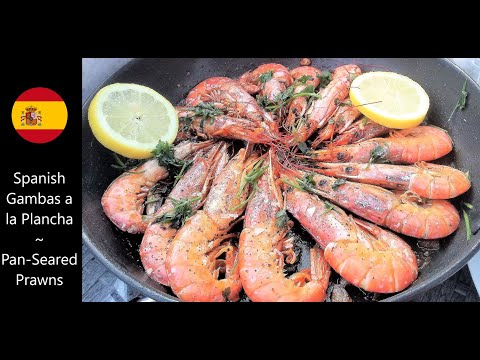
During searing, prawn proteins denature and coagulate, locking in natural juices while the shell chars slightly. The sugars in the shell and flesh caramelise, producing a nutty aroma characteristic of plancha cooking. The brief exposure to high heat concentrates flavour without excessive moisture loss. The final squeeze of lemon introduces volatile acidity that balances the natural sweetness of the crustacean. The result is a firm yet succulent texture with a thin, crisp shell layer that peels cleanly. Proper timing avoids the transition from translucent to chalky, maintaining ideal bite resistance.
Workflow Efficiency and Service Timing
For consistent output, prawns should be cleaned, dried, and lightly oiled before service. The plancha must be preheated during mise en place to avoid downtime. Cooking should occur in small batches to maintain surface temperature integrity. Lemon wedges and finishing salt should be prepared in advance for immediate plating. In professional service, prawns are cooked to order due to rapid quality degradation post-cook. Holding under heat lamps is avoided as residual heat continues to firm the flesh. Efficient sequencing between searing and plating ensures optimal temperature and texture retention.
Regional Technique and Culinary Lineage
Gambas a la Plancha originates from coastal Spain, particularly Andalusia and Catalonia, where seafood grilling on metal plates over open flame is traditional. The method evolved from fishermen’s dockside cooking using iron sheets heated by wood embers. The simplicity of sea salt and olive oil reflects Mediterranean minimalism, focusing on ingredient freshness rather than complex seasoning. Modern adaptations use cast-iron or steel planchas for controlled heat distribution. The dish exemplifies Spain’s emphasis on direct, high-heat seafood preparation, balancing natural sweetness with saline intensity and light acidity.
Recipe Education
Learn the Skills Behind This Recipe
Build confidence with cooking skills, techniques, and tools used in this recipe.
Cooking Basics
Build safer knife preparation, heat control, timing, and everyday kitchen confidence.
Helpful when using chef knife during preparation.
How to Fry Properly
Understand pan heat, oil temperature, and how to get better frying results.
Recommended for the fry method used in this recipe.
How to Substitute Ingredients
Swap ingredients more safely without damaging flavour, texture, or structure.
Helpful cooking knowledge for recipes like this.


Gambas a la Plancha (Grilled Prawns with Sea Salt)
Description
Large prawns contain high surface moisture and delicate muscle proteins that tighten rapidly under direct heat. Coarse sea salt acts as both a seasoning and a moisture regulator, drawing surface water to create a thin brine film that enhances Maillard browning without over-drying. The shell protects the flesh from direct heat, allowing internal steaming while the exterior chars. Olive oil contributes a lipid barrier that stabilises surface temperature and prevents salt crystallisation from scorching. Acid from lemon juice is applied post-cook to preserve protein tenderness and prevent premature denaturation during grilling.
Ingredients
Ingredients
Instructions
Instructions
Step 1
Rinse the prawns under cold water, pat completely dry with paper towels, and place on a tray. Lightly brush with olive oil using a Pastry Brush.Ensure prawns are fully dry before oiling; surface moisture will cause steaming instead of searing.Step 2
Preheat a Cast-Iron Skillet or Grill Pan over high heat until the surface reaches approximately 230–250°C. Do not add oil directly to the pan.Test readiness by flicking a drop of water—instant evaporation indicates correct temperature.Step 3
Place prawns in a single layer on the hot surface. Sprinkle coarse sea salt evenly over them. Cook for 1.5–2 minutes per side until shells are bright red and lightly charred.Avoid moving prawns during searing; uninterrupted contact ensures uniform caramelisation.Step 4
Turn prawns using Tongs and cook the second side for another 1.5–2 minutes. Remove immediately once the flesh turns opaque and firm.Carryover heat will complete cooking; remove slightly before full opacity to prevent overcooking.Step 5
Transfer prawns to a plate, rest for 1 minute, then squeeze fresh lemon juice over and finish with a light grind of black pepper if desired.Add lemon only after resting; acid applied too early can toughen the surface proteins.
Recommended Equipment

Nutrition Facts
Servings 4
Serving Size 1 portion
- Amount Per Serving
- Calories 64.22kcal
- % Daily Value *
- Total Fat 3.67g6%
- Saturated Fat 0.52g3%
- Cholesterol 48.3mg17%
- Sodium 520.83mg22%
- Potassium 119.92mg4%
- Total Carbohydrate 2.68g1%
- Dietary Fiber 0.82g4%
- Sugars 0.68g
- Protein 6.35g13%
- Vitamin C 14.31 mg
- Calcium 27.66 mg
- Iron 0.37 mg
- Vitamin E 0.54 mg
- Vitamin K 2.47 mcg
- Vitamin B6 0.02 mg
- Phosphorus 68.92 mg
- Magnesium 13.1 mg
- Zinc 0.42 mg
- Copper 0.13 mg
- Manganese 0.05 mg
* Nutrition information is provided as an estimate per serving and may vary depending on the ingredients, brands, substitutions, portion sizes and preparation methods used. Percent Daily Values (%DV) are based on U.S. FDA reference values for a 2,000-calorie diet and are intended as a general guide only. Individual nutritional needs vary. This information is not a substitute for advice from a registered dietitian or other qualified healthcare professional.
Note
For best structural retention, cool uncovered briefly before storage to prevent trapped steam from softening exterior crust or caramelised surfaces. The resting phase supports structural stabilisation and moisture redistribution. Cutting or serving too early may compromise internal balance. Spice intensity can deepen over time as volatile compounds settle. Taste and adjust seasoning after resting. When reheating crisp components, use dry heat rather than microwave methods to maintain exterior texture. Acid balance may soften slightly over time; a final adjustment before serving restores clarity.


