
Recipe Snapshot
Recipe at a Glance
Key timing, yield and style details before you start cooking.
Dough Hydration and Gluten Development
The dough for garlic breadsticks relies on a controlled hydration ratio around 60%, balancing elasticity and extensibility. Bread flour provides sufficient protein to form a strong gluten network, allowing the sticks to hold shape while remaining tender. Olive oil softens the crumb by coating gluten strands, moderating chewiness and improving flavour retention. Yeast fermentation introduces mild acidity and gas expansion, which must be timed to avoid overproofing. Salt is added after initial mixing to regulate yeast activity and strengthen gluten bonds. Proper sequencing—hydrating yeast before salt contact—ensures consistent rise and uniform crumb structure.
Heat Management and Baking Control
Baking temperature must remain stable at 220°C to achieve even browning without excessive crust hardening. The oven’s thermal mass and preheat duration directly influence expansion and surface colour. Steam generation from dough moisture assists in initial oven spring before crust sets. Overbaking leads to moisture loss and brittle texture, while underbaking prevents full starch gelatinisation. Rotating the baking sheet midway ensures uniform exposure to radiant heat. The garlic butter topping is applied post-bake to prevent burning of volatile aromatics and to allow absorption through residual surface heat.
Transformation Through Cooking and Sauce Reduction
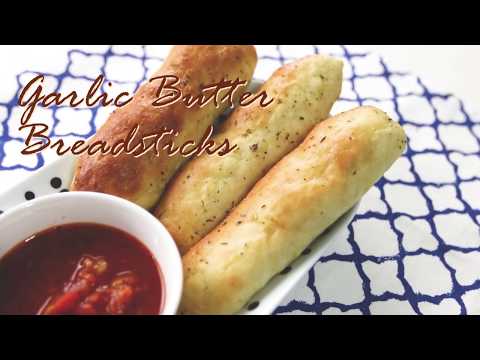
During baking, starches gelatinise and proteins denature, locking in the internal structure. The crust undergoes Maillard reactions, producing the characteristic golden hue and nutty aroma. The marinara dip undergoes reduction to concentrate tomato sugars and balance acidity. Simmering at controlled low heat prevents scorching and maintains a smooth consistency. The integration of olive oil and aromatics in the sauce forms a stable emulsion, ensuring a cohesive mouthfeel that complements the breadsticks’ fat-enriched surface.
Workflow Efficiency and Parallel Preparation
While the dough proofs, the marinara sauce can be prepared and reduced, optimising total workflow time. Mise en place organisation—pre-measured flour, yeast activation, and preheated oven—prevents idle waiting. Dividing the dough evenly before shaping ensures consistent bake times across all breadsticks. Applying garlic butter immediately after baking utilises carryover heat for even absorption. Cooling on a rack avoids condensation that would soften the crust. This sequencing maintains throughput efficiency suitable for both professional and home kitchens.
Cultural and Regional Context
Garlic breadsticks evolved from Italian grissini traditions, adapted through American pizzeria service models. The original Turin-style grissini were lean, crisp, and oil-free, while modern versions integrate enriched dough and butter-based toppings. The marinara dip reflects southern Italian tomato sauce foundations, simplified for quick-service pairing. This combination demonstrates how Italian-American cuisine merged convenience with flavour intensity, maintaining core Mediterranean principles of olive oil, garlic, and wheat while adapting texture and richness to local preferences.
Recipe Education
Learn the Skills Behind This Recipe
Build confidence with cooking skills, techniques, and tools used in this recipe.
Baking Tools Guide
Understand essential tools for mixing, measuring, and preparing recipes.
Recommended for the bake method used in this recipe.
Oven Temperature Conversions
Understand oven temperatures and how they affect baking and roasting.
Recommended for the bake method used in this recipe.
How to Sauté Properly
Master fast cooking, pan heat, and ingredient timing for better texture.
Recommended for the saute method used in this recipe.
Simmer vs Boil
Learn when to simmer, when to boil, and how each affects recipe results.
Recommended for the simmer method used in this recipe.
Cookware Guide
Learn which pots and pans work best for frying, sautéing, simmering, and roasting.
Helpful when using saucepan during preparation.
Batch Cooking
Cook once and prepare multiple meals more efficiently.
Selected for this type of recipe.


Garlic Breadsticks with Marinara Dip
Description
The dough for garlic breadsticks relies on a controlled hydration ratio around 60%, balancing elasticity and extensibility. Bread flour provides sufficient protein to form a strong gluten network, allowing the sticks to hold shape while remaining tender. Olive oil softens the crumb by coating gluten strands, moderating chewiness and improving flavour retention. Yeast fermentation introduces mild acidity and gas expansion, which must be timed to avoid overproofing. Salt is added after initial mixing to regulate yeast activity and strengthen gluten bonds. Proper sequencing—hydrating yeast before salt contact—ensures consistent rise and uniform crumb structure.
Ingredients
Ingredients
Instructions
Instructions
Step 1
Combine warm water and instant yeast in a Mixing Bowl. Let stand 5 minutes until foamy. Add bread flour and mix until a rough dough forms. Rest 10 minutes to hydrate.Ensure water temperature stays below 40°C to prevent yeast denaturation.Step 2
Add salt and olive oil to the dough. Knead on a lightly floured Cutting Board for 8–10 minutes until smooth and elastic. Shape into a ball and place in an oiled Mixing Bowl. Cover and proof 60 minutes.Use a Kitchen Scale to verify consistent hydration; sticky dough indicates overhydration.Step 3
While dough proofs, heat olive oil in a Saucepan over medium heat. Add minced garlic and sauté 30 seconds. Add canned tomatoes, salt, oregano, and sugar. Simmer 20 minutes, stirring occasionally, until reduced.Maintain gentle simmering to prevent tomato solids from sticking and burning at the base.Step 4
Preheat oven to 220°C. Punch down dough and divide into 10 equal portions. Roll each into 20 cm sticks using a Rolling Pin. Arrange on a Baking Sheet lined with Parchment Paper. Proof 15 minutes.Uniform thickness ensures even baking and prevents overbrowning of thinner ends.Step 5
Bake breadsticks for 12–14 minutes until golden brown. Meanwhile, melt butter and stir in minced garlic. Brush baked breadsticks immediately with garlic butter and sprinkle with parsley.Apply butter while breadsticks are hot to maximise absorption and aromatic release.Step 6
Transfer breadsticks to a Cooling Rack for 5 minutes before serving. Serve warm with marinara dip in Ramekins.Cooling briefly prevents steam condensation that would soften the crust.
Recommended Equipment

Nutrition Facts
Servings 10
Serving Size 1 portion
- Amount Per Serving
- Calories 172.87kcal
- % Daily Value *
- Total Fat 5.87g10%
- Saturated Fat 2.02g11%
- Cholesterol 6.45mg3%
- Sodium 365.68mg16%
- Potassium 164.09mg5%
- Total Carbohydrate 25.87g9%
- Dietary Fiber 1.74g7%
- Sugars 2.29g
- Protein 4.59g10%
- Vitamin A 228.76 IU
- Vitamin C 5.07 mg
- Calcium 25.83 mg
- Iron 0.95 mg
- Vitamin E 1.12 mg
- Vitamin K 17.69 mcg
- Thiamin 0.11 mg
- Riboflavin 0.06 mg
- Niacin 1.02 mg
- Vitamin B6 0.1 mg
- Folate 28.51 mcg
- Pantothenic Acid 0.33 mg
- Phosphorus 48.35 mg
- Magnesium 17.18 mg
- Zinc 0.43 mg
- Selenium 12.4 mcg
- Copper 0.14 mg
- Manganese 0.34 mg
* Nutrition information is provided as an estimate per serving and may vary depending on the ingredients, brands, substitutions, portion sizes and preparation methods used. Percent Daily Values (%DV) are based on U.S. FDA reference values for a 2,000-calorie diet and are intended as a general guide only. Individual nutritional needs vary. This information is not a substitute for advice from a registered dietitian or other qualified healthcare professional.
Note
Allow the dish to cool gradually before sealing. Rapid temperature shifts can create condensation, weakening texture and diluting surface flavour concentration. The resting phase supports structural stabilisation and moisture redistribution. Cutting or serving too early may compromise internal balance. In larger batches, maintain even heat distribution and avoid overcrowding during reheating to preserve structural integrity. Slow-cooked preparations often improve after several hours or overnight refrigeration as aromatic compounds integrate more fully. Acid balance may soften slightly over time; a final adjustment before serving restores clarity.


