
Recipe Snapshot
Recipe at a Glance
Key timing, yield and style details before you start cooking.
Fat Integration and Aromatic Sequencing
The structural balance of this dish relies on controlled fat dispersion and aromatic timing. Butter provides both flavour and a medium for volatile compounds from garlic to bloom without burning. The green beans’ surface moisture must be managed to prevent steam entrapment, which would inhibit browning. Salt is introduced after initial sautéing to avoid premature osmosis that could soften the beans excessively. The ratio of butter to beans ensures coating without pooling, maintaining a glossy finish and even flavour distribution. Proper sequencing—garlic after initial bean contact—prevents acrid notes and preserves the butter’s nutty aroma.
Heat Management and Moisture Control
Temperature staging is critical: beans are first blanched to set colour and partially tenderise, then shocked to halt carryover cooking. The sauté phase requires medium-high heat to drive off residual surface water, allowing the butter to emulsify with bean juices rather than separate. Overcrowding the pan would trap steam, leading to limp texture. Controlled evaporation ensures a concentrated butter-garlic glaze rather than diluted liquid. The final toss off-heat stabilises the emulsion and prevents butter from breaking under excessive temperature.
Textural Development and Flavour Concentration
Through blanching and sautéing, the beans transition from fibrous to crisp-tender. The blanching phase gelatinises cell wall pectins partially, while the sautéing phase completes tenderisation and adds light caramelisation. Garlic undergoes Maillard browning in butter, producing sweet, nutty compounds that contrast the vegetal sharpness of the beans. The final texture should retain snap with a thin, even butter film. Excessive cooking collapses structure and dulls colour, while undercooking leaves raw cellulose notes. Proper reduction of butter moisture yields a cohesive glaze that binds aromatics to the bean surface.
Workflow Efficiency and Timing Synchronisation
Efficient mise en place reduces thermal lag between blanching and sautéing. Beans should be drained and dried while the butter and garlic are prepped. Parallelising blanching water heating and garlic mincing prevents downtime. The sauté pan must be preheated before butter addition to avoid delayed emulsification. Timing precision between blanching, shocking, and sautéing ensures consistent texture across batches. In service conditions, beans can be blanched ahead and finished à la minute, maintaining both colour and bite without compromising butter stability.
Regional Technique Context
This preparation aligns with European sautéed vegetable techniques, particularly French haricots verts treatments where butter and garlic are used to enhance natural sweetness. The blanch-and-sauté sequence evolved from classical French service methods designed to preserve chlorophyll and texture while enriching with fat. Modern adaptations maintain the same logic but simplify timing for home execution. The method demonstrates the European principle of minimal ingredient manipulation to highlight produce quality through controlled heat and precise fat handling.
Recipe Education
Learn the Skills Behind This Recipe
Build confidence with cooking skills, techniques, and tools used in this recipe.
Cookware Guide
Learn which pots and pans work best for frying, sautéing, simmering, and roasting.
Helpful when using frying pan during preparation.
Cooking Basics
Build safer knife preparation, heat control, timing, and everyday kitchen confidence.
Helpful when using chef knife during preparation.
How to Sauté Properly
Master fast cooking, pan heat, and ingredient timing for better texture.
Recommended for the saute method used in this recipe.
Teaspoons to Grams
Use small-measure conversions more accurately in cooking and baking.
Helpful when using measuring spoons during preparation.


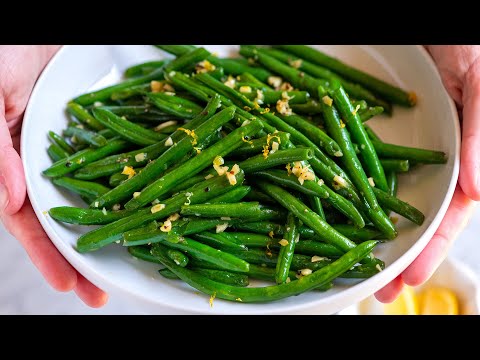
Garlic Butter Green Beans
Description
The structural balance of this dish relies on controlled fat dispersion and aromatic timing. Butter provides both flavour and a medium for volatile compounds from garlic to bloom without burning. The green beans’ surface moisture must be managed to prevent steam entrapment, which would inhibit browning. Salt is introduced after initial sautéing to avoid premature osmosis that could soften the beans excessively. The ratio of butter to beans ensures coating without pooling, maintaining a glossy finish and even flavour distribution. Proper sequencing—garlic after initial bean contact—prevents acrid notes and preserves the butter’s nutty aroma.
Ingredients
Ingredients
Instructions
Instructions
Step 1
Bring a Stock Pot of salted water to a rolling boil. Add the trimmed green beans and blanch for 2–3 minutes until bright green and slightly tender.Use heavily salted water to season the beans internally and stabilise chlorophyll for vibrant colour.Step 2
Immediately transfer the beans to a bowl of ice water to halt cooking. Drain thoroughly using a Colander / Strainer and pat dry with a Tea Towels.Drying the beans completely prevents steam buildup during sautéing and ensures proper butter adhesion.Step 3
Heat a Saute Pan over medium-high heat. Add olive oil and butter; once the butter foams, add minced garlic and cook for 20–30 seconds until fragrant.Monitor garlic closely—remove from direct heat if it begins to brown too quickly to avoid bitterness.Step 4
Add the drained green beans to the pan and toss continuously for 3–4 minutes until evenly coated and lightly blistered.Maintain constant motion with a Wooden Spoon to prevent uneven browning and ensure uniform glaze formation.Step 5
Season with salt and black pepper, then remove from heat. Add lemon juice and toss briefly to integrate before serving.Incorporate acid off-heat to preserve butter emulsion and prevent separation.
Recommended Equipment

Nutrition Facts
Servings 4
Serving Size 1 portion
- Amount Per Serving
- Calories 117.53kcal
- % Daily Value *
- Total Fat 8.67g14%
- Saturated Fat 4.24g22%
- Cholesterol 16.13mg6%
- Sodium 299.52mg13%
- Potassium 281.95mg9%
- Total Carbohydrate 9.89g4%
- Dietary Fiber 3.5g15%
- Sugars 4.2g
- Protein 2.52g6%
- Vitamin A 1051.73 IU
- Vitamin C 17.45 mg
- Calcium 53.66 mg
- Iron 1.37 mg
- Vitamin E 1.03 mg
- Vitamin K 56.1 mcg
- Thiamin 0.11 mg
- Riboflavin 0.14 mg
- Niacin 0.94 mg
- Vitamin B6 0.21 mg
- Folate 42.36 mcg
- Pantothenic Acid 0.31 mg
- Phosphorus 53.45 mg
- Magnesium 32.63 mg
- Zinc 0.34 mg
- Selenium 1.15 mcg
- Copper 0.1 mg
- Manganese 0.34 mg
* Nutrition information is provided as an estimate per serving and may vary depending on the ingredients, brands, substitutions, portion sizes and preparation methods used. Percent Daily Values (%DV) are based on U.S. FDA reference values for a 2,000-calorie diet and are intended as a general guide only. Individual nutritional needs vary. This information is not a substitute for advice from a registered dietitian or other qualified healthcare professional.
Note
Store in an airtight container under refrigeration, ensuring minimal air exposure to preserve flavour integrity and textural balance. Spice intensity can deepen over time as volatile compounds settle. Taste and adjust seasoning after resting. Texture refinement often occurs naturally during resting due to internal moisture redistribution.


