
Recipe Snapshot
Recipe at a Glance
Key timing, yield and style details before you start cooking.
Brine Composition and Osmotic Control
The structural integrity of cucumbers during pickling depends on osmotic balance between the brine and the vegetable tissue. A 5–6% salt concentration initiates controlled dehydration, drawing out water while allowing acid penetration. Vinegar provides the acidification necessary for microbial stability, while sugar moderates sharpness and supports flavour rounding. Garlic and dill release volatile oils that infuse through diffusion during curing. Maintaining correct ratios prevents excessive softening or hollowing. The inclusion of calcium-rich water or brief pre-soaking in ice water can further reinforce pectin structure, ensuring a crisp final texture even after extended storage.
Thermal Management and Sterilisation Accuracy
Temperature staging is critical to ensure both safety and texture retention. Jars and lids must be sterilised in boiling water to eliminate microbial load before filling. The brine should be poured hot, around 85–90°C, to initiate mild blanching without cooking the cucumbers. Overheating above 95°C risks softening cell walls and dulling chlorophyll pigments. The filled jars undergo a controlled water bath process to achieve vacuum sealing, ensuring anaerobic stability. Precise timing and temperature consistency prevent under-processing, which could compromise shelf life, or over-processing, which leads to mushy pickles.
Fermentation and Flavour Development Dynamics
Although this recipe uses vinegar-based acidification rather than spontaneous fermentation, enzymatic and aromatic transformations still occur during curing. Garlic’s sulfur compounds mellow and integrate with dill’s anethole and phellandrene components, producing a balanced aromatic profile. The brine’s acidity stabilises chlorophyll derivatives, maintaining a bright green hue. Over time, diffusion equalises salt and acid concentration throughout the cucumber flesh, yielding uniform flavour. Extended curing beyond two weeks deepens complexity as volatile compounds stabilise and the texture reaches optimal crunch.
Workflow Efficiency and Contamination Prevention
Efficient mise en place reduces contamination risk and ensures consistent jar filling. Prepare all cucumbers, aromatics, and brine before sterilisation to maintain workflow continuity. Avoid touching jar interiors or lids post-sterilisation. Use a funnel or ladle to control brine flow and prevent spillage that could interfere with sealing. Label and date jars immediately after cooling to track curing duration. Maintaining a clean, dry workspace and using gloves during handling prevents cross-contamination and ensures uniform product quality across batches.
Regional Technique Lineage and Adaptation
Garlic dill pickles trace their lineage to Eastern European preservation methods, particularly Polish and Russian traditions where cucumbers were brined in oak barrels. The vinegar-based adaptation emerged with industrial canning and American home preservation practices in the early 20th century. The shift from lactic fermentation to vinegar acidification allowed for predictable acidity and longer shelf stability. Modern adaptations maintain the dill and garlic profile but rely on precise sterilisation rather than natural fermentation, aligning traditional flavour with contemporary food safety standards.
Recipe Education
Learn the Skills Behind This Recipe
Build confidence with cooking skills, techniques, and tools used in this recipe.
How to Boil Properly
Learn boiling times, temperature control, and how to avoid overcooking.
Recommended for the boil method used in this recipe.
Simmer vs Boil
Learn when to simmer, when to boil, and how each affects recipe results.
Recommended for the simmer method used in this recipe.
Cookware Guide
Learn which pots and pans work best for frying, sautéing, simmering, and roasting.
Helpful when using saucepan during preparation.
Cups to Grams
Convert cup measurements more accurately to improve recipe consistency.
Helpful when using measuring cups during preparation.
Batch Cooking
Cook once and prepare multiple meals more efficiently.
Selected for this type of recipe.
Cooking Basics
Build safer knife preparation, heat control, timing, and everyday kitchen confidence.
Helpful when using chef knife during preparation.


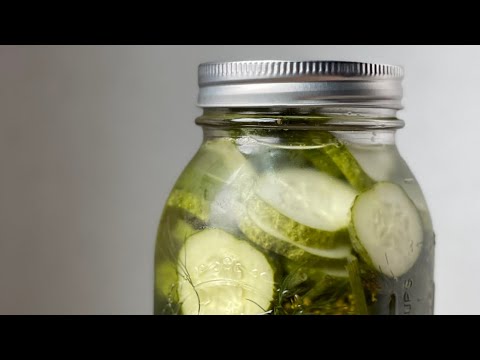
Garlic Dill Pickles
Description
The structural integrity of cucumbers during pickling depends on osmotic balance between the brine and the vegetable tissue. A 5–6% salt concentration initiates controlled dehydration, drawing out water while allowing acid penetration. Vinegar provides the acidification necessary for microbial stability, while sugar moderates sharpness and supports flavour rounding. Garlic and dill release volatile oils that infuse through diffusion during curing. Maintaining correct ratios prevents excessive softening or hollowing. The inclusion of calcium-rich water or brief pre-soaking in ice water can further reinforce pectin structure, ensuring a crisp final texture even after extended storage.
Ingredients
Ingredients
Instructions
Instructions
Step 1
Sterilise glass jars and lids by boiling them in water for 10 minutes, then keep them hot until use.Keep jars submerged in simmering water until filling to prevent temperature shock when adding hot brine.Step 2
In a Saucepan, combine water, vinegar, salt, and sugar. Bring to a gentle boil over medium heat, stirring until salt and sugar dissolve completely.Avoid vigorous boiling; maintaining 85–90°C preserves vinegar volatility and prevents excessive evaporation.Step 3
Pack cucumbers tightly into hot jars along with garlic, dill, peppercorns, mustard seeds, and bay leaves, leaving 1 cm headspace.Arrange cucumbers vertically for even brine circulation and consistent flavour diffusion.Step 4
Pour the hot brine over the packed cucumbers, ensuring all solids are submerged. Remove air bubbles by gently tapping jars or using a non-metallic utensil.Eliminating trapped air pockets ensures uniform acid contact and prevents floating cucumbers.Step 5
Seal jars with sterilised lids and process in a boiling water bath for 10 minutes to create a vacuum seal. Remove and cool on a Cooling Rack undisturbed for 12 hours.Allow jars to cool gradually; rapid temperature change can compromise seals and cause brine leakage.Step 6
Store sealed jars in a cool, dark place for at least 14 days before opening to allow flavour development.Longer curing up to 6 weeks enhances aromatic integration and crispness through continued osmotic exchange.
Recommended Equipment

Nutrition Facts
Servings 10
Serving Size 1 portion
- Amount Per Serving
- Calories 41.8kcal
- % Daily Value *
- Total Fat 0.36g1%
- Saturated Fat 0.03g1%
- Sodium 2917.1mg122%
- Potassium 231.05mg7%
- Total Carbohydrate 6.52g3%
- Dietary Fiber 1.28g6%
- Sugars 4.13g
- Protein 1.18g3%
- Vitamin A 190.67 IU
- Vitamin C 6.43 mg
- Calcium 38.56 mg
- Iron 0.56 mg
- Vitamin K 11.67 mcg
- Thiamin 0.05 mg
- Riboflavin 0.05 mg
- Vitamin B6 0.11 mg
- Folate 23.05 mcg
- Pantothenic Acid 0.39 mg
- Phosphorus 40.47 mg
- Magnesium 22.41 mg
- Zinc 0.33 mg
- Selenium 1.22 mcg
- Copper 0.14 mg
- Manganese 0.27 mg
* Nutrition information is provided as an estimate per serving and may vary depending on the ingredients, brands, substitutions, portion sizes and preparation methods used. Percent Daily Values (%DV) are based on U.S. FDA reference values for a 2,000-calorie diet and are intended as a general guide only. Individual nutritional needs vary. This information is not a substitute for advice from a registered dietitian or other qualified healthcare professional.
Note
Use sterilised containers and ensure full submersion where applicable to maintain product safety and prevent microbial instability during storage. The resting phase supports structural stabilisation and moisture redistribution. Cutting or serving too early may compromise internal balance. Spice intensity can deepen over time as volatile compounds settle. Taste and adjust seasoning after resting. In larger batches, maintain even heat distribution and avoid overcrowding during reheating to preserve structural integrity. Acid balance may soften slightly over time; a final adjustment before serving restores clarity.


