
Recipe Snapshot
Recipe at a Glance
Key timing, yield and style details before you start cooking.
Starch Hydration and Fat Interaction Control
The structural integrity of fries depends on starch gelatinisation and surface dehydration balance. Soaking cut potatoes in cold water removes excess surface starch, preventing gumminess and promoting crispness during frying. The internal moisture retained after soaking ensures a soft interior once cooked. Oil temperature must be staged to allow the starch to set before browning occurs. Parmesan introduces fat and umami, which coat the fry surface post-frying, enhancing flavour adhesion. Garlic’s volatile compounds are best infused into melted butter or oil rather than added raw, ensuring even distribution and preventing acrid notes from direct heat exposure.
Temperature Staging and Moisture Management
Executing a two-stage frying process ensures optimal textural contrast. The first fry at lower temperature cooks the potato through without excessive colouration, allowing internal steam to escape gradually. The second fry at higher temperature rapidly dehydrates the surface, locking in crispness. Oil recovery time between batches must be maintained to avoid soggy results. Garlic butter should be applied while fries are hot enough to absorb flavour but not so hot that the butter separates. Maintaining controlled heat prevents over-browning and ensures consistent golden colour across all pieces.
Textural Transformation and Flavour Layering
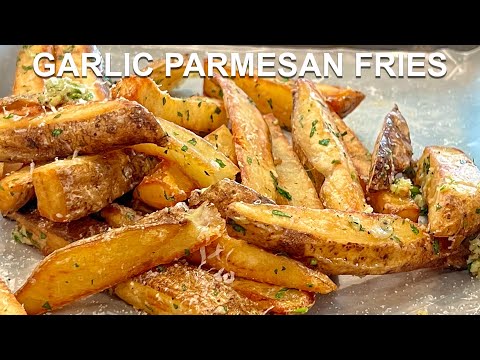
During frying, starch granules swell and gelatinise, while surface sugars caramelise, forming the Maillard crust. This dual transformation yields a crisp exterior and tender interior. The post-fry toss with garlic butter and Parmesan introduces layered flavour complexity—fat carries aromatic compounds, and cheese provides salt and umami reinforcement. The residual heat melts the cheese slightly, binding it to the fry surface. Proper sequencing—fry, drain, season—prevents moisture reabsorption and maintains structural crispness until service.
Workflow Efficiency and Batch Control
For consistent output, fries should be cut uniformly to ensure even cooking. Using a Kitchen Timer and Thermometer(Oil) allows precise control of both frying stages. Draining on a Cooling Rack over a Baking Sheet prevents oil pooling, which would compromise texture. Garlic butter can be prepared concurrently during the first fry to streamline workflow. Batch frying should not exceed oil capacity; overcrowding lowers temperature and increases oil absorption. Maintaining a clean oil surface free of debris prevents flavour contamination and uneven browning.
Regional Technique Lineage and Adaptation
Garlic Parmesan fries represent a modern adaptation of European-style pommes frites, integrating Italian flavour elements through the use of Parmesan and garlic-infused fat. The base technique follows the French double-fry method, while the flavour profile aligns with Mediterranean seasoning logic—fat-based aromatic infusion and aged cheese salinity. This hybridisation reflects contemporary casual dining trends that merge classical frying precision with bold, umami-forward finishes. The dish’s structure remains rooted in traditional fry methodology but adapted for flavour intensity and service versatility.
Recipe Education
Learn the Skills Behind This Recipe
Build confidence with cooking skills, techniques, and tools used in this recipe.
Cookware Guide
Learn which pots and pans work best for frying, sautéing, simmering, and roasting.
Helpful when using dutch oven during preparation.
Baking Tools Guide
Understand essential tools for mixing, measuring, and preparing recipes.
Helpful when using mixing bowl during preparation.
How to Fry Properly
Understand pan heat, oil temperature, and how to get better frying results.
Recommended for the fry method used in this recipe.
Cooking Basics
Build safer knife preparation, heat control, timing, and everyday kitchen confidence.
Helpful when using chef knife during preparation.
Oven Temperature Conversions
Understand oven temperatures and how they affect baking and roasting.
Helpful when using sheet pan during preparation.


Garlic Parmesan Fries
Description
The structural integrity of fries depends on starch gelatinisation and surface dehydration balance. Soaking cut potatoes in cold water removes excess surface starch, preventing gumminess and promoting crispness during frying. The internal moisture retained after soaking ensures a soft interior once cooked. Oil temperature must be staged to allow the starch to set before browning occurs. Parmesan introduces fat and umami, which coat the fry surface post-frying, enhancing flavour adhesion. Garlic’s volatile compounds are best infused into melted butter or oil rather than added raw, ensuring even distribution and preventing acrid notes from direct heat exposure.
Ingredients
Ingredients
Instructions
Instructions
Step 1
Rinse cut russet potatoes under cold water until clear, then soak in cold water for 30 minutes to remove excess starch. Drain and pat completely dry with paper towels.Ensure fries are fully dry before frying to prevent oil splatter and achieve maximum crispness.Step 2
Heat vegetable oil in a Frying Pan or Dutch Oven to 160°C. Fry potatoes in small batches for 5–6 minutes until pale and tender but not browned. Remove and drain on a Cooling Rack over a Baking Sheet.Monitor oil temperature with a Thermometer(Oil) to maintain consistent heat recovery between batches.Step 3
Increase oil temperature to 190°C. Return fries to the oil in batches and fry for 2–3 minutes until golden and crisp. Drain again on the Cooling Rack to remove excess oil.Avoid overcrowding; too many fries will drop oil temperature and cause soggy texture.Step 4
In a small Saucepan, melt butter over low heat. Add minced garlic and cook for 30–45 seconds until fragrant but not browned. Remove from heat immediately.Do not overcook garlic; once aromatic, remove from heat to prevent bitterness.Step 5
Transfer hot fries to a Mixing Bowl. Pour over garlic butter, sprinkle with salt, black pepper, and grated Parmesan. Toss evenly to coat. Garnish with chopped parsley if desired.Toss fries while still hot to ensure butter and cheese adhere uniformly to the surface.
Recommended Equipment

Nutrition Facts
Servings 4
Serving Size 1 portion
- Amount Per Serving
- Calories 2319.39kcal
- % Daily Value *
- Total Fat 241.88g373%
- Saturated Fat 42.38g212%
- Cholesterol 30mg10%
- Sodium 793.68mg34%
- Potassium 865.63mg25%
- Total Carbohydrate 37.51g13%
- Dietary Fiber 2.74g11%
- Sugars 1.38g
- Protein 9.02g19%
- Vitamin A 431.12 IU
- Vitamin C 13.37 mg
- Calcium 183.25 mg
- Iron 2 mg
- Vitamin D 0.21 mcg
- Vitamin E 19.13 mg
- Vitamin K 444.17 mcg
- Thiamin 0.17 mg
- Riboflavin 0.11 mg
- Niacin 2.14 mg
- Vitamin B6 0.73 mg
- Folate 30.73 mcg
- Vitamin B12 0.17 mcg
- Pantothenic Acid 0.69 mg
- Phosphorus 203.54 mg
- Magnesium 53.18 mg
- Zinc 0.97 mg
- Selenium 4.05 mcg
- Copper 0.22 mg
- Manganese 0.39 mg
* Nutrition information is provided as an estimate per serving and may vary depending on the ingredients, brands, substitutions, portion sizes and preparation methods used. Percent Daily Values (%DV) are based on U.S. FDA reference values for a 2,000-calorie diet and are intended as a general guide only. Individual nutritional needs vary. This information is not a substitute for advice from a registered dietitian or other qualified healthcare professional.
Note
For best structural retention, cool uncovered briefly before storage to prevent trapped steam from softening exterior crust or caramelised surfaces. The resting phase supports structural stabilisation and moisture redistribution. Cutting or serving too early may compromise internal balance. Dairy-based elements may thicken further upon cooling. Reheat gently to prevent separation or grainy texture. When reheating crisp components, use dry heat rather than microwave methods to maintain exterior texture. Acid balance may soften slightly over time; a final adjustment before serving restores clarity.


