
Recipe Snapshot
Recipe at a Glance
Key timing, yield and style details before you start cooking.
Leaf Structure and Fat Integration Control
Kontomire (cocoyam leaves) contain high moisture and fibrous cellulose that require controlled heat exposure to soften without disintegrating. The leaves’ natural mucilage thickens the stew when combined with palm oil, creating a stable emulsion that carries spice oils effectively. Palm oil’s saturated fat content stabilises the stew’s viscosity, preventing phase separation during simmering. The inclusion of ground crayfish and smoked fish introduces umami depth, while tomatoes and onions provide acid and sugar balance. Proper sequencing—sweating aromatics before adding leaves—ensures flavour layering and prevents raw vegetal notes. Salt is introduced late to avoid premature toughening of the leaves’ cell walls.
Thermal Management and Moisture Regulation
The stew’s success depends on maintaining medium heat to balance evaporation and reduction. Excessive heat causes palm oil to smoke and impart bitterness, while insufficient heat leads to water retention and diluted flavour. The cocoyam leaves must be simmered gently to release mucilage gradually, thickening the base without scorching. Tomatoes require initial reduction to remove raw acidity before protein components are introduced. Carryover heat from the palm oil phase continues cooking the aromatics even after the heat is lowered, so timing the addition of the leaves is critical to prevent over-softening. Controlled simmering ensures even flavour diffusion and stable texture.
Transformation Through Simmering and Protein Integration
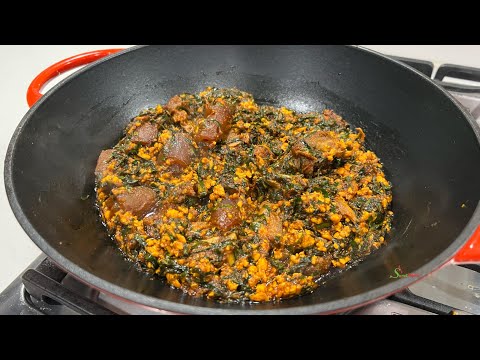
During simmering, proteins from smoked fish and optional meat denature and release collagen, enriching the stew’s body. The starch from cocoyam roots, when boiled separately, gelatinises and provides a neutral, absorbent counterpoint to the rich stew. The transformation phase relies on steady reduction to concentrate flavours while maintaining leaf integrity. The natural oils from fish and palm oil emulsify with the tomato base, producing a glossy finish. The final texture should be cohesive but not pasty, with visible leaf strands suspended in a thickened sauce. Proper reduction timing defines the stew’s depth and mouthfeel.
Workflow Efficiency and Sequencing Logic
Efficient mise en place is essential: cocoyam roots should be peeled and boiled while the stew base develops. This parallel workflow prevents downtime and ensures both components reach service temperature simultaneously. Aromatics must be prepped uniformly to promote even sweating and avoid burnt fragments that can impart bitterness. Smoked fish should be deboned and portioned before cooking to prevent disintegration during stirring. Maintaining a clean work surface and pre-measured spice setup reduces errors under heat pressure. The workflow’s sequencing—oil heating, aromatic base, tomato reduction, protein integration, leaf simmering—ensures consistent output across batches.
Regional and Cultural Context of Kontomire Stew
Kontomire stew originates from southern Ghanaian culinary traditions, particularly among Akan communities. The use of cocoyam leaves reflects the region’s reliance on root and leaf pairings for balanced nutrition. Palm oil, smoked fish, and fermented seasonings such as shrimp powder or crayfish are characteristic of coastal Ghanaian stews, where preservation and flavour intensity were historically vital. The dish’s structure—leaf-based sauce served with boiled cocoyam—demonstrates the integration of indigenous starches and local greens. Modern adaptations may substitute spinach when kontomire is unavailable, but the authentic preparation retains its distinctive palm oil aroma and layered savoury depth.
Recipe Education
Learn the Skills Behind This Recipe
Build confidence with cooking skills, techniques, and tools used in this recipe.
How to Boil Properly
Learn boiling times, temperature control, and how to avoid overcooking.
Recommended for the boil method used in this recipe.
How to Sauté Properly
Master fast cooking, pan heat, and ingredient timing for better texture.
Recommended for the saute method used in this recipe.
Cookware Guide
Learn which pots and pans work best for frying, sautéing, simmering, and roasting.
Helpful when using saucepan during preparation.
Cups to Grams
Convert cup measurements more accurately to improve recipe consistency.
Helpful when using measuring cups during preparation.
Teaspoons to Grams
Use small-measure conversions more accurately in cooking and baking.
Helpful when using measuring spoons during preparation.
Simmer vs Boil
Learn when to simmer, when to boil, and how each affects recipe results.
Recommended for the simmer method used in this recipe.


Ghanaian Kontomire Stew with Cocoyam
Description
Kontomire (cocoyam leaves) contain high moisture and fibrous cellulose that require controlled heat exposure to soften without disintegrating. The leaves’ natural mucilage thickens the stew when combined with palm oil, creating a stable emulsion that carries spice oils effectively. Palm oil’s saturated fat content stabilises the stew’s viscosity, preventing phase separation during simmering. The inclusion of ground crayfish and smoked fish introduces umami depth, while tomatoes and onions provide acid and sugar balance. Proper sequencing—sweating aromatics before adding leaves—ensures flavour layering and prevents raw vegetal notes. Salt is introduced late to avoid premature toughening of the leaves’ cell walls.
Ingredients
Ingredients
Instructions
Instructions
Step 1
Boil the cocoyam roots in a Saucepan with enough water until tender, about 20 minutes. Drain and keep warm.Avoid overboiling the cocoyam; slight firmness prevents disintegration when served.Step 2
Heat palm oil in a Saucepan over medium heat until it turns clear and aromatic but not smoking.Monitor oil temperature closely; once it loses its cloudiness, reduce heat to prevent bitterness.Step 3
Add chopped onions and minced garlic. Sauté until translucent, then stir in blended tomatoes and cook until reduced and thickened.Allow tomato mixture to reduce until oil separates; this signals proper acid evaporation.Step 4
Incorporate ground crayfish, ground chili pepper, and smoked fish. Stir to combine and simmer for 5 minutes.Add smoked fish gently to avoid breaking flakes; fold rather than stir vigorously.Step 5
Add chopped kontomire leaves and 250 ml water. Cover and simmer on low heat for 15–20 minutes until leaves soften and stew thickens.Keep lid slightly ajar to allow controlled evaporation and prevent excess condensation.Step 6
Add boiled meat if using, adjust salt, and simmer for another 5 minutes to integrate flavours.Introduce meat only after leaf softening to prevent overcooking and texture loss.Step 7
Serve the kontomire stew hot with the boiled cocoyam roots on the side.Rest stew for 5 minutes off heat to allow flavours to stabilise before plating.
Recommended Equipment

Nutrition Facts
Servings 4
Serving Size 1 portion
- Amount Per Serving
- Calories 481.16kcal
- % Daily Value *
- Total Fat 36.61g57%
- Saturated Fat 17.48g88%
- Cholesterol 59.12mg20%
- Sodium 755.89mg32%
- Potassium 880.7mg26%
- Total Carbohydrate 18.17g7%
- Dietary Fiber 4.76g20%
- Sugars 10.78g
- Protein 22.29g45%
- Vitamin A 761.68 IU
- Vitamin C 18.59 mg
- Calcium 53.98 mg
- Iron 1.75 mg
- Vitamin D 1.59 mcg
- Vitamin E 6.37 mg
- Vitamin K 9.53 mcg
- Thiamin 0.13 mg
- Riboflavin 0.15 mg
- Niacin 6.84 mg
- Vitamin B6 0.6 mg
- Folate 143.24 mcg
- Vitamin B12 1.09 mcg
- Pantothenic Acid 1.11 mg
- Phosphorus 257.74 mg
- Magnesium 63.16 mg
- Zinc 1.1 mg
- Selenium 36.86 mcg
- Copper 0.25 mg
- Manganese 0.56 mg
* Nutrition information is provided as an estimate per serving and may vary depending on the ingredients, brands, substitutions, portion sizes and preparation methods used. Percent Daily Values (%DV) are based on U.S. FDA reference values for a 2,000-calorie diet and are intended as a general guide only. Individual nutritional needs vary. This information is not a substitute for advice from a registered dietitian or other qualified healthcare professional.
Note
Allow the dish to cool gradually before sealing. Rapid temperature shifts can create condensation, weakening texture and diluting surface flavour concentration. The resting phase supports structural stabilisation and moisture redistribution. Cutting or serving too early may compromise internal balance. Spice intensity can deepen over time as volatile compounds settle. Taste and adjust seasoning after resting. Slow-cooked preparations often improve after several hours or overnight refrigeration as aromatic compounds integrate more fully. Acid balance may soften slightly over time; a final adjustment before serving restores clarity.


