
Recipe Snapshot
Recipe at a Glance
Key timing, yield and style details before you start cooking.
Starch Conditioning and Flavour Base Integration
Day-old rice provides optimal starch retrogradation, reducing surface stickiness and allowing individual grains to fry without clumping. The gochujang paste introduces both sugar and fermented chili compounds, which caramelise under heat to form a savoury-sweet glaze. Sesame oil contributes aromatic fat that coats the rice, moderating moisture release and enhancing mouthfeel. Soy sauce and gochujang together balance umami and salt, while scallions and garlic deliver volatile aromatics that anchor the base flavour. Proper sequencing—aromatics first, then rice, then sauce—ensures even coating and prevents premature sugar burn from the gochujang.
Heat Control and Moisture Management During Frying
High, dry heat is critical to achieve the correct fried rice texture. The wok or frying pan must be preheated until lightly smoking before oil addition to prevent absorption and sogginess. Continuous tossing maintains even exposure and prevents localized scorching. Introducing gochujang too early risks caramelisation beyond control, so it is tempered with soy sauce and water before contact with the pan. The egg is cooked separately to avoid overcoagulation and then reincorporated for even distribution. Controlled evaporation during the final minute concentrates flavour without drying the rice core.
Transformation Through Maillard and Emulsified Coating
As the rice grains contact the hot surface, surface starches undergo Maillard reactions, deepening colour and aroma. The gochujang mixture emulsifies with oil and residual egg fat, forming a cohesive coating that binds aromatics to each grain. The sugar content in the paste assists in browning, while the fermented soybean base adds depth through glutamate concentration. The final texture should be slightly crisp at the edges yet moist within, indicating correct heat distribution and moisture balance. Overstirring disrupts this structure, while underfrying yields a dull, steamed result.
Workflow Efficiency and Timing Coordination
Efficient mise en place is essential: all components must be prepped before heat application. Aromatics, sauce mixture, and garnishes should be staged in sequence to avoid downtime during high-heat frying. Rice should be broken up by hand before entering the pan to prevent clumping under thermal stress. Parallel preparation of the fried egg component allows seamless reintegration. The entire cooking phase should not exceed five minutes once heat is applied, as extended exposure compromises both colour and texture integrity.
Cultural and Regional Context of Gochujang Fried Rice
Gochujang fried rice evolved from Korean home-cooking practices that repurpose leftover rice through high-heat stir-frying. The technique aligns with broader East Asian wok-frying traditions but distinguishes itself through the use of fermented chili paste as the primary seasoning matrix. This adaptation reflects Korea’s fermentation heritage and the integration of gochujang as a daily condiment rather than a specialty ingredient. Modern variations often include kimchi or protein additions, but the structural principle—rice fried in gochujang fat emulsion—remains consistent across regional interpretations.
Recipe Education
Learn the Skills Behind This Recipe
Build confidence with cooking skills, techniques, and tools used in this recipe.
How to Fry Properly
Understand pan heat, oil temperature, and how to get better frying results.
Recommended for the fry method used in this recipe.
Cooking Basics
Build safer knife preparation, heat control, timing, and everyday kitchen confidence.
Helpful when using chef knife during preparation.
Cookware Guide
Learn which pots and pans work best for frying, sautéing, simmering, and roasting.
Helpful when using wok during preparation.
Teaspoons to Grams
Use small-measure conversions more accurately in cooking and baking.
Helpful when using measuring spoons during preparation.
Baking Tools Guide
Understand essential tools for mixing, measuring, and preparing recipes.
Helpful when using mixing bowl during preparation.


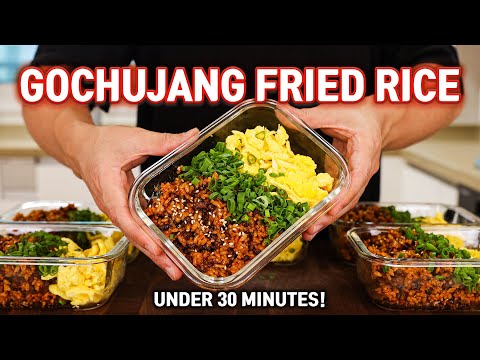
Gochujang Fried Rice
Description
Day-old rice provides optimal starch retrogradation, reducing surface stickiness and allowing individual grains to fry without clumping. The gochujang paste introduces both sugar and fermented chili compounds, which caramelise under heat to form a savoury-sweet glaze. Sesame oil contributes aromatic fat that coats the rice, moderating moisture release and enhancing mouthfeel. Soy sauce and gochujang together balance umami and salt, while scallions and garlic deliver volatile aromatics that anchor the base flavour. Proper sequencing—aromatics first, then rice, then sauce—ensures even coating and prevents premature sugar burn from the gochujang.
Ingredients
Ingredients
Instructions
Instructions
Step 1
Combine gochujang paste, soy sauce, sugar, and water in a small bowl until smooth. Set aside near the stove.Mixing the sauce before cooking prevents uneven caramelisation and allows rapid incorporation under high heat.Step 2
Heat 1 tbsp vegetable oil in a Wok over medium-high heat. Add beaten eggs and scramble until just set. Remove and reserve.Pull the eggs off heat while still slightly soft; residual heat will finish cooking during reintegration.Step 3
Add remaining vegetable oil to the Wok. Introduce garlic and scallion whites, stir-frying for 20 seconds until aromatic.Avoid browning the garlic; light golden colour maximises aroma without bitterness.Step 4
Add the chilled rice, breaking up clumps with a Spatula. Stir-fry for 2–3 minutes until grains separate and steam off excess moisture.Use firm wrist motion to toss rather than mash; this preserves grain integrity and promotes even surface contact.Step 5
Pour in the gochujang mixture and toss rapidly to coat all grains evenly. Fry for another 1–2 minutes until colour deepens and edges crisp.Keep the mixture moving constantly to prevent sugar in the paste from scorching on the pan base.Step 6
Return scrambled eggs and scallion greens to the Wok. Drizzle sesame oil and toss briefly to combine. Adjust seasoning with salt if required.Add sesame oil off direct heat to preserve its volatile aroma compounds.Step 7
Transfer to serving dish and sprinkle with sesame seeds before serving.Rest the rice for one minute before plating to allow steam to stabilise and surface crispness to set.
Recommended Equipment

Nutrition Facts
Servings 2
Serving Size 1 portion
- Amount Per Serving
- Calories 445.16kcal
- % Daily Value *
- Total Fat 21.07g33%
- Saturated Fat 3.97g20%
- Cholesterol 163.68mg55%
- Sodium 593.4mg25%
- Potassium 261.64mg8%
- Total Carbohydrate 52.6g18%
- Dietary Fiber 1.41g6%
- Sugars 4.46g
- Protein 11.65g24%
- Vitamin A 451.25 IU
- Vitamin C 7.04 mg
- Calcium 73.23 mg
- Iron 1.89 mg
- Vitamin D 0.88 mcg
- Vitamin E 1.81 mg
- Vitamin K 62.96 mcg
- Thiamin 0.09 mg
- Riboflavin 0.27 mg
- Niacin 1.42 mg
- Vitamin B6 0.32 mg
- Folate 41.08 mcg
- Vitamin B12 0.39 mcg
- Pantothenic Acid 1.33 mg
- Phosphorus 189.7 mg
- Magnesium 36.86 mg
- Zinc 1.55 mg
- Selenium 25.91 mcg
- Copper 0.24 mg
- Manganese 0.87 mg
* Nutrition information is provided as an estimate per serving and may vary depending on the ingredients, brands, substitutions, portion sizes and preparation methods used. Percent Daily Values (%DV) are based on U.S. FDA reference values for a 2,000-calorie diet and are intended as a general guide only. Individual nutritional needs vary. This information is not a substitute for advice from a registered dietitian or other qualified healthcare professional.
Note
For best structural retention, cool uncovered briefly before storage to prevent trapped steam from softening exterior crust or caramelised surfaces. The resting phase supports structural stabilisation and moisture redistribution. Cutting or serving too early may compromise internal balance. Grains and starches continue absorbing moisture after cooking. Adjust liquid slightly when reheating to restore optimal consistency. When reheating crisp components, use dry heat rather than microwave methods to maintain exterior texture. Acid balance may soften slightly over time; a final adjustment before serving restores clarity.


