
Recipe Snapshot
Recipe at a Glance
Key timing, yield and style details before you start cooking.
Fat Balance and Acid Integration in Salmon Preparation
Salmon’s high lipid content demands controlled acid balance to prevent surface denaturation and maintain internal moisture. The lemon juice in the sauce introduces citric acid that lightly tightens surface proteins without over-curing. Olive oil in the marinade forms a thin lipid barrier, moderating direct heat exposure and preventing albumin extrusion. Dill’s volatile oils integrate best when added post-cooking to avoid degradation under high heat. Salt application before grilling enhances osmotic moisture retention, while a brief rest after cooking allows internal redistribution of rendered fat, stabilizing texture and flavor uniformity across the fillet.
Heat Management and Grill Surface Control
Effective grilling of salmon requires precise surface temperature calibration. The grill must be preheated to medium-high to achieve Maillard browning without excessive charring. Oil application to both grill grates and fish skin minimizes sticking and ensures even sear marks. Carryover heat continues protein coagulation post-removal, so extraction should occur just before full opacity. Maintaining lid closure during cooking stabilizes convection heat, reducing surface dehydration. Monitoring internal temperature with a probe ensures the core reaches 52–55°C, the optimal range for moist flake separation without raw translucency.
Transformation Through Cooking and Sauce Emulsification
During grilling, salmon’s connective tissue gelatinizes, allowing muscle flakes to separate cleanly. The lemon dill sauce relies on controlled emulsification between melted butter and lemon juice, stabilized by gentle whisking to prevent phase separation. The sauce’s viscosity depends on temperature: too hot and it breaks; too cold and it congeals. Incorporating fresh dill and yogurt at the end preserves aromatic brightness and provides a mild lactic tang that complements the fish’s richness. The resulting contrast between charred exterior and creamy sauce defines the dish’s structural balance.
Workflow Efficiency and Timing Coordination
Parallel preparation of sauce and salmon minimizes idle time. The sauce can be assembled while the grill preheats, ensuring both components reach service temperature simultaneously. Mise en place should include pre-measured lemon juice, chopped dill, and softened butter to streamline emulsification. Avoid overhandling the fish once placed on the grill; movement disrupts crust formation. Resting the salmon briefly while finishing the sauce allows residual heat to stabilize internal moisture, aligning both elements for immediate plating without temperature drop or sauce separation.
Regional Technique Lineage and Adaptation
Grilled salmon with lemon dill sauce draws from Northern European and Scandinavian traditions where dill and citrus are used to balance oily fish. The grilling method represents a modern adaptation of open-fire cooking once performed over wood embers. The sauce’s structure parallels classical French beurre citron but substitutes yogurt for cream to lighten the profile and extend shelf stability. This integration of Nordic flavor logic with French emulsification technique reflects contemporary European fusion grounded in functional culinary evolution rather than stylistic novelty.
Recipe Education
Learn the Skills Behind This Recipe
Build confidence with cooking skills, techniques, and tools used in this recipe.
How to Sauté Properly
Master fast cooking, pan heat, and ingredient timing for better texture.
Recommended for the saute method used in this recipe.
Cookware Guide
Learn which pots and pans work best for frying, sautéing, simmering, and roasting.
Helpful when using saucepan during preparation.
Cooking Basics
Build confidence with core skills and beginner-friendly cooking techniques.
Helpful cooking knowledge for recipes like this.


Grilled Salmon with Lemon Dill Sauce
Description
Salmon’s high lipid content demands controlled acid balance to prevent surface denaturation and maintain internal moisture. The lemon juice in the sauce introduces citric acid that lightly tightens surface proteins without over-curing. Olive oil in the marinade forms a thin lipid barrier, moderating direct heat exposure and preventing albumin extrusion. Dill’s volatile oils integrate best when added post-cooking to avoid degradation under high heat. Salt application before grilling enhances osmotic moisture retention, while a brief rest after cooking allows internal redistribution of rendered fat, stabilizing texture and flavor uniformity across the fillet.
Ingredients
Ingredients
Instructions
Instructions
Step 1
Preheat grill to medium-high heat (around 220°C). Lightly brush grill grates with olive oil using a Pastry Brush to prevent sticking.Ensure grill grates are fully heated before placing fish; cold grates cause tearing and uneven sear.Step 2
Pat salmon fillets dry on a Cutting Board using paper towels. Brush both sides with olive oil, then season evenly with salt and black pepper.Drying the surface promotes crisp skin and prevents steaming during initial contact with the grill.Step 3
Place salmon skin-side down on the grill. Cook for 4–5 minutes without moving until skin crisps and releases naturally, then flip and cook another 3–4 minutes until internal temperature reaches 52–55°C.Use a Fish Spatula to flip; its thin edge slides under delicate skin without tearing.Step 4
While salmon grills, melt butter in a Saucepan over low heat. Add minced garlic and cook 30 seconds until aromatic. Whisk in lemon juice and zest to form a light emulsion.Keep heat low; excessive temperature breaks the butter-lemon emulsion and dulls acidity.Step 5
Remove saucepan from heat. Whisk in yogurt and chopped dill until smooth. Adjust seasoning with salt if needed. Hold warm, not hot.Add yogurt off heat to prevent curdling; residual warmth ensures smooth integration.Step 6
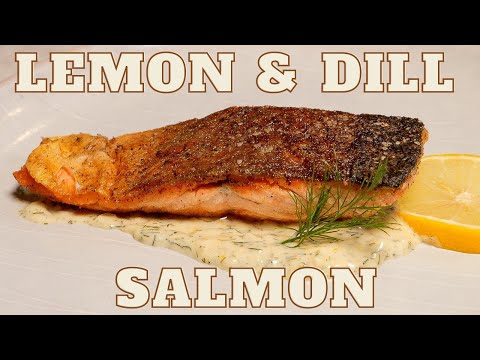
Transfer grilled salmon to a plate and rest 2 minutes. Spoon lemon dill sauce over each fillet just before serving.Resting allows internal juices to redistribute, preventing moisture loss when sauced.
Recommended Equipment

Nutrition Facts
Servings 4
Serving Size 1 portion
- Amount Per Serving
- Calories 154.26kcal
- % Daily Value *
- Total Fat 16.2g25%
- Saturated Fat 8.51g43%
- Cholesterol 34.75mg12%
- Sodium 204.79mg9%
- Potassium 68.38mg2%
- Total Carbohydrate 2.15g1%
- Sugars 0.94g
- Protein 1.09g3%
- Vitamin A 585.27 IU
- Vitamin C 6.31 mg
- Calcium 32.18 mg
- Iron 0.26 mg
- Vitamin D 0.24 mcg
- Vitamin E 0.87 mg
- Vitamin K 3.58 mcg
- Riboflavin 0.04 mg
- Vitamin B6 0.04 mg
- Folate 7.2 mcg
- Vitamin B12 0.11 mcg
- Pantothenic Acid 0.13 mg
- Phosphorus 24.87 mg
- Magnesium 5.11 mg
- Zinc 0.16 mg
- Selenium 1.08 mcg
- Manganese 0.09 mg
* Nutrition information is provided as an estimate per serving and may vary depending on the ingredients, brands, substitutions, portion sizes and preparation methods used. Percent Daily Values (%DV) are based on U.S. FDA reference values for a 2,000-calorie diet and are intended as a general guide only. Individual nutritional needs vary. This information is not a substitute for advice from a registered dietitian or other qualified healthcare professional.
Note
For best structural retention, cool uncovered briefly before storage to prevent trapped steam from softening exterior crust or caramelised surfaces. The resting phase supports structural stabilisation and moisture redistribution. Cutting or serving too early may compromise internal balance. Spice intensity can deepen over time as volatile compounds settle. Taste and adjust seasoning after resting. When reheating crisp components, use dry heat rather than microwave methods to maintain exterior texture. Acid balance may soften slightly over time; a final adjustment before serving restores clarity.


