
Recipe Snapshot
Recipe at a Glance
Key timing, yield and style details before you start cooking.
Protein Coagulation and Broth Balance
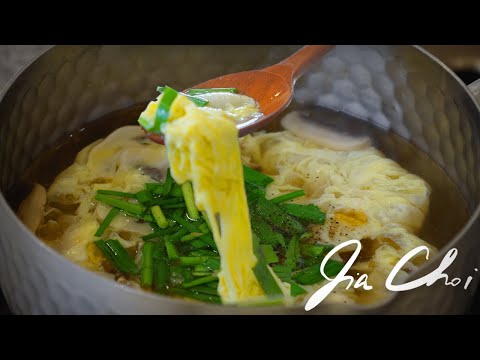
The structural integrity of Gyeran Guk depends on controlled protein coagulation within a light, saline broth. Beaten eggs disperse into the simmering liquid, forming delicate ribbons through thermal denaturation. The salt concentration must remain moderate to prevent premature tightening of the egg proteins, which would yield a grainy texture. A small amount of sesame oil introduces fat dispersion, softening mouthfeel and enhancing aromatic lift. The broth’s umami base, typically from anchovy or kelp stock, provides glutamate depth that balances the mild sweetness of the egg. Proper sequencing—adding eggs only after the broth reaches a gentle simmer—ensures even coagulation without curdling.
Temperature Control and Simmering Precision
Maintaining a stable low simmer is critical to avoid turbulence that breaks the egg ribbons. Excessive heat causes rapid convection, fragmenting the protein strands and clouding the broth. The ideal temperature range is just below boiling, around 90–95°C, allowing the eggs to set gradually. Stirring directionally during pouring creates laminar flow, guiding the egg into cohesive strands. Once the eggs are added, agitation must cease to preserve clarity. Carryover heat continues to firm the structure slightly after removal from the burner, so timing the finish before full set prevents overcooking.
Textural Development and Aromatic Integration
The transformation from raw egg to structured soup involves both protein setting and aromatic diffusion. Sesame oil and scallions release volatile compounds that integrate into the broth during the final minute of cooking. The result is a layered aroma profile—nutty, savory, and subtly marine if anchovy stock is used. The egg ribbons act as a carrier for these flavors, absorbing broth while maintaining elasticity. The final texture should be cohesive yet fluid, with suspended strands rather than clumps. Overmixing or excessive resting before service leads to separation and dull flavor expression.
Workflow Efficiency and Mise en Place Logic
Preparation efficiency relies on sequencing liquid heating before egg mixing. While the broth reaches temperature, eggs can be beaten and seasoned, and scallions sliced. This parallel workflow minimizes idle time and ensures immediate integration once the broth is ready. Mise en place should include pre-measured salt and sesame oil to avoid over-seasoning under time pressure. In service conditions, maintaining a small pot of hot broth allows rapid assembly to order, with eggs whisked and streamed per portion. This approach preserves clarity and texture consistency across multiple servings.
Cultural and Regional Context
Gyeran Guk originates from Korean home-style cooking, where light broths accompany rice-based meals. Its simplicity reflects the broader Korean approach to balancing protein and umami within minimal seasoning frameworks. The use of anchovy or kelp stock aligns with coastal ingredient availability and traditional preservation methods. Modern adaptations may substitute vegetable stock for dietary preference, but the structural principle—gentle egg coagulation in a clear broth—remains unchanged. The dish exemplifies the Korean emphasis on temperature harmony and textural restraint within everyday soups.
Recipe Education
Learn the Skills Behind This Recipe
Build confidence with cooking skills, techniques, and tools used in this recipe.
Simmer vs Boil
Learn when to simmer, when to boil, and how each affects recipe results.
Recommended for the simmer method used in this recipe.
Cookware Guide
Learn which pots and pans work best for frying, sautéing, simmering, and roasting.
Helpful when using saucepan during preparation.
Cups to Grams
Convert cup measurements more accurately to improve recipe consistency.
Helpful when using measuring cups during preparation.
Teaspoons to Grams
Use small-measure conversions more accurately in cooking and baking.
Helpful when using measuring spoons during preparation.
Baking Tools Guide
Understand essential tools for mixing, measuring, and preparing recipes.
Helpful when using mixing bowl during preparation.
Cooking Basics
Build confidence with core skills and beginner-friendly cooking techniques.
Supports the beginner skill level of this recipe.


Gyeran Guk (Egg Soup)
Description
The structural integrity of Gyeran Guk depends on controlled protein coagulation within a light, saline broth. Beaten eggs disperse into the simmering liquid, forming delicate ribbons through thermal denaturation. The salt concentration must remain moderate to prevent premature tightening of the egg proteins, which would yield a grainy texture. A small amount of sesame oil introduces fat dispersion, softening mouthfeel and enhancing aromatic lift. The broth’s umami base, typically from anchovy or kelp stock, provides glutamate depth that balances the mild sweetness of the egg. Proper sequencing—adding eggs only after the broth reaches a gentle simmer—ensures even coagulation without curdling.
Ingredients
Ingredients
Instructions
Instructions
Step 1
Place the anchovy or kelp stock in a Saucepan and bring to a gentle simmer over medium heat.Avoid vigorous boiling; excessive agitation clouds the broth and reduces clarity.Step 2
In a Mixing Bowl, beat the eggs until fully homogenized with no visible streaks of white or yolk.Uniform beating ensures consistent ribbon formation when streamed into the broth.Step 3
Season the simmering broth with soy sauce and salt, tasting to calibrate salinity before adding eggs.Adjust seasoning prior to egg addition; post-coagulation correction risks breaking the structure.Step 4
Slowly pour the beaten eggs into the simmering broth in a thin stream while gently stirring in one direction with a Wooden Spoon.Controlled stirring creates elongated ribbons; erratic motion fragments the protein network.Step 5
Reduce heat to low and allow the eggs to set for 30–45 seconds without further stirring, then drizzle sesame oil and add ground white pepper.Residual heat completes coagulation; turning off the heat slightly early prevents over-firming.Step 6
Ladle the soup into bowls and top with chopped scallions immediately before service.Add scallions at plating to preserve volatile aroma compounds and maintain color contrast.
Recommended Equipment

Nutrition Facts
Servings 2
Serving Size 1 portion
- Amount Per Serving
- Calories 120.64kcal
- % Daily Value *
- Total Fat 8.58g14%
- Saturated Fat 2.4g12%
- Cholesterol 245.52mg82%
- Sodium 1439.31mg60%
- Potassium 111.82mg4%
- Total Carbohydrate 1.68g1%
- Dietary Fiber 0.26g2%
- Sugars 0.4g
- Protein 8.82g18%
- Vitamin A 393.66 IU
- Calcium 51.89 mg
- Iron 1.5 mg
- Vitamin D 1.32 mcg
- Vitamin E 0.8 mg
- Vitamin K 10.9 mcg
- Thiamin 0.03 mg
- Riboflavin 0.32 mg
- Niacin 0.21 mg
- Vitamin B6 0.12 mg
- Folate 44.92 mcg
- Vitamin B12 0.59 mcg
- Pantothenic Acid 1.07 mg
- Phosphorus 138.88 mg
- Magnesium 17.69 mg
- Zinc 0.96 mg
- Selenium 20.36 mcg
- Copper 0.07 mg
- Manganese 0.07 mg
* Nutrition information is provided as an estimate per serving and may vary depending on the ingredients, brands, substitutions, portion sizes and preparation methods used. Percent Daily Values (%DV) are based on U.S. FDA reference values for a 2,000-calorie diet and are intended as a general guide only. Individual nutritional needs vary. This information is not a substitute for advice from a registered dietitian or other qualified healthcare professional.
Note
Allow the dish to cool gradually before sealing. Rapid temperature shifts can create condensation, weakening texture and diluting surface flavour concentration. Adequate chilling or marination enhances aromatic absorption and improves cohesion between fat, acid, and seasoning components. Spice intensity can deepen over time as volatile compounds settle. Taste and adjust seasoning after resting. Slow-cooked preparations often improve after several hours or overnight refrigeration as aromatic compounds integrate more fully. Acid balance may soften slightly over time; a final adjustment before serving restores clarity.


