
Recipe Snapshot
Recipe at a Glance
Key timing, yield and style details before you start cooking.
Fat-Sugar Interaction and Coating Stability
The structural integrity of honey butter popcorn relies on the emulsification between melted butter and honey. Butter provides fat that coats the popcorn surface, while honey introduces viscosity and hygroscopic sweetness. The ratio must be balanced to prevent sogginess; excessive honey increases water activity, softening the popped kernels. A small amount of salt enhances flavour perception and offsets the sweetness, while the residual heat from the popcorn assists in distributing the coating evenly. Proper sequencing—melting butter first, then integrating honey off direct heat—prevents separation and ensures a uniform glaze that adheres without crystallising.
Heat Management and Caramelisation Control
Temperature staging is critical. Popcorn must be popped at high heat to achieve full expansion without scorching. The honey-butter mixture, however, requires moderate heat to dissolve sugars and stabilise the emulsion without reaching caramelisation. Overheating honey leads to rapid darkening and bitter notes. Once combined, the coating should be applied while warm but not boiling, ensuring even distribution before it cools and thickens. Carryover heat from the popcorn finalises adhesion, locking the glaze without additional cooking. Controlled cooling on a flat surface prevents clumping and maintains crispness.
Texture Development and Moisture Regulation
The transformation from dry popped corn to glazed snack depends on moisture control. Popcorn’s porous starch structure absorbs minimal liquid, so the glaze must set quickly. The butter’s milk solids contribute a slight browning effect, while honey’s natural sugars form a thin, glossy film. Air exposure during cooling allows residual steam to escape, preserving crunch. If the mixture is too fluid, the coating will pool and soften the kernels; if too viscous, it will clump unevenly. The correct viscosity resembles light syrup, ensuring a crisp, cohesive finish after cooling.
Workflow Efficiency and Batch Handling
Efficient execution requires parallel preparation. Pop the corn first and keep it warm in a low oven while preparing the honey-butter glaze. This prevents premature cooling that would hinder coating adhesion. Use a large Mixing Bowl for tossing to maximise surface area and minimise breakage. For larger batches, divide the popcorn into portions to maintain even coverage. Avoid overmixing once coated; agitation after the glaze begins to set causes flaking. Cooling on a Baking Sheet lined with Parchment Paper ensures separation and consistent texture across the batch.
Regional and Culinary Context
Honey butter popcorn aligns with North American snack traditions, particularly those evolving from fairground caramel corn. The substitution of honey for refined sugar reflects a shift toward natural sweeteners and lighter flavour profiles. While caramel corn relies on high-temperature sugar stages, this version uses a lower-heat glaze, maintaining honey’s floral notes. The method parallels kettle corn in its balance of sweet and salty elements but omits direct pan caramelisation. Modern adaptations often use oven drying for extended shelf life, though the core technique remains rooted in classic buttered popcorn preparation.
Recipe Education
Learn the Skills Behind This Recipe
Build confidence with cooking skills, techniques, and tools used in this recipe.
Baking Tools Guide
Understand essential tools for mixing, measuring, and preparing recipes.
Helpful when using mixing bowl during preparation.
How to Fry Properly
Understand pan heat, oil temperature, and how to get better frying results.
Recommended for the fry method used in this recipe.
Cookware Guide
Learn which pots and pans work best for frying, sautéing, simmering, and roasting.
Helpful when using saucepan during preparation.
Cooking Basics
Build confidence with core skills and beginner-friendly cooking techniques.
Supports the beginner skill level of this recipe.
Oven Temperature Conversions
Understand oven temperatures and how they affect baking and roasting.
Helpful when using sheet pan during preparation.


Honey Butter Popcorn
Description
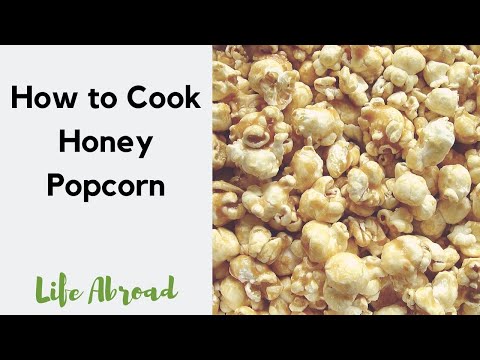
The structural integrity of honey butter popcorn relies on the emulsification between melted butter and honey. Butter provides fat that coats the popcorn surface, while honey introduces viscosity and hygroscopic sweetness. The ratio must be balanced to prevent sogginess; excessive honey increases water activity, softening the popped kernels. A small amount of salt enhances flavour perception and offsets the sweetness, while the residual heat from the popcorn assists in distributing the coating evenly. Proper sequencing—melting butter first, then integrating honey off direct heat—prevents separation and ensures a uniform glaze that adheres without crystallising.
Ingredients
Ingredients
Instructions
Instructions
Step 1
Heat the neutral oil in a large Saucepan over medium-high heat. Add a few popcorn kernels and cover until they pop, confirming oil temperature.Use the initial test kernels to gauge oil readiness; popping within 10 seconds indicates optimal heat.Step 2
Add the remaining popcorn kernels, cover, and shake the Saucepan occasionally to prevent burning. Remove from heat once popping slows to 2–3 seconds between pops.Keep the lid slightly ajar to allow steam to escape, maintaining crisp texture.Step 3
Transfer the popped corn to a large Mixing Bowl. Discard any unpopped kernels using a Colander / Strainer if necessary.Removing unpopped kernels prevents cracking teeth and ensures even coating distribution.Step 4
In a small Saucepan over low heat, melt the butter. Stir in the honey and salt until fully combined and fluid. Do not boil.Maintain low heat to preserve honey’s volatile aromatics and prevent crystallisation.Step 5
Pour the warm honey-butter mixture over the popcorn. Toss immediately with a Silicone Spatula until evenly coated.Work quickly; the glaze thickens as it cools, so uniform mixing must occur within 30 seconds.Step 6
Spread the coated popcorn onto a Baking Sheet lined with Parchment Paper. Allow to cool for 10–15 minutes until the glaze sets.Distribute in a single layer to prevent clumping and ensure consistent air exposure during setting.
Recommended Equipment

Nutrition Facts
Servings 4
Serving Size 1 portion
- Amount Per Serving
- Calories 260.36kcal
- % Daily Value *
- Total Fat 14.77g23%
- Saturated Fat 6.84g35%
- Cholesterol 26.88mg9%
- Sodium 585.09mg25%
- Potassium 79.42mg3%
- Total Carbohydrate 30.87g11%
- Dietary Fiber 3.2g13%
- Sugars 12.55g
- Protein 2.87g6%
- Vitamin A 312.38 IU
- Iron 0.83 mg
- Vitamin D 0.19 mcg
- Vitamin E 0.97 mg
- Vitamin K 3.41 mcg
- Thiamin 0.08 mg
- Riboflavin 0.02 mg
- Niacin 0.42 mg
- Vitamin B6 0.08 mg
- Folate 16.17 mcg
- Pantothenic Acid 0.12 mg
- Phosphorus 78.34 mg
- Magnesium 31.32 mg
- Zinc 0.73 mg
- Copper 0.06 mg
- Manganese 0.25 mg
* Nutrition information is provided as an estimate per serving and may vary depending on the ingredients, brands, substitutions, portion sizes and preparation methods used. Percent Daily Values (%DV) are based on U.S. FDA reference values for a 2,000-calorie diet and are intended as a general guide only. Individual nutritional needs vary. This information is not a substitute for advice from a registered dietitian or other qualified healthcare professional.
Note
Store in an airtight container under refrigeration, ensuring minimal air exposure to preserve flavour integrity and textural balance. The resting phase supports structural stabilisation and moisture redistribution. Cutting or serving too early may compromise internal balance. Texture refinement often occurs naturally during resting due to internal moisture redistribution.


