
Recipe Snapshot
Recipe at a Glance
Key timing, yield and style details before you start cooking.
Emulsion Stability and Fat-Acid Balance
Horseradish sauce depends on controlled emulsification between dairy fat and volatile root compounds. The grated horseradish releases isothiocyanates that provide heat and aroma, but these compounds degrade rapidly in high acidity or prolonged exposure to air. Balancing cream fat with mild acid from vinegar or lemon juice stabilises flavour intensity while preventing curdling. Salt enhances perception of pungency, while sugar moderates sharpness. The ratio of cream to horseradish determines viscosity and heat level; higher fat content softens the burn and improves mouthfeel. Proper sequencing—acid last—prevents premature protein coagulation in the dairy base.
Temperature Control and Mixing Precision
Temperature management is critical to preserve volatile aromatics. The horseradish must remain cold during grating and mixing to prevent enzymatic breakdown that dulls flavour. Using chilled Mixing Bowls and utensils limits oxidation. Over-whipping cream introduces excess air, destabilising the emulsion and thinning the sauce once acid is added. Gentle folding ensures even distribution of horseradish without deflating the structure. Resting the mixture under refrigeration allows flavour integration while maintaining a stable, spoonable consistency. Avoid direct heat at all stages; this sauce is assembled cold to retain its characteristic sharpness.
Textural Integration and Flavour Maturation
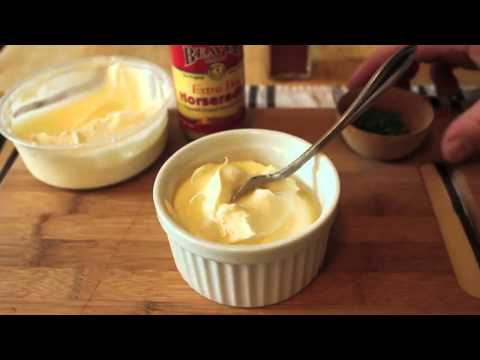
The sauce transitions from sharp and thin immediately after mixing to smoother and more cohesive after resting. During refrigeration, the dairy proteins hydrate and thicken slightly, while the horseradish compounds mellow. This short maturation period aligns the fat phase with the aqueous phase, yielding a uniform texture. The acidity continues to stabilise the volatile oils, extending shelf life. Stirring before service re-suspends any settled solids and restores homogeneity. The final texture should coat the back of a spoon without separation or visible curdling.
Common Technical Errors and Correction Strategy
Over-acidification or premature acid addition can cause the cream to split, producing a grainy sauce. To correct, whisk in a small amount of cold cream to rebind the emulsion. Excess horseradish leads to overpowering heat and watery separation; balance by folding in additional sour cream. If the sauce thickens excessively after refrigeration, a few drops of cold water can restore flow. Always taste after chilling, as pungency reduces slightly over time. Avoid using pre-grated horseradish stored in vinegar—it lacks the enzymatic activity that drives authentic flavour release.
Regional and Culinary Context
Horseradish sauce has deep roots in Central and Eastern European cuisines, where grated horseradish was traditionally preserved in vinegar for winter use. The cream-based variant evolved in British and French kitchens as a condiment for roasted beef, integrating dairy to temper the root’s intensity. Modern adaptations maintain the cold preparation method but adjust fat ratios for lighter service. The technique reflects European preservation logic—stabilising volatile compounds through acid and fat rather than heat. Its continued use alongside roasted meats and smoked fish demonstrates its enduring structural balance between sharpness and richness.
Recipe Education
Learn the Skills Behind This Recipe
Build confidence with cooking skills, techniques, and tools used in this recipe.
Cups to Grams
Convert cup measurements more accurately to improve recipe consistency.
Helpful when using measuring cups during preparation.
Teaspoons to Grams
Use small-measure conversions more accurately in cooking and baking.
Helpful when using measuring spoons during preparation.
Baking Tools Guide
Understand essential tools for mixing, measuring, and preparing recipes.
Helpful when using mixing bowl during preparation.
Cooking Basics
Build confidence with core skills and beginner-friendly cooking techniques.
Supports the beginner skill level of this recipe.
Batch Cooking
Cook once and prepare multiple meals more efficiently.
Selected for this type of recipe.


Horseradish Sauce
Description
Horseradish sauce depends on controlled emulsification between dairy fat and volatile root compounds. The grated horseradish releases isothiocyanates that provide heat and aroma, but these compounds degrade rapidly in high acidity or prolonged exposure to air. Balancing cream fat with mild acid from vinegar or lemon juice stabilises flavour intensity while preventing curdling. Salt enhances perception of pungency, while sugar moderates sharpness. The ratio of cream to horseradish determines viscosity and heat level; higher fat content softens the burn and improves mouthfeel. Proper sequencing—acid last—prevents premature protein coagulation in the dairy base.
Ingredients
Ingredients
Instructions
Instructions
Step 1
Peel and finely grate the fresh horseradish root using a Box Grater onto a chilled Cutting Board to minimise oxidation.Keep the horseradish root refrigerated until immediately before grating to preserve volatile heat compounds.Step 2
In a chilled Mixing Bowl, combine the grated horseradish with sour cream and stir gently using a Silicone Spatula until evenly distributed.Avoid vigorous mixing; overworking the cream can thin the sauce and reduce stability.Step 3
Fold in the lightly whipped double cream to adjust texture and mouthfeel, maintaining a smooth, cohesive consistency.Incorporate the whipped cream in two additions to control viscosity and prevent separation.Step 4
Add caster sugar and fine sea salt, stirring until dissolved. Taste and adjust seasoning for balance between heat and sweetness.Dissolve sugar fully before adding acid to avoid grainy texture in the finished sauce.Step 5
Finally, stir in white wine vinegar and optional lemon juice. Mix briefly to integrate, then cover and refrigerate for at least 30 minutes.Add acid last to prevent premature curdling and to lock in the horseradish’s aromatic sharpness.Step 6
Before serving, stir the sauce to restore uniformity and check consistency. Adjust with a few drops of cold water if overly thick.A brief stir after chilling reactivates emulsification and ensures even flavour distribution.
Recommended Equipment

Nutrition Facts
Servings 6
Serving Size 1 portion
- Amount Per Serving
- Calories 77.13kcal
- % Daily Value *
- Total Fat 7.74g12%
- Saturated Fat 4.38g22%
- Cholesterol 23.81mg8%
- Sodium 203.73mg9%
- Potassium 39.9mg2%
- Total Carbohydrate 2.25g1%
- Sugars 1.09g
- Protein 0.83g2%
- Vitamin A 274.69 IU
- Calcium 30.35 mg
- Vitamin E 0.17 mg
- Riboflavin 0.06 mg
- Vitamin B12 0.06 mcg
- Pantothenic Acid 0.1 mg
- Phosphorus 23.53 mg
- Selenium 1.14 mcg
* Nutrition information is provided as an estimate per serving and may vary depending on the ingredients, brands, substitutions, portion sizes and preparation methods used. Percent Daily Values (%DV) are based on U.S. FDA reference values for a 2,000-calorie diet and are intended as a general guide only. Individual nutritional needs vary. This information is not a substitute for advice from a registered dietitian or other qualified healthcare professional.
Note
Store in an airtight container under refrigeration, ensuring minimal air exposure to preserve flavour integrity and textural balance. The resting phase supports structural stabilisation and moisture redistribution. Cutting or serving too early may compromise internal balance. Dairy-based elements may thicken further upon cooling. Reheat gently to prevent separation or grainy texture. In larger batches, maintain even heat distribution and avoid overcrowding during reheating to preserve structural integrity. Acid balance may soften slightly over time; a final adjustment before serving restores clarity.


