
Recipe Snapshot
Recipe at a Glance
Key timing, yield and style details before you start cooking.
Starch Gelatinisation and Moisture Retention
A jacket potato relies on controlled starch gelatinisation and internal steam pressure to achieve a fluffy interior. The potato’s high starch content, when heated gradually, absorbs internal moisture until the granules swell and rupture, forming a soft matrix. The skin acts as a natural barrier, retaining steam while allowing gradual dehydration of the outer layer. Salt applied post-bake enhances flavour perception through ionic balance, while butter introduces fat that coats starch molecules, moderating moisture release and improving mouthfeel. Selecting a medium to large floury potato ensures optimal internal expansion without collapse or gumminess.
Heat Management and Skin Texture Control
Baking temperature and airflow determine the final contrast between crisp skin and tender interior. A steady 200°C dry oven environment promotes even heat penetration and gradual water evaporation through the skin. Excessive humidity or low temperature leads to leathery skin and uneven cooking. Piercing the potato before baking prevents bursting by releasing controlled steam. Resting briefly after removal allows internal pressure to stabilise, preventing collapse. The correct balance of convection and radiant heat ensures uniform browning without scorching or undercooked centres.
Transformation Through Baking
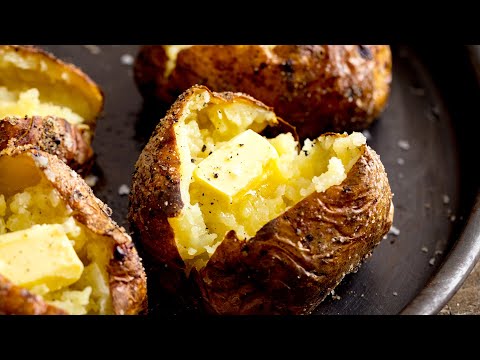
During baking, the potato undergoes a series of transformations: starch gelatinises, cell walls soften, and Maillard reactions occur on the skin surface. The skin’s sugars caramelise, forming a thin, crisp shell that contrasts with the aerated interior. Butter application post-bake melts into the porous starch network, enhancing flavour dispersion and creating a creamy texture gradient. The salt crystals dissolve partially on contact, amplifying the butter’s richness and balancing the natural sweetness of the potato flesh. This controlled transformation defines the structural integrity and sensory appeal of a properly executed jacket potato.
Workflow Efficiency and Common Errors
Efficient execution requires minimal handling but precise timing. Potatoes should be scrubbed and dried thoroughly before baking to prevent steaming rather than roasting. Overcrowding the oven restricts airflow, leading to uneven skin texture. Underbaking results in dense, waxy interiors, while overbaking causes excessive dehydration. Butter should be applied immediately after cutting to maximise absorption. In service conditions, holding baked potatoes at moderate temperature for short periods is acceptable, but prolonged holding degrades texture. Avoid wrapping in foil during baking, as it traps steam and prevents proper skin crisping.
Regional and Culinary Context
The jacket potato is rooted in British culinary tradition, where it evolved as a simple, self-contained meal utilising readily available root crops. Historically baked in domestic ovens or directly in embers, the technique emphasised efficiency and minimal waste. The modern oven-baked version preserves the same principle: achieving a crisp exterior and soft interior through dry heat. Its enduring presence in British cuisine reflects both practicality and textural precision, often serving as a neutral base for varied toppings while maintaining its core identity as a standalone preparation of starch and fat balance.
Recipe Education
Learn the Skills Behind This Recipe
Build confidence with cooking skills, techniques, and tools used in this recipe.
Oven Temperature Conversions
Understand oven temperatures and how they affect baking and roasting.
Recommended for the bake method used in this recipe.
Baking Tools Guide
Understand essential tools for mixing, measuring, and preparing recipes.
Recommended for the bake method used in this recipe.
How to Roast Properly
Improve roasting with better tray setup, timing, and oven heat balance.
Recommended for the roast method used in this recipe.
Cooking Basics
Build safer knife preparation, heat control, timing, and everyday kitchen confidence.
Helpful when using chef knife during preparation.


Jacket Potato with Butter and Salt
Description
A jacket potato relies on controlled starch gelatinisation and internal steam pressure to achieve a fluffy interior. The potato’s high starch content, when heated gradually, absorbs internal moisture until the granules swell and rupture, forming a soft matrix. The skin acts as a natural barrier, retaining steam while allowing gradual dehydration of the outer layer. Salt applied post-bake enhances flavour perception through ionic balance, while butter introduces fat that coats starch molecules, moderating moisture release and improving mouthfeel. Selecting a medium to large floury potato ensures optimal internal expansion without collapse or gumminess.
Ingredients
Ingredients
Instructions
Instructions
Step 1
Preheat the oven to 200°C. Scrub the potatoes thoroughly using a Chef Knife to remove any blemishes, then dry them completely with a Tea Towel.Ensure potatoes are fully dry before oiling; surface moisture inhibits crisping and promotes steaming.Step 2
Pierce each potato several times with a Paring Knife to allow steam to escape during baking. Rub the skins evenly with vegetable oil and sprinkle with coarse salt if desired.Uniform piercing prevents internal bursting and ensures even pressure release during heat expansion.Step 3
Place the potatoes directly on a Baking Sheet and bake for 60–70 minutes, turning once halfway through for even skin dehydration and browning.Use an Oven Thermometer to verify consistent 200°C chamber temperature; fluctuations affect starch gelatinisation.Step 4
Remove from the oven and rest for 5 minutes to stabilise internal steam pressure. Slice lengthwise with a Chef Knife and gently press the ends to open the interior.Allowing brief rest prevents collapse and maintains a fluffy crumb structure when cut.Step 5
Add a portion of softened butter to each potato and season with fine sea salt. Serve immediately while the butter melts into the flesh.Apply butter while the interior remains above 70°C to ensure full melt and optimal flavour dispersion.
Recommended Equipment

Nutrition Facts
Servings 2
Serving Size 1 portion
- Amount Per Serving
- Calories 132.58kcal
- % Daily Value *
- Total Fat 14.91g23%
- Saturated Fat 6.17g31%
- Cholesterol 21.5mg8%
- Sodium 2326.64mg97%
- Total Carbohydrate 0.18g1%
- Sugars 0.01g
- Protein 0.11g1%
- Vitamin A 249.92 IU
- Vitamin E 0.79 mg
- Vitamin K 13.22 mcg
* Nutrition information is provided as an estimate per serving and may vary depending on the ingredients, brands, substitutions, portion sizes and preparation methods used. Percent Daily Values (%DV) are based on U.S. FDA reference values for a 2,000-calorie diet and are intended as a general guide only. Individual nutritional needs vary. This information is not a substitute for advice from a registered dietitian or other qualified healthcare professional.
Note
Allow the dish to cool gradually before sealing. Rapid temperature shifts can create condensation, weakening texture and diluting surface flavour concentration. The resting phase supports structural stabilisation and moisture redistribution. Cutting or serving too early may compromise internal balance. Texture refinement often occurs naturally during resting due to internal moisture redistribution.


