
Recipe Snapshot
Recipe at a Glance
Key timing, yield and style details before you start cooking.
Fermentation Balance and Starch Integration
Kimchi juk relies on the controlled interaction between fermented kimchi acids and rice starch gelatinisation. The lactic acid from mature kimchi introduces tang and depth, but excessive acidity can destabilise starch thickening if added too early. The rice must hydrate fully before kimchi liquid is incorporated to prevent premature acid interference with starch swelling. Fat from sesame oil moderates sharpness and supports flavour dispersion. The salt content from kimchi brine contributes to seasoning but requires calibration to avoid oversalting once soy sauce is introduced. The sequencing of aromatics before liquid addition ensures proper flavour foundation without compromising starch integrity.
Heat Regulation and Moisture Control
Temperature staging defines the texture outcome of kimchi juk. Initial sautéing of aromatics and kimchi at medium heat drives moisture evaporation and concentrates flavour through mild caramelisation. Once rice is added, heat must be reduced to maintain even gelatinisation without scorching. Excessive heat causes uneven thickening and surface sticking, while insufficient simmering yields a watery base. Controlled simmering allows starch granules to expand gradually, producing a cohesive porridge consistency. Carryover heat continues gelatinisation after removal from direct flame, so final viscosity should be slightly looser than desired at plating.
Transformation Through Simmering and Reduction
During simmering, rice starch transitions from discrete grains to a cohesive suspension. The porridge thickens as amylose and amylopectin leach into the liquid, binding the kimchi particles and aromatics. The reduction phase intensifies umami from anchovy or vegetable stock, while the kimchi’s fermented complexity integrates into the starch matrix. The final texture should be smooth but retain minimal particulate definition from chopped kimchi. Over-reduction risks stickiness and loss of flow, while under-reduction leaves a thin, soupy texture. Proper stirring intervals maintain suspension uniformity and prevent bottom scorching.
Workflow Efficiency and Parallel Preparation
Efficient mise en place reduces downtime during cooking. Pre-chopping kimchi, measuring stock, and rinsing rice streamline transitions between sautéing and simmering phases. Using pre-warmed stock prevents temperature shock that can delay gelatinisation. The porridge can be held at low heat for short service windows if stirred periodically to maintain suspension. For larger batches, a wide Saute Pan ensures even heat distribution and prevents localised thickening. Parallel preparation of garnishes such as sesame oil drizzle or chopped scallions can occur during the final simmer to optimise workflow.
Cultural and Regional Context
Kimchi juk originates from Korean culinary practice as a restorative porridge, often prepared to utilise aged kimchi and leftover rice. It reflects the broader juk tradition, which encompasses grain-based porridges used for recovery and gentle nourishment. The dish’s evolution aligns with Korea’s fermentation culture, where kimchi’s acidity and umami are leveraged to create depth without heavy seasoning. Modern adaptations may use short-grain rice for creamier texture or vegetable stock for lighter versions, but the structural principle—balancing fermented acidity with starch comfort—remains consistent across regional variations.
Recipe Education
Learn the Skills Behind This Recipe
Build confidence with cooking skills, techniques, and tools used in this recipe.
How to Sauté Properly
Master fast cooking, pan heat, and ingredient timing for better texture.
Recommended for the saute method used in this recipe.
Simmer vs Boil
Learn when to simmer, when to boil, and how each affects recipe results.
Recommended for the simmer method used in this recipe.
Cookware Guide
Learn which pots and pans work best for frying, sautéing, simmering, and roasting.
Helpful when using frying pan during preparation.
Cups to Grams
Convert cup measurements more accurately to improve recipe consistency.
Helpful when using measuring cups during preparation.
Teaspoons to Grams
Use small-measure conversions more accurately in cooking and baking.
Helpful when using measuring spoons during preparation.
Baking Tools Guide
Understand essential tools for mixing, measuring, and preparing recipes.
Helpful when using mixing bowl during preparation.


Kimchi Juk (Kimchi Porridge)
Description
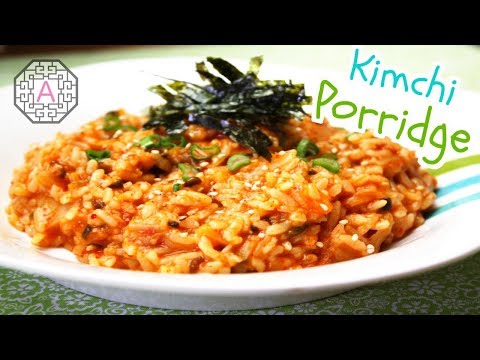
Kimchi juk relies on the controlled interaction between fermented kimchi acids and rice starch gelatinisation. The lactic acid from mature kimchi introduces tang and depth, but excessive acidity can destabilise starch thickening if added too early. The rice must hydrate fully before kimchi liquid is incorporated to prevent premature acid interference with starch swelling. Fat from sesame oil moderates sharpness and supports flavour dispersion. The salt content from kimchi brine contributes to seasoning but requires calibration to avoid oversalting once soy sauce is introduced. The sequencing of aromatics before liquid addition ensures proper flavour foundation without compromising starch integrity.
Ingredients
Ingredients
Instructions
Instructions
Step 1
Heat sesame oil in a Saute Pan over medium heat. Add minced garlic and sauté for 30 seconds until aromatic, avoiding browning.Maintain medium heat to prevent garlic bitterness and preserve oil aroma.Step 2
Add chopped kimchi and gochugaru. Stir-fry for 2–3 minutes until moisture reduces and colour deepens.Allow slight caramelisation to develop depth; avoid over-drying which can cause harsh acidity.Step 3
Add rinsed rice and stir to coat evenly with the kimchi mixture. Toast lightly for 1 minute to develop nutty aroma.Toasting rice before liquid addition enhances flavour and stabilises starch release.Step 4
Pour in hot stock gradually while stirring. Bring to a gentle simmer, then reduce heat to low. Cook uncovered for 25–30 minutes, stirring occasionally to prevent sticking.Use a Silicone Spatula to scrape the base periodically and maintain even gelatinisation.Step 5
Add kimchi brine and soy sauce near the end of simmering. Adjust salt to taste and continue cooking until porridge reaches thick, creamy consistency.Introduce acidic components late to preserve starch structure and prevent thinning.Step 6
Remove from heat and let rest for 5 minutes to stabilise texture. Serve topped with sliced scallions and a drizzle of sesame oil if desired.Resting allows residual heat to complete gelatinisation and ensures uniform viscosity.
Recommended Equipment

Nutrition Facts
Servings 2
Serving Size 1 portion
- Amount Per Serving
- Calories 371.56kcal
- % Daily Value *
- Total Fat 9.61g15%
- Saturated Fat 1.48g8%
- Sodium 3046.38mg127%
- Potassium 407.36mg12%
- Total Carbohydrate 64.98g22%
- Dietary Fiber 4.79g20%
- Sugars 3.91g
- Protein 7.38g15%
- Vitamin A 1080.97 IU
- Vitamin C 1.38 mg
- Calcium 70.8 mg
- Iron 4.37 mg
- Vitamin E 0.62 mg
- Vitamin K 59.15 mcg
- Thiamin 0.33 mg
- Riboflavin 0.28 mg
- Niacin 4.66 mg
- Vitamin B6 0.66 mg
- Folate 74.75 mcg
- Pantothenic Acid 1.14 mg
- Phosphorus 233.93 mg
- Magnesium 126.12 mg
- Zinc 1.84 mg
- Selenium 0.99 mcg
- Copper 0.26 mg
- Manganese 2.87 mg
* Nutrition information is provided as an estimate per serving and may vary depending on the ingredients, brands, substitutions, portion sizes and preparation methods used. Percent Daily Values (%DV) are based on U.S. FDA reference values for a 2,000-calorie diet and are intended as a general guide only. Individual nutritional needs vary. This information is not a substitute for advice from a registered dietitian or other qualified healthcare professional.
Note
Use sterilised containers and ensure full submersion where applicable to maintain product safety and prevent microbial instability during storage. The resting phase supports structural stabilisation and moisture redistribution. Cutting or serving too early may compromise internal balance. Grains and starches continue absorbing moisture after cooking. Adjust liquid slightly when reheating to restore optimal consistency. Slow-cooked preparations often improve after several hours or overnight refrigeration as aromatic compounds integrate more fully. When reheating crisp components, use dry heat rather than microwave methods to maintain exterior texture. Texture refinement often occurs naturally during resting due to internal moisture redistribution.


