
Recipe Snapshot
Recipe at a Glance
Key timing, yield and style details before you start cooking.
Component Integration and Structural Balance
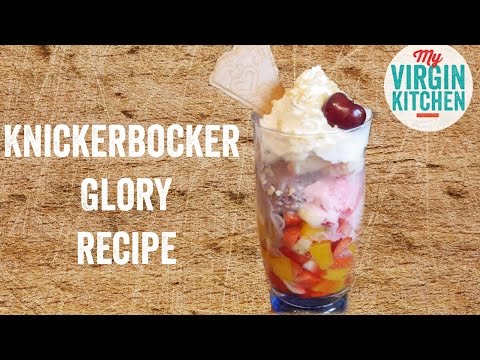
A Knickerbocker Glory relies on controlled layering of temperature, texture, and sweetness. Ice cream provides the fat matrix and frozen density, while fruit introduces acidity and moisture contrast. Whipped cream contributes aeration and lightness, preventing the dessert from feeling dense. Syrup functions as both flavour enhancer and binding medium between layers, while nuts or wafers add mechanical crunch. The sequencing of cold and room-temperature elements is critical; premature assembly leads to melting and syrup dilution. Each layer must be proportioned to maintain vertical stability and prevent collapse under the cream’s weight. The glass acts as a structural mould, so ingredient density must decrease upward to maintain visual clarity and textural progression.
Temperature Control and Assembly Timing
Temperature staging defines the success of this dessert. Ice cream must be slightly tempered—around -10°C—to allow clean scooping without fracturing. Fruit should be well-drained and chilled but not frozen, preventing ice crystal formation that would destabilise the cream. Syrups must be cool to avoid melting the ice cream on contact. Whipped cream should be firm but not over-whipped, maintaining pipeable consistency. Assembly must occur rapidly in a chilled glass to minimise melt rate. The final topping is applied immediately before service to preserve structural definition and prevent syrup migration through the cream layer. Timing precision ensures visual stratification and textural integrity.
Transformation Through Layering and Textural Contrast
Unlike cooked desserts, transformation here occurs through controlled assembly rather than heat. The process manipulates viscosity, aeration, and temperature differentials to achieve contrast. Fruit syrup thickens slightly when chilled, increasing cling and reducing run-off. Ice cream softens marginally, integrating with syrup layers to create a semi-emulsified interface. Whipped cream stabilises the top layer, trapping air and insulating the colder components beneath. The final texture progression—crisp nut, soft fruit, creamy ice cream, and aerated cream—depends on precise layering order. Any imbalance in syrup viscosity or cream density disrupts the intended mouthfeel and visual clarity.
Workflow Efficiency and Mise en Place Logic
Professional execution requires pre-chilling all glassware and staging components in sequence: fruit base, syrup, ice cream, cream, garnish. Syrups and fruits should be portioned in advance to eliminate handling delays. Ice cream scoops can be pre-formed and held briefly in a blast freezer for rapid service assembly. Whipped cream must be held under refrigeration and re-whipped lightly if separation occurs. Garnishes such as nuts or wafers should be added last to prevent moisture absorption. Efficient mise en place ensures consistent presentation across multiple servings and prevents melt-induced structural failure during plating.
Cultural and Historical Context
The Knickerbocker Glory originated in early 20th-century British ice cream parlours, influenced by American soda fountain culture. Its layered presentation mirrored the visual appeal of sundaes but incorporated British preferences for fruit and cream over heavy sauces. The tall glass format showcased ingredient stratification, aligning with the era’s fascination with visual abundance. Modern adaptations maintain the core structure—fruit, syrup, ice cream, cream—but employ refined flavour pairings and controlled sweetness. The dish remains a technical exercise in cold assembly and textural balance rather than a simple indulgence, reflecting the evolution of plated desserts in Western service traditions.
Recipe Education
Learn the Skills Behind This Recipe
Build confidence with cooking skills, techniques, and tools used in this recipe.
Cups to Grams
Convert cup measurements more accurately to improve recipe consistency.
Helpful when using measuring cups during preparation.
Teaspoons to Grams
Use small-measure conversions more accurately in cooking and baking.
Helpful when using measuring spoons during preparation.
Baking Tools Guide
Understand essential tools for mixing, measuring, and preparing recipes.
Helpful when using mixing bowl during preparation.


Knickerbocker Glory
Description
A Knickerbocker Glory relies on controlled layering of temperature, texture, and sweetness. Ice cream provides the fat matrix and frozen density, while fruit introduces acidity and moisture contrast. Whipped cream contributes aeration and lightness, preventing the dessert from feeling dense. Syrup functions as both flavour enhancer and binding medium between layers, while nuts or wafers add mechanical crunch. The sequencing of cold and room-temperature elements is critical; premature assembly leads to melting and syrup dilution. Each layer must be proportioned to maintain vertical stability and prevent collapse under the cream’s weight. The glass acts as a structural mould, so ingredient density must decrease upward to maintain visual clarity and textural progression.
Ingredients
Ingredients
Instructions
Instructions
Step 1
Chill tall serving glasses in the refrigerator for at least 15 minutes to reduce melt rate during assembly.Cold glassware slows ice cream softening and maintains distinct syrup layers.Step 2
Place sliced strawberries and pineapple chunks in a Mixing Bowl and combine gently with half of the strawberry syrup to coat evenly.Mix fruit lightly to avoid crushing; intact pieces preserve visual clarity in the base layer.Step 3
Spoon the fruit mixture into the base of each chilled glass, ensuring even distribution and minimal air gaps.Compact the fruit gently with a Silicone Spatula to create a stable foundation for the ice cream.Step 4
Add one scoop of vanilla ice cream over the fruit, drizzle with remaining strawberry syrup, then add a second scoop topped with chocolate syrup.Slightly tempered ice cream allows clean scooping and prevents fracture lines that disrupt layering.Step 5
Pipe or spoon whipped cream over the top to form a dome, then garnish with chopped roasted nuts, a wafer biscuit, and a maraschino cherry.Apply whipped cream immediately before service to prevent syrup migration and maintain aeration.
Recommended Equipment

Nutrition Facts
Servings 2
Serving Size 1 portion
- Amount Per Serving
- Calories 879.76kcal
- % Daily Value *
- Total Fat 58.34g90%
- Saturated Fat 34.56g173%
- Cholesterol 179.67mg60%
- Sodium 178.07mg8%
- Potassium 740.68mg22%
- Total Carbohydrate 81.92g28%
- Dietary Fiber 4.88g20%
- Sugars 66.47g
- Protein 11.32g23%
- Vitamin A 2146.91 IU
- Vitamin C 61.12 mg
- Calcium 291.68 mg
- Iron 2.16 mg
- Vitamin D 1.91 mcg
- Vitamin E 1.76 mg
- Vitamin K 9.75 mcg
- Thiamin 0.18 mg
- Riboflavin 0.62 mg
- Niacin 1 mg
- Vitamin B6 0.22 mg
- Folate 44.07 mcg
- Vitamin B12 0.75 mcg
- Pantothenic Acid 1.37 mg
- Phosphorus 339.83 mg
- Magnesium 98.43 mg
- Zinc 2.29 mg
- Selenium 8 mcg
- Copper 0.56 mg
- Manganese 0.6 mg
* Nutrition information is provided as an estimate per serving and may vary depending on the ingredients, brands, substitutions, portion sizes and preparation methods used. Percent Daily Values (%DV) are based on U.S. FDA reference values for a 2,000-calorie diet and are intended as a general guide only. Individual nutritional needs vary. This information is not a substitute for advice from a registered dietitian or other qualified healthcare professional.
Note
Allow the dish to cool gradually before sealing. Rapid temperature shifts can create condensation, weakening texture and diluting surface flavour concentration. Adequate chilling or marination enhances aromatic absorption and improves cohesion between fat, acid, and seasoning components. Dairy-based elements may thicken further upon cooling. Reheat gently to prevent separation or grainy texture. Monitor seasoning levels after storage, as salt perception can shift once chilled.


