
Recipe Snapshot
Recipe at a Glance
Key timing, yield and style details before you start cooking.
Protein Structure and Marinade Chemistry
Lamb shoulder or leg provides sufficient intramuscular fat for moisture retention during high-heat grilling. The marinade’s acid component, typically lemon juice, initiates mild protein denaturation, allowing salt and aromatics to penetrate the muscle fibers. Olive oil stabilizes the emulsion, coating the meat to reduce surface dehydration. Garlic and oregano contribute enzymatic and phenolic compounds that enhance browning reactions once exposed to direct heat. The balance between acid and oil is critical—excess acid will toughen the outer layer before internal seasoning occurs, while insufficient salt limits osmotic diffusion and flavour depth.
Heat Control and Moisture Management During Grilling
Souvlaki requires precise temperature staging to achieve even caramelization without overcooking. Skewered lamb should be grilled over medium-high heat to promote Maillard reactions while maintaining internal juiciness. Excessive flame contact leads to surface charring before internal temperature reaches 60–65°C. Rotating skewers at consistent intervals ensures uniform exposure and prevents localized scorching. Resting post-grill allows residual heat to equalize internal temperature and redistribute juices, avoiding purge loss. Proper preheating of the Grill Pan or outdoor grill is essential to prevent sticking and achieve defined sear marks.
Transformation Through Cooking and Sauce Integration
As the lamb cooks, connective tissue softens and intramuscular fat renders, enriching mouthfeel. The yogurt sauce provides thermal contrast and acidity to balance the grilled fat. Yogurt’s lactic acid and casein proteins create a cooling emulsion that binds cucumber moisture and garlic volatiles. The sauce’s viscosity must remain stable under refrigeration; excessive cucumber water will thin it, so salting and draining the cucumber before mixing is essential. The combination of hot, charred protein and cold, tangy sauce forms a balanced temperature and texture profile central to the dish’s structural identity.
Workflow Efficiency and Mise en Place Logic
Marinating and sauce preparation can occur concurrently to optimize workflow. The lamb should marinate for at least two hours, allowing time to prepare and chill the yogurt sauce. Skewering should be completed immediately before grilling to prevent oxidation and uneven seasoning. Organizing components—meat, sauce, garnishes, and flatbreads—into separate holding containers ensures rapid assembly during service. Maintaining a clean cutting board and sanitized tongs prevents cross-contamination between raw and cooked protein. Efficient sequencing minimizes downtime and preserves temperature integrity across all components.
Regional Technique Lineage and Adaptation
Souvlaki originates from Greek street and taverna cooking traditions, where skewered meats were grilled over charcoal for rapid service. The technique evolved from ancient spit-roasting methods, adapting to smaller portion formats for urban dining. Modern adaptations often use gas or cast-iron grilling to replicate the same surface char indoors. The yogurt sauce, derived from tzatziki, reflects the Eastern Mediterranean use of cultured dairy to temper grilled meats. This combination of marinated lamb and yogurt-based accompaniment exemplifies the balance of fat, acid, and smoke characteristic of Greek culinary structure.
Recipe Education
Learn the Skills Behind This Recipe
Build confidence with cooking skills, techniques, and tools used in this recipe.
Cooking Basics
Build safer knife preparation, heat control, timing, and everyday kitchen confidence.
Helpful when using chef knife during preparation.
Cups to Grams
Convert cup measurements more accurately to improve recipe consistency.
Helpful when using measuring cups during preparation.
Teaspoons to Grams
Use small-measure conversions more accurately in cooking and baking.
Helpful when using measuring spoons during preparation.
Baking Tools Guide
Understand essential tools for mixing, measuring, and preparing recipes.
Helpful when using mixing bowl during preparation.


Lamb Souvlaki with Yogurt Sauce
Description
Lamb shoulder or leg provides sufficient intramuscular fat for moisture retention during high-heat grilling. The marinade’s acid component, typically lemon juice, initiates mild protein denaturation, allowing salt and aromatics to penetrate the muscle fibers. Olive oil stabilizes the emulsion, coating the meat to reduce surface dehydration. Garlic and oregano contribute enzymatic and phenolic compounds that enhance browning reactions once exposed to direct heat. The balance between acid and oil is critical—excess acid will toughen the outer layer before internal seasoning occurs, while insufficient salt limits osmotic diffusion and flavour depth.
Ingredients
Ingredients
Instructions
Instructions
Step 1
Combine olive oil, lemon juice, minced garlic, dried oregano, salt, and black pepper in a Mixing Bowl. Add lamb cubes and mix thoroughly to coat. Cover and refrigerate for at least 2 hours.Ensure even coating by massaging marinade into the meat; this promotes uniform flavour penetration.Step 2
Prepare the yogurt sauce by combining Greek yogurt, grated and drained cucumber, olive oil, minced garlic, lemon juice, and chopped dill in a Mixing Bowl. Mix until smooth and refrigerate until serving.Drain cucumber thoroughly to prevent excess water from thinning the yogurt sauce.Step 3
Thread marinated lamb cubes onto soaked wooden skewers, leaving small gaps between pieces for even heat exposure.Avoid compressing meat tightly on skewers; airflow between pieces ensures consistent browning.Step 4
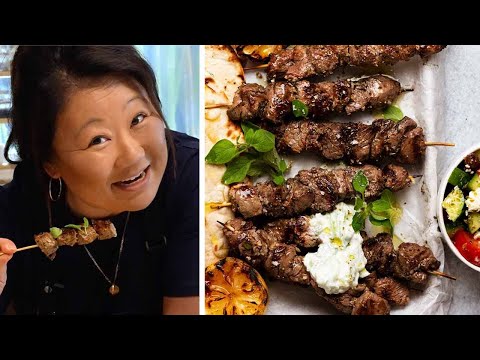
Preheat Grill Pan over medium-high heat. Lightly oil the surface, then place skewers on the pan. Grill for 8–10 minutes, turning every 2–3 minutes until evenly browned and internal temperature reaches 60–65°C.Rotate skewers frequently to prevent localized scorching and promote uniform caramelization.Step 5
Transfer grilled lamb skewers to a plate and rest for 5 minutes before serving. Serve with chilled yogurt sauce on the side.Resting allows juices to redistribute, maintaining tenderness and preventing surface dryness.
Recommended Equipment

Nutrition Facts
Servings 4
Serving Size 1 portion
- Amount Per Serving
- Calories 249.63kcal
- % Daily Value *
- Total Fat 15.64g25%
- Saturated Fat 3.27g17%
- Cholesterol 62.35mg21%
- Sodium 661.25mg28%
- Potassium 371.66mg11%
- Total Carbohydrate 3.63g2%
- Dietary Fiber 0.43g2%
- Sugars 1.72g
- Protein 23.08g47%
- Vitamin C 5.55 mg
- Calcium 68.43 mg
- Iron 2 mg
- Vitamin E 1.83 mg
- Vitamin K 10.47 mcg
- Thiamin 0.13 mg
- Riboflavin 0.33 mg
- Niacin 5.8 mg
- Vitamin B6 0.21 mg
- Folate 30.63 mcg
- Vitamin B12 2.79 mcg
- Pantothenic Acid 0.87 mg
- Phosphorus 234.86 mg
- Magnesium 32.2 mg
- Zinc 4.19 mg
- Selenium 25.54 mcg
- Copper 0.14 mg
- Manganese 0.13 mg
* Nutrition information is provided as an estimate per serving and may vary depending on the ingredients, brands, substitutions, portion sizes and preparation methods used. Percent Daily Values (%DV) are based on U.S. FDA reference values for a 2,000-calorie diet and are intended as a general guide only. Individual nutritional needs vary. This information is not a substitute for advice from a registered dietitian or other qualified healthcare professional.
Note
For best structural retention, cool uncovered briefly before storage to prevent trapped steam from softening exterior crust or caramelised surfaces. The resting phase supports structural stabilisation and moisture redistribution. Cutting or serving too early may compromise internal balance. Spice intensity can deepen over time as volatile compounds settle. Taste and adjust seasoning after resting. When reheating crisp components, use dry heat rather than microwave methods to maintain exterior texture. Acid balance may soften slightly over time; a final adjustment before serving restores clarity.


