
Recipe Snapshot
Recipe at a Glance
Key timing, yield and style details before you start cooking.
Fat Emulsification and Acid Balance
This sauce relies on controlled emulsification between butterfat and lemon juice. The acid from the lemon juice cuts through the butter’s richness, creating a balanced mouthfeel. The inclusion of fresh herbs introduces volatile aromatic oils that disperse evenly when suspended in the fat phase. Salt calibrates the perception of acidity, while a small amount of water or stock stabilises the emulsion by moderating temperature and viscosity. The butter must be added gradually to prevent the emulsion from breaking, maintaining a glossy, cohesive texture rather than separating into oil and liquid.
Temperature Management and Reduction Control
Heat control is critical for this sauce. The reduction of lemon juice and stock must occur over medium heat to concentrate flavour without caramelising the acids. Once the liquid base is reduced, the temperature must drop below 85°C before butter incorporation. Excess heat will cause the butter to split, while insufficient heat will prevent proper emulsification. Continuous whisking ensures even dispersion of fat droplets. The final temperature should allow the sauce to coat the back of a spoon without visible oil separation or curdling.
Texture Development and Aromatic Integration
As the butter melts into the reduced base, the sauce transitions from thin and sharp to smooth and rounded. The herbs—parsley, chives, and thyme—are added at the end to preserve chlorophyll brightness and prevent bitterness from overexposure to heat. The sauce’s viscosity depends on the butter-to-liquid ratio and the rate of incorporation. A properly finished sauce should exhibit a uniform sheen, moderate thickness, and a clean citrus-herb aroma that complements rather than overwhelms the main dish.
Workflow Efficiency and Service Stability
In a professional setting, mise en place is essential: lemon juice pre-squeezed, herbs finely chopped, and butter portioned into cold cubes. The sauce should be prepared à la minute to maintain emulsion integrity. Holding it over direct heat leads to separation; instead, it should rest in a warm bain-marie below 60°C. For service, whisking briefly before plating restores homogeneity. This workflow minimises downtime and ensures consistent texture across multiple plates during service.
Culinary Lineage and Regional Context
Lemon butter sauces derive from French beurre blanc and beurre citron traditions, both rooted in classical emulsified butter techniques. The addition of herbs reflects Mediterranean influence, where fresh aromatics and citrus are used to lighten rich sauces. Modern adaptations often reduce dairy content or incorporate vegetable stock for balance. This version maintains the French structural base while integrating Mediterranean freshness, making it suitable for seafood, poultry, or vegetable applications.
Recipe Education
Learn the Skills Behind This Recipe
Build confidence with cooking skills, techniques, and tools used in this recipe.
How to Sauté Properly
Master fast cooking, pan heat, and ingredient timing for better texture.
Recommended for the saute method used in this recipe.
Cooking Basics
Build safer knife preparation, heat control, timing, and everyday kitchen confidence.
Helpful when using chef knife during preparation.
Cookware Guide
Learn which pots and pans work best for frying, sautéing, simmering, and roasting.
Helpful when using saucepan during preparation.
Cups to Grams
Convert cup measurements more accurately to improve recipe consistency.
Helpful when using measuring cups during preparation.
Teaspoons to Grams
Use small-measure conversions more accurately in cooking and baking.
Helpful when using measuring spoons during preparation.
Baking Tools Guide
Understand essential tools for mixing, measuring, and preparing recipes.
Helpful when using mixing bowl during preparation.


Lemon Herb Butter Sauce
Description
This sauce relies on controlled emulsification between butterfat and lemon juice. The acid from the lemon juice cuts through the butter’s richness, creating a balanced mouthfeel. The inclusion of fresh herbs introduces volatile aromatic oils that disperse evenly when suspended in the fat phase. Salt calibrates the perception of acidity, while a small amount of water or stock stabilises the emulsion by moderating temperature and viscosity. The butter must be added gradually to prevent the emulsion from breaking, maintaining a glossy, cohesive texture rather than separating into oil and liquid.
Ingredients
Ingredients
Instructions
Instructions
Step 1
Combine lemon juice and vegetable stock in a Saucepan over medium heat. Reduce by half to concentrate acidity and flavour.Monitor reduction visually; bubbles should remain steady but not aggressive to avoid caramelising the acids.Step 2
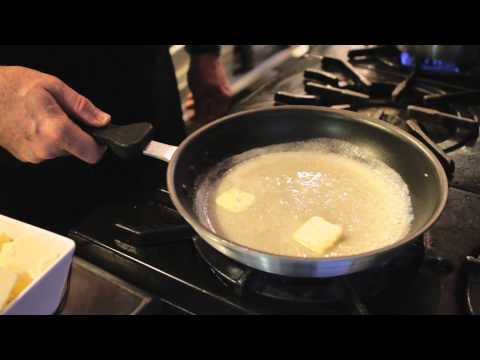
Lower the heat to medium-low. Begin whisking in cold butter cubes one at a time, allowing each to melt before adding the next.Keep the Saucepan temperature below 85°C to prevent the butter from separating into oil and solids.Step 3
Continue whisking until all butter is incorporated and the sauce is smooth and glossy.If the emulsion begins to thin, remove from heat briefly and whisk vigorously to restore structure.Step 4
Add chopped parsley, chives, and thyme. Stir gently to distribute herbs evenly without overcooking them.Introduce herbs off the heat to preserve volatile oils and maintain bright colour.Step 5
Season with salt and black pepper. Hold warm in a bain-marie or serve immediately.Maintain holding temperature below 60°C to prevent the emulsion from breaking during service.
Recommended Equipment

Nutrition Facts
Servings 4
Serving Size 1 portion
- Amount Per Serving
- Calories 275.89kcal
- % Daily Value *
- Total Fat 30.49g47%
- Saturated Fat 19.28g97%
- Cholesterol 80.63mg27%
- Sodium 64.31mg3%
- Potassium 43.98mg2%
- Total Carbohydrate 2.09g1%
- Sugars 0.8g
- Protein 0.47g1%
- Vitamin A 1082.68 IU
- Vitamin C 11.84 mg
- Calcium 13.07 mg
- Vitamin D 0.56 mcg
- Vitamin E 0.92 mg
- Vitamin K 19.84 mcg
- Riboflavin 0.02 mg
- Folate 8.56 mcg
- Vitamin B12 0.06 mcg
- Phosphorus 12.19 mg
* Nutrition information is provided as an estimate per serving and may vary depending on the ingredients, brands, substitutions, portion sizes and preparation methods used. Percent Daily Values (%DV) are based on U.S. FDA reference values for a 2,000-calorie diet and are intended as a general guide only. Individual nutritional needs vary. This information is not a substitute for advice from a registered dietitian or other qualified healthcare professional.
Note
Store in an airtight container under refrigeration, ensuring minimal air exposure to preserve flavour integrity and textural balance. Spice intensity can deepen over time as volatile compounds settle. Taste and adjust seasoning after resting. Texture refinement often occurs naturally during resting due to internal moisture redistribution.


