
Recipe Snapshot
Recipe at a Glance
Key timing, yield and style details before you start cooking.
Ingredient Structure and Balance Control
The dish relies on precise moisture management between crisp tostada bases and the tuna topping. The corn tortillas must be dehydrated through frying to achieve a rigid, non-absorbent surface that resists sogginess. The tuna mixture requires controlled binding through mayonnaise and lime juice, balancing fat and acid to prevent separation. Diced vegetables contribute hydration and crunch; their water content must be moderated by draining to avoid dilution. Salt calibration is critical—too early and it draws liquid from the tuna, softening texture; too late and seasoning remains uneven. The fat-acid ratio defines mouthfeel and stability, ensuring the topping adheres without leaking into the base.
Heat Management and Frying Precision
Frying the mini tortillas demands stable oil temperature between 175–185°C. Below this range, tortillas absorb oil and lose crispness; above it, they brown prematurely before full dehydration. Uniform thickness and even flipping ensure consistent texture. After frying, immediate draining on a sheet rack prevents residual oil pooling. The tuna topping requires no direct heat, but ingredients should be chilled before mixing to maintain firmness and prevent emulsion breakdown. Temperature staging—hot base, cold topping—creates contrast and structural integrity. Timing coordination between frying and assembly prevents steam condensation that could soften the tostadas.
Textural and Flavour Transformation
The tostada base undergoes starch gelatinisation followed by dehydration, locking in a brittle texture. The tuna mixture transforms through emulsification, where fat from mayonnaise coats protein strands, creating a cohesive yet light structure. Lime juice denatures surface proteins, tightening the tuna’s texture slightly while brightening flavour. Diced onion and tomato introduce volatile aromatics that integrate during brief resting, allowing salt to draw out mild juices for balance. The final assembly depends on immediate topping to preserve contrast—crisp base, creamy tuna, and fresh garnish. Each component’s transformation is controlled to maintain defined layers without bleed-through.
Workflow Efficiency and Assembly Timing
Professional execution requires parallel sequencing: tortillas fried and cooled while the tuna mixture is prepared. Mise en place must include pre-diced vegetables, drained tuna, and measured dressing to avoid idle time during frying. Assembly should occur in small batches to prevent moisture migration. In service conditions, tostadas can be held crisp in a low-humidity environment for up to 30 minutes before topping. The tuna mixture benefits from a short refrigeration period to stabilise emulsification. Efficient workflow minimises textural degradation and ensures consistent plating speed during high-volume service.
Regional and Cultural Context
Mini tostadas with tuna derive from coastal Mexican cuisine, particularly Baja California, where seafood and crisp corn bases intersect. The tostada format evolved as a preservation method for stale tortillas, later adapted for seafood applications. The cold tuna topping reflects influence from ceviche traditions, integrating citrus acidity and raw or lightly cooked fish. Modern adaptations use canned tuna for accessibility while maintaining the structural logic of contrast between crisp and fresh. The dish exemplifies Mexico’s balance of texture and temperature, adapted for contemporary service as a compact, high-turnover appetizer.
Recipe Education
Learn the Skills Behind This Recipe
Build confidence with cooking skills, techniques, and tools used in this recipe.
How to Fry Properly
Understand pan heat, oil temperature, and how to get better frying results.
Recommended for the fry method used in this recipe.
Cooking Basics
Build safer knife preparation, heat control, timing, and everyday kitchen confidence.
Helpful when using chef knife during preparation.
Cookware Guide
Learn which pots and pans work best for frying, sautéing, simmering, and roasting.
Helpful when using frying pan during preparation.
Baking Tools Guide
Understand essential tools for mixing, measuring, and preparing recipes.
Helpful when using mixing bowl during preparation.


Mini Tostadas with Tuna
Description
The dish relies on precise moisture management between crisp tostada bases and the tuna topping. The corn tortillas must be dehydrated through frying to achieve a rigid, non-absorbent surface that resists sogginess. The tuna mixture requires controlled binding through mayonnaise and lime juice, balancing fat and acid to prevent separation. Diced vegetables contribute hydration and crunch; their water content must be moderated by draining to avoid dilution. Salt calibration is critical—too early and it draws liquid from the tuna, softening texture; too late and seasoning remains uneven. The fat-acid ratio defines mouthfeel and stability, ensuring the topping adheres without leaking into the base.
Ingredients
Ingredients
Instructions
Instructions
Step 1
Cut the corn tortillas into 8 cm rounds using a pastry ring or cutter. Pat dry to remove surface moisture.Ensure tortillas are at room temperature before cutting to prevent tearing and uneven frying.Step 2
Heat vegetable oil in a Frying Pan to 180°C. Fry tortilla rounds in batches for 30–40 seconds per side until golden and crisp.Maintain oil temperature with a Thermometer(Meat) to avoid oil absorption and ensure uniform dehydration.Step 3
Transfer fried tortillas to a Sheet Rack to drain and cool completely. Do not stack to prevent steam softening.Allow at least 5 minutes of cooling before topping to stabilise crispness.Step 4
In a Mixing Bowl, combine drained tuna, mayonnaise, lime juice, diced red onion, tomato, coriander, salt, and black pepper. Mix gently until evenly coated.Fold rather than stir vigorously to preserve tuna flake integrity and prevent emulsification breakdown.Step 5
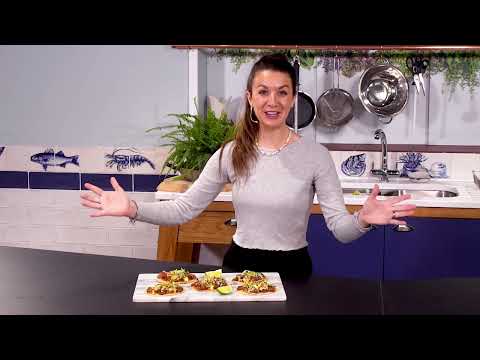
Spoon a small portion of the tuna mixture onto each cooled tostada base. Serve immediately to retain contrast.Assemble only before service; pre-topped tostadas lose crispness within 10 minutes due to moisture migration.
Recommended Equipment

Nutrition Facts
Servings 4
Serving Size 1 portion
- Amount Per Serving
- Calories 531.59kcal
- % Daily Value *
- Total Fat 54.13g84%
- Saturated Fat 8.33g42%
- Cholesterol 22.2mg8%
- Sodium 369.77mg16%
- Potassium 149.25mg5%
- Total Carbohydrate 2.65g1%
- Dietary Fiber 0.52g3%
- Sugars 0.74g
- Protein 9.98g20%
- Vitamin A 290.48 IU
- Vitamin C 3.75 mg
- Calcium 17.57 mg
- Iron 1.01 mg
- Vitamin D 0.62 mcg
- Vitamin E 4.4 mg
- Vitamin K 110.13 mcg
- Thiamin 0.03 mg
- Riboflavin 0.05 mg
- Niacin 5.09 mg
- Vitamin B6 0.19 mg
- Folate 7.5 mcg
- Vitamin B12 1.3 mcg
- Pantothenic Acid 0.13 mg
- Phosphorus 83.59 mg
- Magnesium 16.28 mg
- Zinc 0.42 mg
- Selenium 34.33 mcg
- Copper 0.05 mg
- Manganese 0.08 mg
* Nutrition information is provided as an estimate per serving and may vary depending on the ingredients, brands, substitutions, portion sizes and preparation methods used. Percent Daily Values (%DV) are based on U.S. FDA reference values for a 2,000-calorie diet and are intended as a general guide only. Individual nutritional needs vary. This information is not a substitute for advice from a registered dietitian or other qualified healthcare professional.
Note
For best structural retention, cool uncovered briefly before storage to prevent trapped steam from softening exterior crust or caramelised surfaces. The resting phase supports structural stabilisation and moisture redistribution. Cutting or serving too early may compromise internal balance. Spice intensity can deepen over time as volatile compounds settle. Taste and adjust seasoning after resting. When reheating crisp components, use dry heat rather than microwave methods to maintain exterior texture. Acid balance may soften slightly over time; a final adjustment before serving restores clarity.


