
Recipe Snapshot
Recipe at a Glance
Key timing, yield and style details before you start cooking.
Balancing Sweetness and Freshness in Legume Structure
Peas contain natural sugars and starches that shift rapidly once heat is applied. Controlling hydration and salt concentration ensures the cell walls soften without collapsing. The addition of mint introduces volatile oils that can dominate if added too early, so timing is critical to preserve chlorophyll brightness. Butter or olive oil provides a lipid medium that carries mint aroma evenly through the peas while maintaining gloss and preventing surface drying. Acid from lemon juice stabilises colour and balances sweetness, avoiding a cloying finish. The ratio of fat to liquid must remain low to prevent emulsification breakdown and maintain a clean, bright texture.
Heat Management and Moisture Retention
Gentle simmering rather than aggressive boiling preserves pea integrity and prevents starch leaching. Using a covered Saucepan limits evaporation, maintaining a controlled moisture environment. The goal is to heat the peas through to approximately 85–90°C, just below full boiling, to activate starch gelatinisation without rupturing skins. Carryover heat completes the cooking once removed from direct flame. Excessive heat dulls colour and flavour, while insufficient heat leaves a raw, grassy note. Timing precision is essential; the cooking window is narrow and must be monitored closely for optimal texture retention.
Transformation Through Controlled Cooking
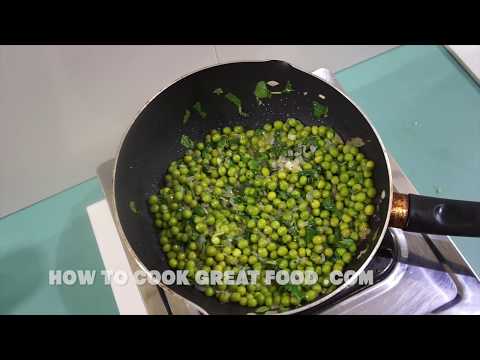
During cooking, the pea’s internal starches gelatinise, creating a tender yet structured bite. The butter melts and coats each pea, forming a thin emulsion with residual cooking water. Mint’s essential oils volatilise under gentle heat, integrating into the fat phase and dispersing evenly. The final texture should be moist but not wet, with peas retaining spherical definition. Overcooking leads to mash formation and muted flavour. The transformation is complete when the peas glisten uniformly, and the aroma of mint is perceptible but not overpowering.
Workflow Efficiency and Timing Coordination
Efficient mise en place ensures the short cooking window is fully controlled. Peas should be measured and ready before heating begins, mint leaves pre-chopped, and butter portioned. The Saucepan must be preheated with water at the correct depth to avoid delays that cause uneven cooking. Parallel tasks, such as preparing garnish or adjusting seasoning, should occur during the brief simmer phase. This workflow avoids idle time and ensures immediate service while the peas retain maximum colour and volatile aroma integrity.
Cultural and Regional Context of Minted Peas
Minted peas are rooted in British and Mediterranean culinary traditions, where fresh herbs are used to balance the natural sweetness of spring vegetables. The pairing of mint with peas evolved from preservation practices that used herbs to enhance flavour in early-season produce. In modern British cuisine, the dish often accompanies roasted meats or fish, reflecting its role as a bright, vegetal counterpoint to rich proteins. The technique of finishing with butter and acid mirrors classical French glazing methods, demonstrating cross-regional adaptation of simple vegetable cookery.
Recipe Education
Learn the Skills Behind This Recipe
Build confidence with cooking skills, techniques, and tools used in this recipe.
Cooking Basics
Build safer knife preparation, heat control, timing, and everyday kitchen confidence.
Helpful when using chef knife during preparation.
How to Sauté Properly
Master fast cooking, pan heat, and ingredient timing for better texture.
Recommended for the saute method used in this recipe.
Cookware Guide
Learn which pots and pans work best for frying, sautéing, simmering, and roasting.
Helpful when using saucepan during preparation.
Cups to Grams
Convert cup measurements more accurately to improve recipe consistency.
Helpful when using measuring cups during preparation.
Teaspoons to Grams
Use small-measure conversions more accurately in cooking and baking.
Helpful when using measuring spoons during preparation.
Simmer vs Boil
Learn when to simmer, when to boil, and how each affects recipe results.
Recommended for the simmer method used in this recipe.


Minted Peas
Description
Peas contain natural sugars and starches that shift rapidly once heat is applied. Controlling hydration and salt concentration ensures the cell walls soften without collapsing. The addition of mint introduces volatile oils that can dominate if added too early, so timing is critical to preserve chlorophyll brightness. Butter or olive oil provides a lipid medium that carries mint aroma evenly through the peas while maintaining gloss and preventing surface drying. Acid from lemon juice stabilises colour and balances sweetness, avoiding a cloying finish. The ratio of fat to liquid must remain low to prevent emulsification breakdown and maintain a clean, bright texture.
Ingredients
Ingredients
Instructions
Instructions
Step 1
Place the Saucepan over medium heat and add water, olive oil, and salt. Bring to a gentle simmer without reaching a full boil.Monitor the water temperature closely; maintaining sub-boiling heat prevents pea skin rupture and colour loss.Step 2
Add the fresh peas to the simmering liquid and cook for 3–4 minutes until tender but still bright green.Taste one pea at 3 minutes; remove from heat as soon as the texture yields slightly under pressure but remains firm.Step 3
Drain the peas using a Colander / Strainer, reserving a small amount of the cooking liquid for finishing.Retaining a few tablespoons of cooking liquid helps emulsify the butter later and prevents dryness.Step 4
Return the peas to the warm Saucepan, add butter and chopped mint, and toss gently over low heat until the butter melts and coats evenly.Keep the heat low to avoid volatilising mint oils too rapidly; gentle agitation ensures uniform coating.Step 5
Add lemon juice and adjust seasoning with additional salt if required. Serve immediately while hot and glossy.Add acid only at the end; early addition can toughen the pea skins and dull the green pigment.
Recommended Equipment

Nutrition Facts
Servings 4
Serving Size 1 portion
- Amount Per Serving
- Calories 149.3kcal
- % Daily Value *
- Total Fat 5.84g9%
- Saturated Fat 2.33g12%
- Cholesterol 8.06mg3%
- Sodium 201.64mg9%
- Potassium 313.61mg9%
- Total Carbohydrate 18.22g7%
- Dietary Fiber 7.23g29%
- Sugars 7.1g
- Protein 6.86g14%
- Vitamin A 1103.08 IU
- Vitamin C 50.6 mg
- Calcium 35.81 mg
- Iron 1.92 mg
- Vitamin E 0.57 mg
- Vitamin K 32.64 mcg
- Thiamin 0.33 mg
- Riboflavin 0.17 mg
- Niacin 2.64 mg
- Vitamin B6 0.21 mg
- Folate 82.89 mcg
- Pantothenic Acid 0.14 mg
- Phosphorus 136.85 mg
- Magnesium 42.51 mg
- Zinc 1.57 mg
- Selenium 2.29 mcg
- Copper 0.23 mg
- Manganese 0.53 mg
* Nutrition information is provided as an estimate per serving and may vary depending on the ingredients, brands, substitutions, portion sizes and preparation methods used. Percent Daily Values (%DV) are based on U.S. FDA reference values for a 2,000-calorie diet and are intended as a general guide only. Individual nutritional needs vary. This information is not a substitute for advice from a registered dietitian or other qualified healthcare professional.
Note
Allow the dish to cool gradually before sealing. Rapid temperature shifts can create condensation, weakening texture and diluting surface flavour concentration. Slow-cooked preparations often improve after several hours or overnight refrigeration as aromatic compounds integrate more fully. Texture refinement often occurs naturally during resting due to internal moisture redistribution.


