
Recipe Snapshot
Recipe at a Glance
Key timing, yield and style details before you start cooking.
Hydration and Umami Balance in Seaweed Structure
Dried miyeok (wakame) undergoes significant hydration expansion, increasing up to tenfold in volume when soaked. Proper rehydration ensures even texture and prevents fibrous toughness. The seaweed’s glutamic acid content contributes natural umami, which integrates with beef or anchovy stock to create depth without excessive sodium. Sesame oil introduces lipid-based aroma compounds that bind volatile seaweed notes, stabilising flavour dispersion. Salt and soy sauce are applied incrementally to avoid over-salting as the broth reduces. The sequencing of fat introduction before liquid addition allows the seaweed to bloom aromatically, enhancing the soup’s savoury base.
Temperature Control and Simmering Precision
Miyeok guk requires controlled simmering rather than vigorous boiling. Excessive agitation can cause the seaweed to fragment and cloud the broth. Maintaining a steady low simmer around 90–95°C allows collagen from beef slices to release gradually, enriching mouthfeel without emulsifying fat into the liquid. Evaporation is minimal at this range, preserving clarity. Timing is critical: undercooking yields chewy strands, while overcooking dulls colour and flavour. The cook must balance heat input to sustain gentle convection, ensuring even extraction of flavour compounds from both protein and seaweed without structural breakdown.
Transformation Through Slow Cooking
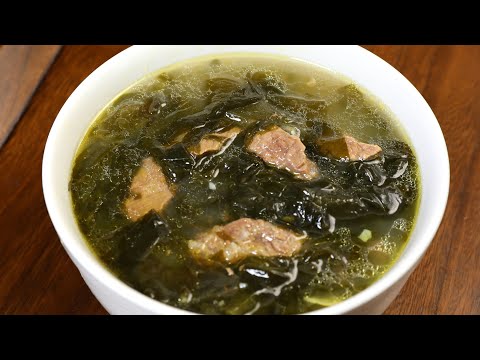
During simmering, the seaweed’s cell walls soften, releasing polysaccharides that slightly thicken the broth and contribute to a silky texture. Beef proteins denature and tenderise, while the broth gains body through gradual gelatin release. The interaction between amino acids and lipids from sesame oil produces subtle roasted notes that deepen the overall profile. The final soup should exhibit translucence with suspended seaweed ribbons and a clean, savoury aroma. Properly managed simmering transforms a minimal ingredient set into a cohesive, nutrient-dense broth with balanced salinity and sustained umami resonance.
Workflow Efficiency and Preparation Sequencing
Efficient execution depends on staging hydration and slicing concurrently. While the seaweed rehydrates, beef can be trimmed and seasoned. Stock preparation or reheating should occur in parallel to minimise idle time. Mise en place discipline ensures that aromatics, seasoning agents, and liquids are pre-measured, preventing over-reduction during seasoning adjustments. In service environments, batch preparation benefits from controlled holding at 70°C to maintain clarity without further cooking. Home execution should prioritise small-batch simmering to maintain broth purity and prevent flavour flattening from prolonged reheating cycles.
Cultural and Regional Context of Miyeok Guk
Miyeok guk originates from Korean coastal regions where seaweed was abundant and valued for mineral content. Historically consumed by postpartum women for recovery, it evolved into a symbolic birthday dish representing health and renewal. The technique reflects Korean broth-making discipline, emphasising clarity and balance over intensity. Regional variations substitute beef with anchovy or mussel stock depending on availability and dietary preference. Modern adaptations maintain the same structural logic—hydration, sautéing, and controlled simmering—demonstrating continuity between traditional coastal cooking and contemporary Korean home cuisine.
Recipe Education
Learn the Skills Behind This Recipe
Build confidence with cooking skills, techniques, and tools used in this recipe.
Cooking Basics
Build safer knife preparation, heat control, timing, and everyday kitchen confidence.
Helpful when using chef knife during preparation.
How to Sauté Properly
Master fast cooking, pan heat, and ingredient timing for better texture.
Recommended for the saute method used in this recipe.
Cookware Guide
Learn which pots and pans work best for frying, sautéing, simmering, and roasting.
Helpful when using saucepan during preparation.
Teaspoons to Grams
Use small-measure conversions more accurately in cooking and baking.
Helpful when using measuring spoons during preparation.
Simmer vs Boil
Learn when to simmer, when to boil, and how each affects recipe results.
Recommended for the simmer method used in this recipe.


Miyeok Guk (Seaweed Soup)
Description
Dried miyeok (wakame) undergoes significant hydration expansion, increasing up to tenfold in volume when soaked. Proper rehydration ensures even texture and prevents fibrous toughness. The seaweed’s glutamic acid content contributes natural umami, which integrates with beef or anchovy stock to create depth without excessive sodium. Sesame oil introduces lipid-based aroma compounds that bind volatile seaweed notes, stabilising flavour dispersion. Salt and soy sauce are applied incrementally to avoid over-salting as the broth reduces. The sequencing of fat introduction before liquid addition allows the seaweed to bloom aromatically, enhancing the soup’s savoury base.
Ingredients
Ingredients
Instructions
Instructions
Step 1
Soak the dried miyeok in cold water for 20 minutes until fully rehydrated. Drain, squeeze out excess water, and cut into 5 cm lengths using a Chef Knife on a Cutting Board.Ensure the seaweed is fully hydrated before cutting; partial hydration leads to uneven texture during simmering.Step 2
Heat sesame oil in a Saucepan over medium heat. Add the sliced beef brisket and sauté for 2–3 minutes until lightly browned.Avoid overcrowding the pan; searing in small batches preserves Maillard flavour without steaming the meat.Step 3
Add the drained miyeok to the beef and stir for 2 minutes to coat evenly in oil and render aroma.This brief sauté phase blooms the seaweed’s natural umami and prevents raw marine notes in the final broth.Step 4
Pour in water or beef stock, bring to a gentle boil, then reduce to a low simmer. Skim any surface foam using a Spider / Skimmer.Maintaining a clear broth requires consistent skimming during the first 10 minutes of simmering.Step 5
Add minced garlic and soy sauce. Continue simmering uncovered for 25–30 minutes until the beef is tender and the broth slightly reduced.Monitor evaporation; if reduction exceeds 20%, top up with hot stock to maintain balance.Step 6
Season with salt and black pepper. Adjust final seasoning to taste and serve hot.Add salt only after simmering to prevent premature protein tightening in the beef.
Recommended Equipment

Nutrition Facts
Servings 4
Serving Size 1 portion
- Amount Per Serving
- Calories 132.68kcal
- % Daily Value *
- Total Fat 6.55g11%
- Saturated Fat 1.58g8%
- Cholesterol 23.25mg8%
- Sodium 1174.39mg49%
- Potassium 700.82mg21%
- Total Carbohydrate 4.21g2%
- Sugars 1.73g
- Protein 14.3g29%
- Calcium 29.12 mg
- Iron 1.68 mg
- Vitamin E 0.2 mg
- Vitamin K 1.48 mcg
- Thiamin 0.14 mg
- Riboflavin 0.35 mg
- Niacin 4.32 mg
- Vitamin B6 0.34 mg
- Folate 9.56 mcg
- Vitamin B12 0.91 mcg
- Pantothenic Acid 0.15 mg
- Phosphorus 176.83 mg
- Magnesium 32.11 mg
- Zinc 2.16 mg
- Selenium 9.94 mcg
- Copper 0.19 mg
- Manganese 0.06 mg
* Nutrition information is provided as an estimate per serving and may vary depending on the ingredients, brands, substitutions, portion sizes and preparation methods used. Percent Daily Values (%DV) are based on U.S. FDA reference values for a 2,000-calorie diet and are intended as a general guide only. Individual nutritional needs vary. This information is not a substitute for advice from a registered dietitian or other qualified healthcare professional.
Note
Allow the dish to cool gradually before sealing. Rapid temperature shifts can create condensation, weakening texture and diluting surface flavour concentration. Spice intensity can deepen over time as volatile compounds settle. Taste and adjust seasoning after resting. Slow-cooked preparations often improve after several hours or overnight refrigeration as aromatic compounds integrate more fully. Monitor seasoning levels after storage, as salt perception can shift once chilled.


